




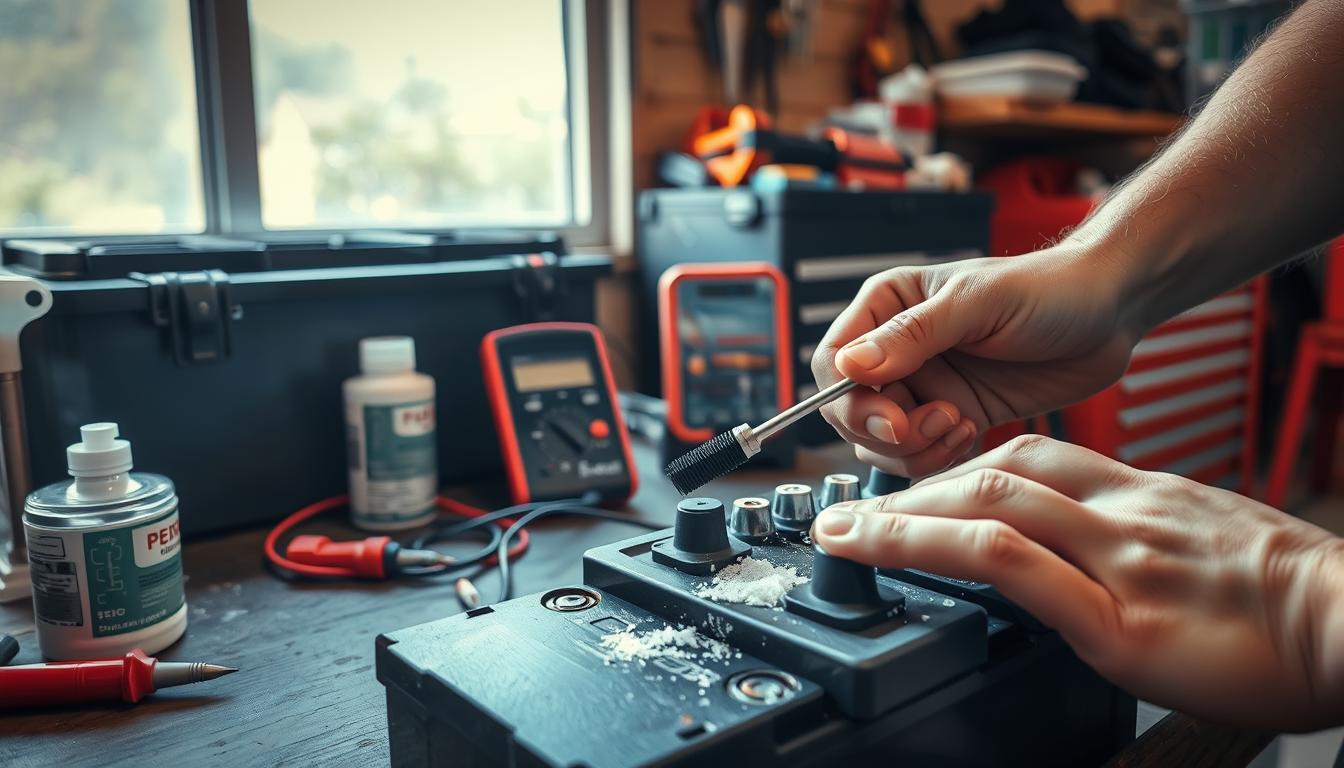
Maintaining your car’s car battery is crucial for optimal vehicle performance. One often overlooked aspect is the cleaning and maintenance of the terminals. Corrosion on the terminals can lead to a range of problems, including difficulty starting the engine and reduced overall performance.
By learning how to clean and maintain your car’s DIY battery terminal cleaning, you can extend the life of your car’s car battery and ensure it runs smoothly. This simple DIY task can make a significant difference in your vehicle’s overall health.
Key Takeaways
- Regular maintenance of car battery terminals is crucial for optimal vehicle performance.
- Corrosion on the terminals can lead to starting issues and reduced performance.
- DIY battery terminal cleaning is a simple task that can extend the life of your car’s battery.
- Proper care can improve your car’s overall health and performance.
- Learning this DIY task can save you money and hassle in the long run.
Understanding Car Battery Terminals
Car battery terminals play a crucial role in your vehicle’s electrical system, and understanding their function is key to maintaining your car’s overall health. The terminals are the points of connection between the battery and the vehicle’s electrical system, facilitating the flow of electrical current.
What Are Battery Terminals?
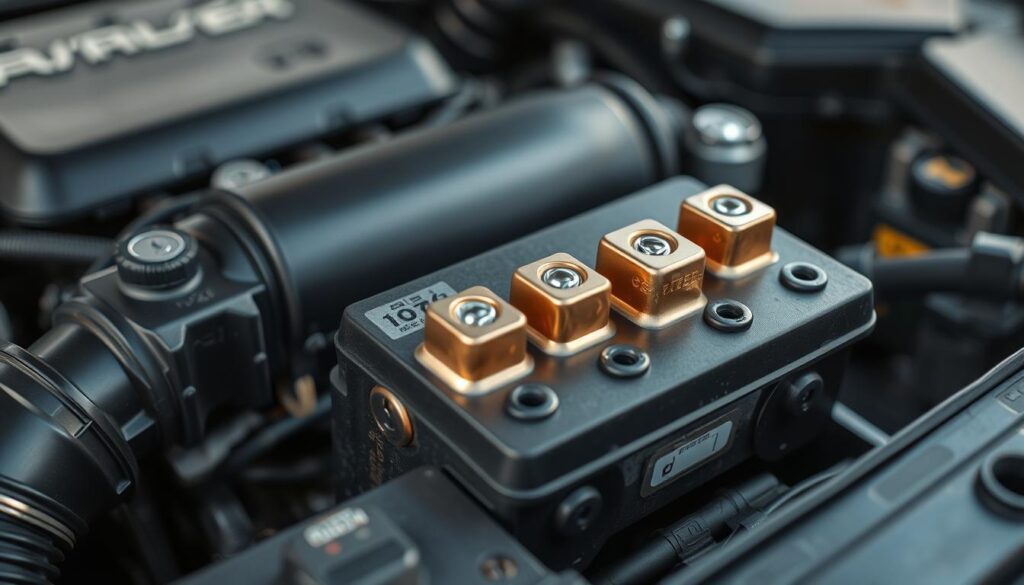
Battery terminals are metal posts on the battery that connect to the vehicle’s electrical system via cables. They are typically made of lead or a lead alloy and are designed to withstand the corrosive environment within the battery. The terminals come in different types, including positive (+) and negative (-) terminals, which are usually marked with corresponding signs or colors.
“A well-maintained battery terminal is essential for a vehicle’s electrical system,” as noted by automotive experts. Corrosion on the terminals can lead to a range of problems, including difficulty starting the engine and dim or flickering headlights.
Importance of Clean Terminals
Clean battery terminals are vital for ensuring a reliable connection between the battery and the vehicle’s electrical system. Corrosion, dirt, or grime on the terminals can impede the flow of electrical current, leading to various issues. Regular cleaning and maintenance of the terminals can help prevent these problems and ensure the longevity of the battery and electrical system.
- Prevents corrosion and damage to the electrical system
- Ensures reliable engine starts and performance
- Reduces the risk of electrical system failures
Common Battery Terminal Problems
Battery terminal corrosion is one of the most common issues affecting vehicle electrical systems. Corrosion can occur due to exposure to moisture, salt, and other environmental factors. Other common problems include loose or damaged terminals, which can cause intermittent electrical issues or complete system failures.
“Corrosion on battery terminals can significantly impact a vehicle’s performance and reliability. Regular inspection and maintenance are crucial to preventing these issues.”
By understanding the importance of car battery terminals and maintaining them properly, you can prevent a range of issues and ensure your vehicle’s electrical system operates smoothly.
Gathering Your Supplies
To effectively clean your car’s battery terminals, you’ll need to assemble a few crucial tools and materials. Having the right supplies on hand will make the process smoother and safer.
Essential Cleaning Tools
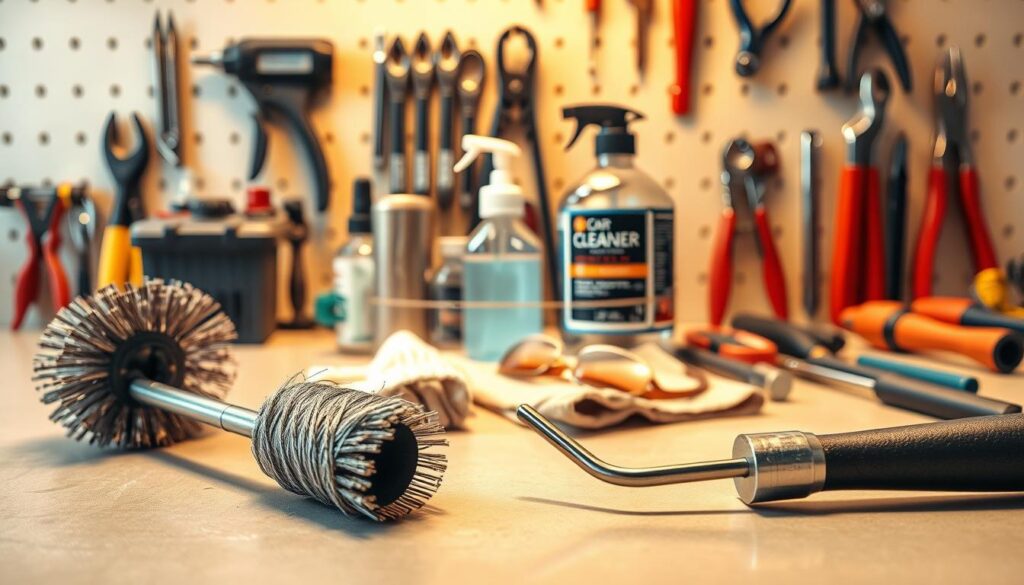
The primary tool you’ll need is a wire brush, which is used to scrub away corrosion from the terminals. Look for a wire brush with sturdy bristles that can effectively remove grime without damaging the terminals. Additionally, a terminal cleaning brush can be useful for reaching into tight spaces and cleaning the terminals more thoroughly.
Recommended Cleaning Solutions
A common and effective cleaning solution for battery terminals is a mixture of baking soda and water. This non-corrosive and non-toxic solution helps neutralize acid and remove grime. You can also use a commercial battery terminal cleaner if you prefer a specialized product.
Safety Gear You Should Wear
When working with batteries and cleaning solutions, it’s crucial to wear protective gloves and safety glasses to prevent injury from corrosive materials and electrical shock. Protective gear will help safeguard your hands and eyes from potential hazards.
By gathering these essential supplies, you’ll be well-prepared to clean your car’s battery terminals safely and effectively.
Preparing Your Vehicle
Preparing your vehicle for battery terminal cleaning is a crucial step that ensures your safety and the effectiveness of the cleaning process. This step is often overlooked, but it’s essential for a successful DIY maintenance task.
Safety Precautions Before Starting
Before you begin, make sure you are wearing the appropriate safety gear, including gloves and safety glasses. This protective equipment will shield you from potential chemical splashes and electrical shocks. Ensure your workspace is well-ventilated to prevent inhalation of any fumes.
Turn off the engine and all electrical accessories to prevent any accidental starts or electrical surges. It’s also a good practice to consult your vehicle’s manual for any specific safety recommendations related to battery maintenance.
Accessing the Battery Terminals
To access the battery terminals, you may need to remove some components that obstruct your view or access. Typically, this involves removing a cover or a bracket that holds the battery in place. Refer to your vehicle’s manual to understand the specific steps required for your vehicle model.
Once you have accessed the battery, inspect the terminals for any signs of corrosion or wear. This visual inspection will help you understand the extent of the cleaning required.
Disconnecting the Battery Cables
To clean the battery terminals effectively, you need to disconnect the battery cables. Start by loosening the nut on the cable clamp with a wrench. Always disconnect the negative (black) cable first to prevent any short circuits. After removing the negative cable, proceed to disconnect the positive (red) cable.
With both cables disconnected, you can now safely clean the battery terminals without the risk of electrical shock or damage to your vehicle’s electrical system.
By following these steps, you ensure a safe and effective DIY battery maintenance experience, aligning with best practices for automotive battery cleaning and do it yourself battery maintenance.
Cleaning Techniques for Battery Terminals
With your vehicle prepared and supplies at hand, it’s time to dive into the actual cleaning process of your car’s battery terminals. Cleaning the terminals is a crucial step in maintaining your vehicle’s battery health.
Manual Cleaning with a Brush
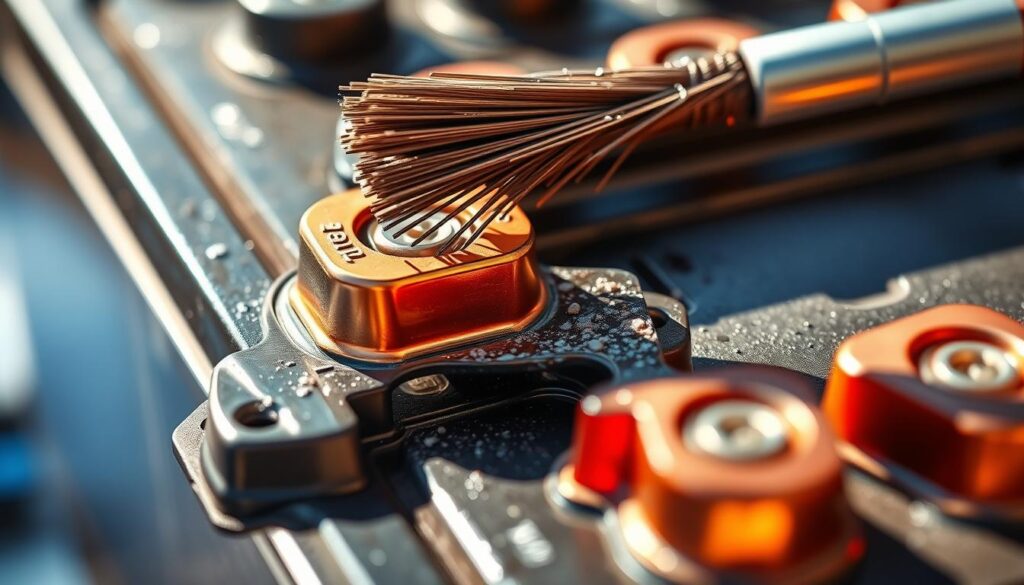
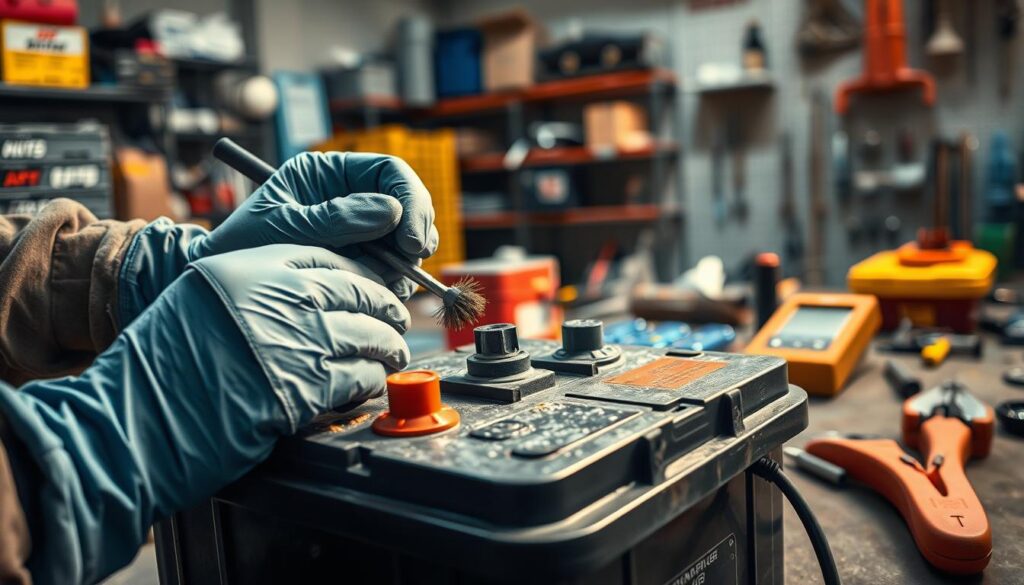
Start by manually cleaning the battery terminals using a terminal brush. This brush is designed to reach into the tight spaces around the terminals and remove any corrosion or debris. Gently scrub the terminals and cables until they are free from any visible corrosion.
Using a Baking Soda Solution
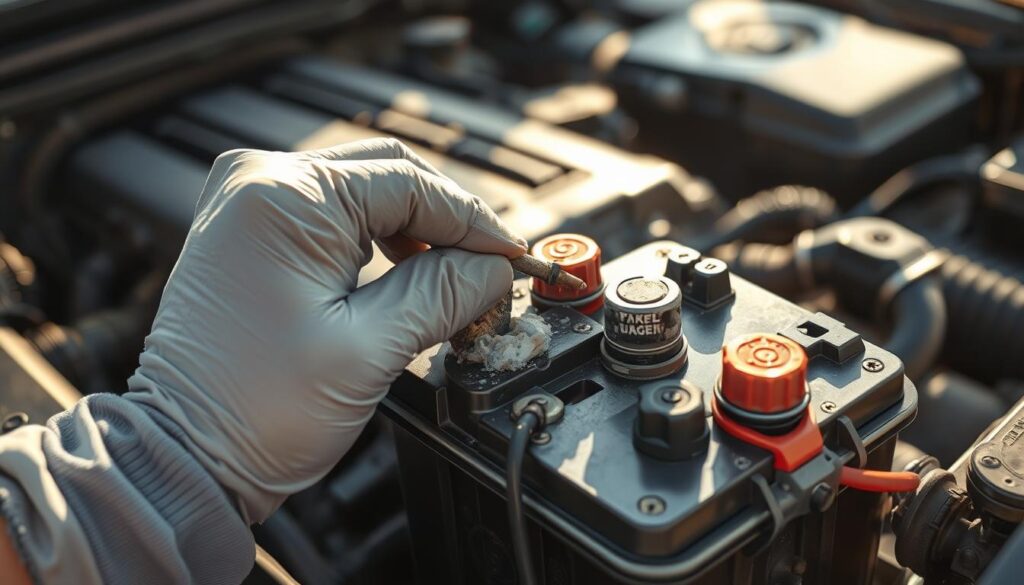
For more thorough cleaning, especially when dealing with heavy corrosion, a baking soda solution can be very effective. Mix baking soda with water to form a paste, and then apply it to the terminals. The baking soda acts to neutralize the corrosion, making it easier to remove. Let it sit for a few minutes before scrubbing with your terminal brush.
Rinsing and Drying the Terminals
After scrubbing the terminals, rinse them with clean water to remove any remaining baking soda paste or debris. Use a clean cloth or towel to dry the terminals thoroughly. This step is crucial to prevent any water spots and to ensure the terminals are dry before reconnecting the battery cables.
By following these steps, you can effectively clean your car’s battery terminals, improving your vehicle’s performance and prolonging the life of your battery.
Preventing Future Corrosion
Preventing corrosion on your car’s battery terminals is just as important as cleaning them. Corrosion can lead to significant issues, including battery failure and costly repairs. By taking proactive steps, you can extend the life of your car’s battery and ensure reliable performance.
Applying Protective Coatings
One effective way to prevent corrosion is by applying protective coatings to the battery terminals. These coatings can be in the form of sprays or greases that are specifically designed to resist corrosion. When applying a protective coating, make sure to follow the manufacturer’s instructions for the best results.
Types of Protective Coatings:
- Petroleum jelly
- Silicone-based sprays
- Specialized battery terminal protectants
Regular Maintenance Schedule
Regular maintenance is crucial for preventing corrosion. This includes regularly inspecting the battery terminals for signs of wear or corrosion and cleaning them as needed. A regular maintenance schedule can help identify potential issues before they become major problems.
Recommended Maintenance Schedule:
| Maintenance Task | Frequency |
|---|---|
| Inspect battery terminals | Every 3 months |
| Clean battery terminals | Every 6 months or as needed |
| Apply protective coating | After cleaning, or every 12 months |
Identifying Early Signs of Corrosion
Being able to identify early signs of corrosion can help you take action before it’s too late. Common signs include a white or greenish powder on the terminals, loose or damaged cables, and dim or flickering headlights. By catching these signs early, you can prevent more serious issues from developing.
Early Signs of Corrosion:
- Visible powder or rust on terminals
- Difficulty starting the engine
- Dim or flickering lights
Troubleshooting Battery Issues
Understanding how to identify and address battery problems can save you time and money in the long run. Battery issues can arise despite regular maintenance, and knowing how to troubleshoot these problems is essential for any car owner.
Recognizing Battery Failure Signs
Identifying the signs of battery failure is the first step in troubleshooting. Common indicators include:
- Difficulty starting the engine
- Dim or flickering headlights
- Swollen or bloated battery case
- Corrosion on the terminals
If you notice any of these signs, it’s crucial to take action promptly to prevent further damage.
When to Replace the Battery
Knowing when to replace your car battery is vital for maintaining your vehicle’s reliability. Consider replacement if:
| Condition | Age of Battery | Recommended Action |
|---|---|---|
| Battery is not holding charge | More than 3 years | Replace the battery |
| Visible corrosion or damage | Any age | Inspect and replace if necessary |
| Difficulty starting the engine | More than 2 years | Test the battery and replace if needed |
How to Test Battery Performance
Testing your car battery’s performance is a straightforward process that can be done at home or by a professional. Here’s a simple method:
- Ensure your vehicle is turned off and in neutral gear.
- Use a multimeter to measure the battery voltage.
- A fully charged battery should read around 12.6 volts.
- If the voltage is significantly lower, it may indicate a discharged or failing battery.
Regular testing can help you identify potential issues before they become major problems.
Environmentally Friendly Disposal
When your car’s battery reaches the end of its life, it’s crucial to consider the environmental impact of its disposal. Old car batteries contain hazardous materials like lead and acid, which can contaminate soil and water if not disposed of properly.
Recycling Old Batteries
Recycling is one of the most effective ways to manage old battery disposal. Many auto parts stores and service centers have battery recycling programs. These programs ensure that the hazardous materials in batteries are handled and recycled, reducing environmental harm.
Benefits of Recycling:
- Reduces the need for primary lead production
- Decreases the risk of soil and water contamination
- Conserves natural resources
Proper Waste Management Practices
Proper disposal involves taking your old battery to a recycling center or an auto parts store that accepts old batteries. It’s essential to handle the battery with care to prevent any damage that could lead to leakage of hazardous materials.
Tips for Safe Handling:
- Wear protective gloves and eyewear
- Avoid tilting or turning the battery upside down
- Keep the battery away from children and pets
Local Recycling Centers to Consider
Finding a local recycling center is easier than ever. Many communities have designated facilities for hazardous waste, including old car batteries. You can also check with local auto repair shops or battery retailers for take-back programs or recommendations.
| Recycling Center Type | Services Offered | Benefits |
|---|---|---|
| Auto Parts Stores | Battery Recycling, Parts Reuse | Convenient, Environmentally Friendly |
| Hazardous Waste Facilities | Safe Disposal of Hazardous Materials | Comprehensive Waste Management |
| Specialized Battery Recycling Centers | Battery Recycling, Lead Reclamation | Expertise in Battery Disposal |
By choosing to recycle your old car battery, you’re not only reducing waste but also contributing to a more sustainable automotive industry. For more information on maintaining your car’s battery and other DIY maintenance tips, explore our other resources.
DIY Battery Terminal Maintenance Tips
Regular cleaning and maintenance of your car’s battery terminals can significantly extend its lifespan. By following a few simple steps, you can ensure your car’s battery performs optimally and reduce the risk of unexpected breakdowns.
Frequency of Cleaning
The frequency of cleaning your car’s battery terminals depends on several factors, including the climate you live in and how often you drive your car. As a general rule, it’s recommended to inspect and clean the terminals every 3 to 6 months.
High humidity and extreme temperatures can accelerate corrosion, so if you live in such conditions, you may need to clean the terminals more frequently.
Best Practices for Terminals
To maintain your car’s battery terminals effectively, follow these best practices:
- Always disconnect the battery cables before cleaning to prevent any accidental starts or electrical shocks.
- Use a soft-bristled brush to gently remove any corrosion or debris from the terminals.
- Avoid using harsh chemicals that can damage the terminals or other components.
Additional Maintenance Tips
In addition to regular cleaning, there are several other maintenance tips to keep in mind:
- Check the battery water level (if applicable) and top it off as needed.
- Tighten any loose connections to ensure reliable starts.
- Consider applying a terminal protectant to prevent future corrosion.
By following these DIY battery terminal maintenance tips, you can help extend the life of your car’s battery and ensure your vehicle runs smoothly.
When to Seek Professional Help
Understanding the limits of DIY car battery maintenance is key to knowing when to seek professional help. While cleaning and maintaining your car’s battery terminals can be a straightforward DIY task, there are situations where the expertise of a professional mechanic is invaluable.
Signs You Need an Expert
If you notice any of the following signs, it’s time to consult a professional: your battery is old and showing signs of wear, you’ve attempted cleaning but the problem persists, or you’re unsure about how to proceed with maintenance. Corrosion that’s severe or recurring is another indicator that professional assistance is needed.
Additionally, if your vehicle is experiencing electrical issues that you’re not equipped to diagnose or fix, a mechanic can provide the necessary expertise. They can check the battery’s condition, the alternator’s performance, and other related components to ensure your vehicle is running smoothly.
What to Expect from a Mechanic
When you take your vehicle to a mechanic for battery-related issues, you can expect a thorough inspection. They will check the battery’s age, condition, and performance, as well as inspect the terminals and cables for any signs of wear or damage. A professional mechanic can also test the electrical system to identify any potential issues.
A comprehensive diagnosis is crucial for identifying the root cause of the problem, whether it’s the battery, the alternator, or another component of the electrical system. Based on their findings, the mechanic can recommend the necessary repairs or replacements.
Choosing the Right Repair Shop
Selecting the right repair shop for your car’s battery needs involves considering a few key factors. Look for a shop with certified mechanics who have experience with your vehicle’s make and model. Check online reviews and ask for referrals from friends or family to gauge the shop’s reputation and reliability.
It’s also important to compare prices and services offered by different shops. While cost is a significant factor, it shouldn’t be the only consideration. Ensure that the shop provides a warranty for their work and uses quality parts.
The Cost of DIY vs. Professional Cleaning
When it comes to car battery maintenance, understanding the cost implications of DIY versus professional cleaning is crucial. The decision to clean your car’s battery terminals yourself or seek professional help can significantly impact your wallet.
Budgeting for Supplies
To clean your car’s battery terminals effectively, you’ll need some basic supplies. The best tools for cleaning battery terminals include a wire brush, baking soda, water, and a cloth. The cost of these supplies can vary, but on average, you can expect to spend around $10 to $20.
- Wire brush: $5-$10
- Baking soda: $1-$2
- Water: $0 (since you likely already have this at home)
- Cloth: $2-$5
Comparing DIY and Professional Services
Professional automotive battery cleaning services can range from $50 to $100, depending on the service provider and your location. While this may seem like a significant difference compared to the DIY cost, it’s essential to consider the value of your time and the potential for professionals to identify other issues with your vehicle.
| Service | Cost |
|---|---|
| DIY Cleaning | $10-$20 |
| Professional Cleaning | $50-$100 |
Long-Term Savings with Regular Maintenance
Regular maintenance of your car’s battery terminals can lead to significant long-term savings. By cleaning the terminals regularly, you can extend the life of your battery, reducing the need for premature replacements. Regular maintenance can save you up to $100 or more in the long run, not to mention the convenience of avoiding unexpected breakdowns.
In conclusion, while the initial cost of DIY cleaning is significantly lower, the value of professional services should not be overlooked. By understanding the costs and benefits of each approach, you can make an informed decision that suits your budget and needs.
Additional Resources for Vehicle Maintenance
Expanding your understanding of car maintenance can be achieved through various resources tailored to different learning styles. Whether you’re a visual learner or prefer hands-on guidance, there’s something available for everyone.
Recommended Books and Guides
For those who prefer learning through written materials, several books and guides are highly recommended. These resources cover a wide range of topics related to car maintenance, including do it yourself battery maintenance and troubleshooting common issues.
- “Chilton’s Total Car Care Manual” – A comprehensive guide covering various car maintenance tasks.
- “Haynes Automotive Repair Manual” – Detailed repair and maintenance information for various vehicle models.
- “Auto Repair For Dummies” – A user-friendly guide to understanding and performing car repairs.
Online Tutorials and Videos
Online tutorials and videos offer a visual and interactive way to learn about car maintenance. Websites like YouTube have numerous channels dedicated to DIY car repairs and maintenance, including tutorials on battery terminal corrosion prevention.
- YouTube channels like ChrisFix and EricTheCarGuy.
- Websites such as Autozone’s Repair Help and O’Reilly Auto Parts’ DIY Advice.
Forums and Community Advice
Engaging with online forums and communities can provide valuable insights and advice from experienced car owners and mechanics. These platforms are excellent for asking questions and sharing experiences related to vehicle maintenance.
| Forum/Community | Description |
|---|---|
| Reddit’s r/DIY | A community sharing DIY projects and advice, including car maintenance. |
| Autozone’s Community Forum | A platform for discussing car repairs and maintenance with other users. |
By leveraging these resources, you can enhance your knowledge of vehicle maintenance, troubleshoot issues effectively, and perform tasks like do it yourself battery maintenance with confidence.
Frequently Asked Questions (FAQs)
Understanding the ins and outs of battery terminal maintenance can be challenging, so let’s address some common FAQs. As you maintain your vehicle’s battery, it’s natural to have questions about the best practices for cleaning battery terminals.
How Often Should I Clean Battery Terminals?
It’s recommended to inspect and clean your car’s battery terminals every 6 months to prevent corrosion buildup. However, if you live in an area with high humidity or your vehicle is exposed to harsh conditions, consider cleaning them more frequently.
Can I Clean Terminals Without Removing the Battery?
Yes, you can clean the battery terminals without removing the battery, but it’s crucial to follow proper safety precautions. Make sure your vehicle is turned off and the keys are removed from the ignition. Use a corrosion-resistant brush and a suitable cleaning solution to gently scrub away any corrosion.
What If My Battery Is Leaking?
If your battery is leaking, it’s a sign of a more serious issue. Avoid touching any leaking fluids, as they can be corrosive and harmful to your skin. Instead, consider having your battery replaced by a professional mechanic to ensure your safety and prevent further damage to your vehicle.
By addressing these FAQs, we hope to have provided you with the confidence to maintain your car’s battery terminals effectively. Regular maintenance not only prolongs the life of your battery but also ensures your vehicle’s reliability and performance.
Conclusion: Importance of Maintenance
Maintaining your car’s battery terminals is crucial for optimal vehicle performance and longevity. By following the steps outlined in this guide, you can ensure your car’s battery operates efficiently and effectively.
Key Takeaways
DIY battery terminal cleaning is a simple and cost-effective way to maintain your car’s battery. Regular cleaning and inspection can help prevent corrosion and prolong the life of your battery. Proper car battery care involves checking the terminals regularly and addressing any issues promptly.
Take Action Today
Don’t wait until you experience battery-related issues. Take proactive steps to maintain your car’s battery terminals. With the right tools and techniques, you can keep your car’s battery in top condition and avoid costly repairs down the road.
Final Considerations
By incorporating DIY battery terminal cleaning into your regular car maintenance routine, you can enjoy a more reliable and efficient driving experience. Remember, proper car battery care is essential for the overall health of your vehicle.