




A dead car battery can be a real inconvenience, leaving you stranded and frustrated. However, with the right knowledge, you can get back on the road quickly. Jump starting a car is a simple process that can be done with a few basic tools and some caution.
When done correctly, DIY jump start can be a lifesaver. It’s essential to understand the proper steps to avoid any damage to your vehicle’s electrical system or battery. A successful jump start can get your car running again, allowing you to drive to a repair shop to have your battery checked or replaced.
Key Takeaways
- Understand the basics of jump starting a car safely.
- Learn the correct steps for a DIY jump start.
- Recognize the importance of proper jump starting techniques.
- Avoid common mistakes that can damage your car’s electrical system.
- Get back on the road quickly with a successful jump start.
Understanding Why Cars Need Jump Starts
A dead car battery can be a real inconvenience, and understanding the reasons behind it can help prevent future occurrences. Cars need jump starts for various reasons, primarily related to their battery health.
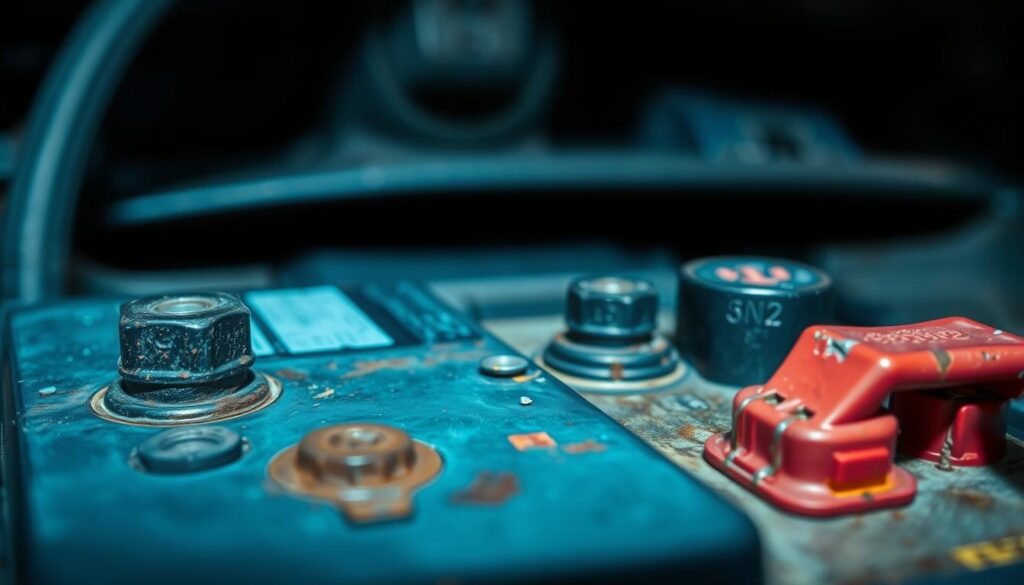
Common Reasons for Battery Failure
Several factors contribute to battery failure, making a jump start necessary. According to various sources, common reasons include:
- Age: Batteries have a limited lifespan and may need replacement after a certain period.
- Deep discharging: Completely draining the battery can reduce its lifespan.
- Manufacturing defects: Some batteries may fail prematurely due to defects in manufacturing.
Understanding these reasons can help in taking preventive measures to avoid being stranded with a dead battery.
Signs Your Car Battery Is Dying
Recognizing the signs of a dying car battery can help you take action before it completely fails. Some common indicators include:
- Slow engine crank: If the engine takes longer than usual to start, it could be a sign of a weak battery.
- Dim lights: Dim or flickering headlights and interior lights can indicate a battery issue.
- Swollen battery case: A swollen or bloated battery case is a sign of overheating, which can lead to battery failure.
Being aware of these signs can help you address the issue before it becomes a major problem, potentially avoiding the need for a jump start.
By understanding why cars need jump starts and recognizing the signs of battery failure, you can take steps to maintain your car’s battery health and know when to seek a car battery dead fix or follow a jump start guide to get back on the road.
Tools Needed for Jump Starting a Car
Having the correct tools is crucial when it comes to jump starting your car safely and effectively. A successful DIY jump start requires not only the right equipment but also an understanding of how to use it properly.
Essential Equipment: Jumper Cables and More
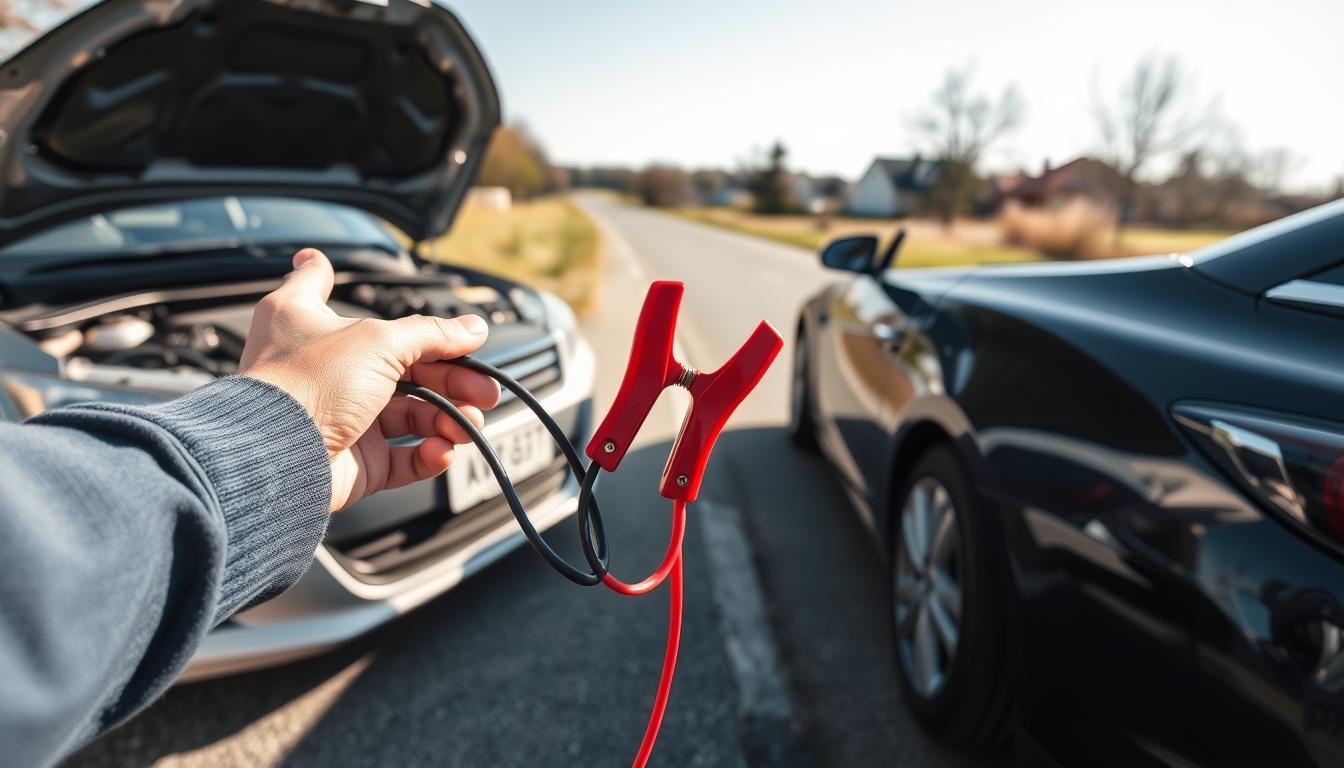
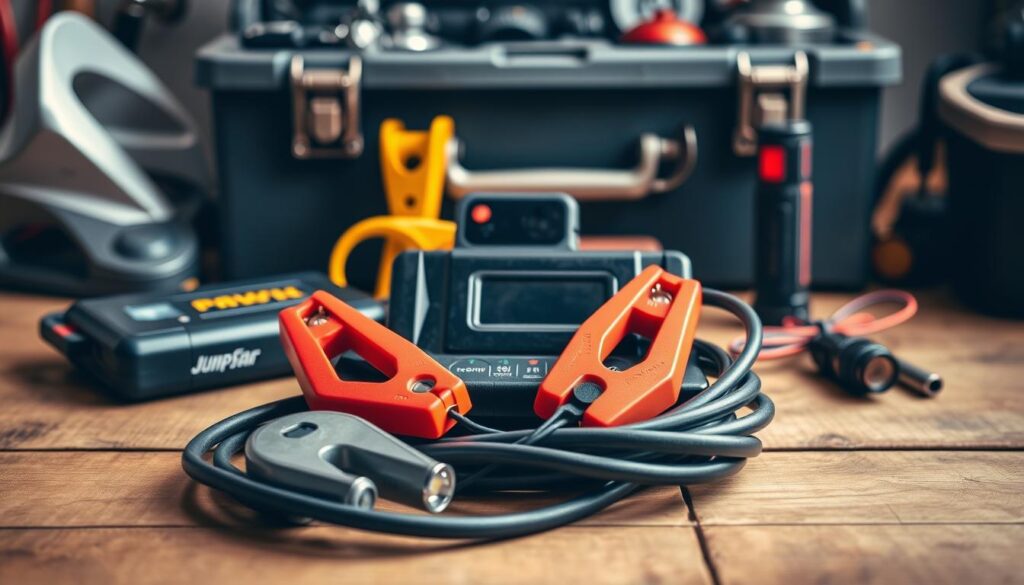
The most critical tool for jump starting a car is a set of jumper cables. These cables are used to connect the dead battery to a functioning battery in another vehicle. When selecting jumper cables, look for ones that are:
- Heavy-duty: Capable of handling the high current required to start a car.
- Long enough: Ensure they can reach between the two vehicles.
- Well-insulated: To prevent electrical shock.
In addition to jumper cables, it’s a good idea to have other basic tools handy, such as a car manual and a flashlight, in case the jump start needs to be done in the dark.
| Tool | Purpose |
|---|---|
| Jumper Cables | Connects dead battery to a functioning one |
| Safety Glasses | Protects eyes from battery acid or electrical sparks |
| Gloves | Protects hands from electrical shock and battery acid |
Recommended Safety Gear
Safety should always be your top priority when attempting to jump start a car. Protective gear can significantly reduce the risk of injury. Essential safety gear includes:
- Safety Glasses: Protect your eyes from potential battery acid splashes or electrical sparks.
- Gloves: Insulated gloves can protect your hands from electrical shock.
“Safety is not just a precaution, it’s a necessity when working with electrical systems and potentially hazardous materials like car batteries.”
By having the right tools and safety gear, you can minimize risks and ensure a successful jump start. Remember, safety always comes first.
Preparing for the Jump Start
A successful jump start begins with proper preparation, including choosing the right location and checking both vehicles. Ensuring that both vehicles are prepared and that the environment is safe is crucial for a smooth jump start process.
Finding a Safe Location
It’s crucial to choose a safe location, away from traffic and any flammable materials, to jump start your car. Look for a flat, stable surface that is far from any hazards. Ensure both vehicles are in neutral or park gear, with their engines turned off and parking brakes engaged. This prevents any accidents during the jump start process.
Here are some tips for finding a safe location:
- Choose a spot that is far from traffic to avoid any potential hazards.
- Ensure the area is well-ventilated to prevent the accumulation of explosive gases.
- Avoid parking on an incline or any uneven surface.
Checking Both Vehicles’ Conditions
Before proceeding with the jump start, it’s essential to check the conditions of both vehicles involved. Verify that both batteries are of the same voltage and that the donor vehicle’s battery is in good condition. Also, ensure that both vehicles are in the correct gear (neutral or park) and that their parking brakes are engaged.
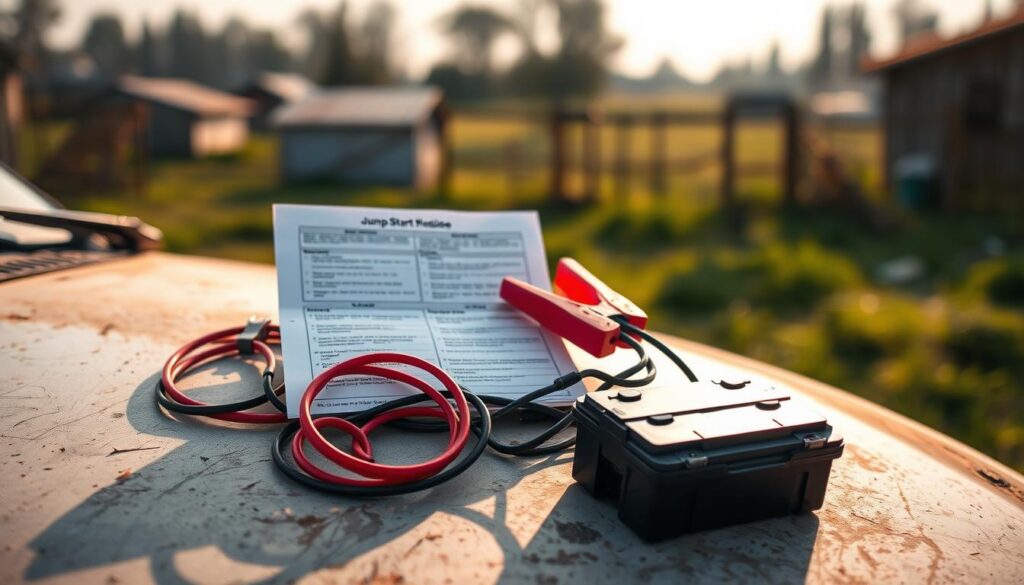
- Check the battery terminals for corrosion or damage.
- Ensure the batteries are compatible (same voltage).
- Verify that both vehicles are in neutral or park gear.
By following these steps, you can ensure a safe and successful jump start. Proper preparation is key to avoiding any potential risks or complications during the process.
How to Connect the Jumper Cables
To jump-start a car safely, understanding how to connect jumper cables is essential. This process involves a series of steps that, when followed correctly, can help you DIY jump start your vehicle without risking damage or injury.
Step-by-Step Cable Connection Process
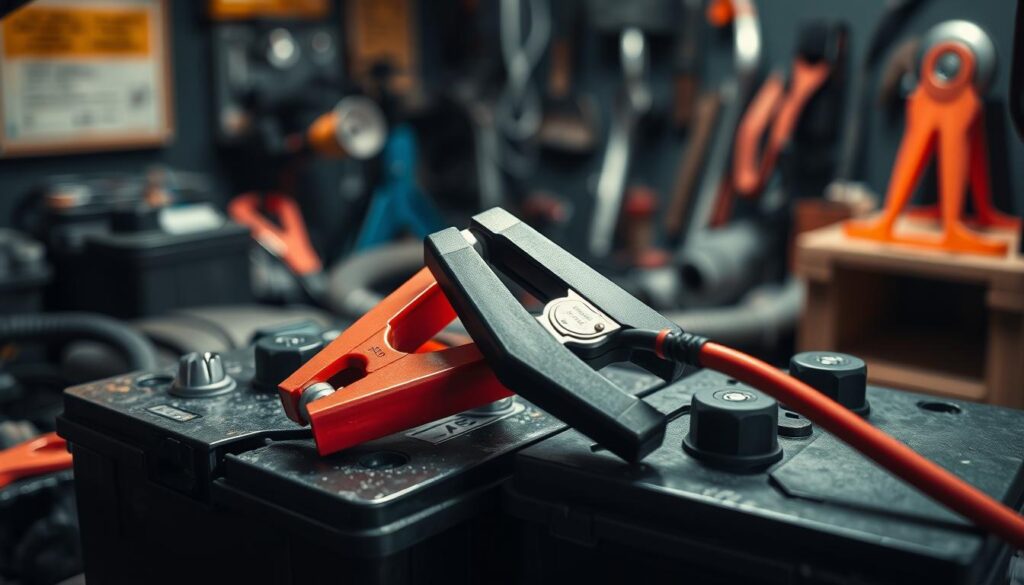
Connecting jumper cables requires attention to detail to ensure a safe and successful car battery boost. Here’s a step-by-step guide:
- Identify the batteries in both vehicles and their corresponding terminals.
- Locate the positive (+) and negative (-) terminals on both batteries. The positive terminal is usually marked with a “+” sign or a red color, while the negative terminal is marked with a “-” sign or black.
- Attach one end of the positive (red) jumper cable to the positive terminal of the dead battery.
- Attach the other end of the positive (red) jumper cable to the positive terminal of the good battery.
- Attach one end of the negative (black) jumper cable to the negative terminal of the good battery.
- Attach the other end of the negative (black) jumper cable to a metal surface on the vehicle with the dead battery, such as a bolt on the engine block. Never connect it to the negative terminal of the dead battery.
Common Mistakes to Avoid
When connecting jumper cables, there are several common mistakes to avoid to ensure a safe car battery boost:
- Incorrect Order: Always connect the positive cables first, followed by the negative cables.
- Wrong Terminals: Ensure you’re connecting the cables to the correct terminals. Reversing the polarity can cause serious damage.
- Loose Connections: Make sure all connections are secure to prevent sparks or fires.
- Touching Metal: Avoid letting the cable clamps touch any metal parts on the vehicle, as this can cause a short circuit.
By following these steps and avoiding common mistakes, you can safely perform a DIY jump start and get back on the road.
Starting the Dead Vehicle
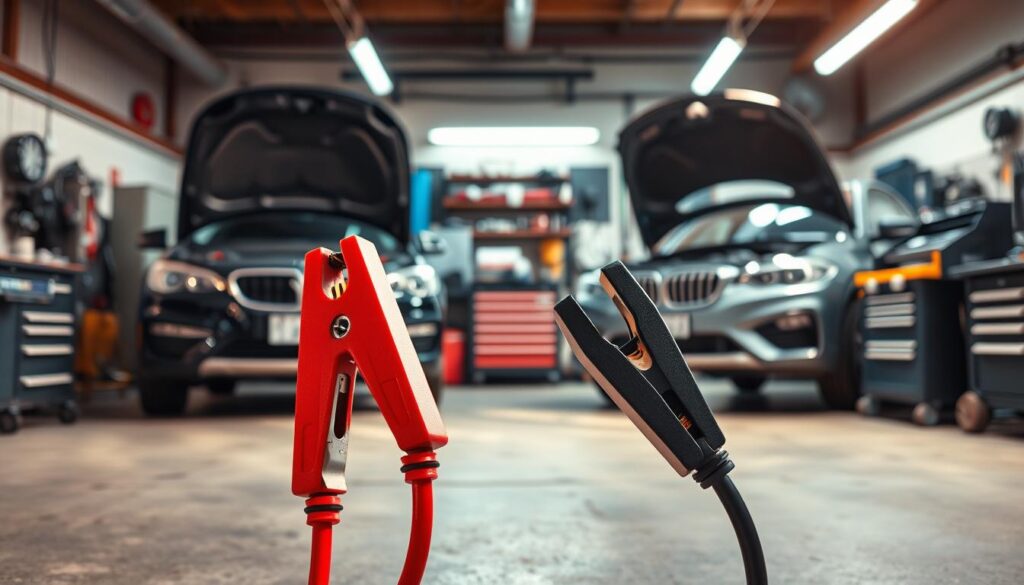
Having connected the jumper cables correctly, you’re ready to start the car that’s not working. This step is crucial in the jump-starting process, and doing it right can save you time and potential safety hazards.
Tips for Successful Start-Up
To successfully start the dead vehicle, ensure that the cables are securely attached to the batteries of both cars. Check that the vehicles are in neutral or park gear and apply the parking brake. Turn the key to start the engine of the car with the dead battery. If it doesn’t start right away, allow the working vehicle’s engine to run for a few minutes to charge the dead battery a bit.
- Make sure both vehicles are in the correct gear.
- Apply the parking brake for safety.
- Turn off all electrical accessories in both cars to prevent a surge of power when the dead car’s engine starts.
What to Do if the Car Doesn’t Start
If the car doesn’t start after a few minutes, it may be necessary to check the connections or consider seeking professional help. Ensure that the cables are not loose and that the clamps are making good contact with the battery terminals. If the issue persists, it might indicate a more serious problem with the battery or electrical system, requiring a mechanic’s inspection.
For a car battery dead fix, you might need to replace the battery if it’s old or damaged beyond recovery. Regular maintenance can help prevent such issues, but when they arise, knowing how to jump-start your car is invaluable.
Disconnecting the Jumper Cables Safely
Once you’ve successfully jump-started your car, it’s crucial to disconnect the jumper cables in the correct order to avoid any sparks or damage to the electrical systems.
Proper Order for Disconnecting
Disconnecting the jumper cables is essentially the reverse of the connection process. To do this safely:
- First, remove the black clamp from the engine block or the metal surface on the vehicle that was jump-started.
- Next, remove the black clamp from the negative terminal of the battery of the vehicle that provided the jump.
- Then, remove the red clamp from the positive terminal of the battery of the vehicle that provided the jump.
- Finally, remove the red clamp from the positive terminal of the battery of the vehicle that was jump-started.
Following this order helps prevent any accidental short circuits.
Avoiding Damage to the Vehicles
To avoid damaging the vehicles’ electrical systems during disconnection, ensure that:
- The clamps do not touch any moving parts or get tangled in the engine.
- The vehicles do not come into contact with each other.
- All electrical accessories in both cars are turned off during the process.
Safe disconnection is key to a successful DIY jump start. By following these steps, you minimize the risk of damage to your car’s complex electrical systems.
After safely disconnecting the jumper cables, allow the vehicle that was jump-started to run for a few minutes. This helps recharge the battery to some extent and ensures that the alternator is functioning correctly.
After the Jump Start: What’s Next?
Once you’ve jump-started your vehicle, the next steps are vital for preventing future battery failures. A successful jump start is just the beginning; ensuring your car’s battery is in good health is crucial.
Evaluating Battery Performance
To evaluate your battery’s performance, start by checking its voltage using a multimeter. A fully charged battery should read around 12.6 volts. If the voltage is significantly lower, it may indicate a deeply discharged or failing battery.
Key indicators of a healthy battery include:
- Voltage reading around 12.6 volts when fully charged
- Ability to hold charge after being jump-started
- No signs of physical damage or leaks
| Battery Condition | Voltage Reading | Action Required |
|---|---|---|
| Fully Charged | 12.6 volts | None |
| Discharged | Below 12.4 volts | Recharge |
| Failing | Significantly below 12 volts | Replace |
How to Recharge Your Battery
If your battery is simply discharged, recharging it might be all that’s needed. Use a battery charger suitable for your battery type (lead-acid, AGM, etc.). Follow the charger’s instructions for the correct charging rate and duration.
“Recharging your car battery can be a straightforward process if done correctly. Always follow safety guidelines and manufacturer instructions.”
After recharging, monitor your battery’s performance. If it doesn’t hold the charge or shows signs of weakness, consider replacing it to avoid future issues.
By following these steps, you can ensure your car’s battery is in the best possible condition after a jump start, reducing the likelihood of needing another boost soon.
Preventive Measures for Future Issues
Regular maintenance is key to extending the life of your car battery and avoiding unexpected breakdowns. By following a few simple tips, you can ensure your car starts reliably every time.
Regular Battery Maintenance Tips
To keep your car battery in good condition, it’s essential to perform regular checks. Start by inspecting the battery terminals for signs of corrosion or wear. Cleaning the terminals with a wire brush and baking soda can help maintain a good connection.
Another crucial aspect is checking the electrolyte level, if your battery allows it. Maintaining the proper electrolyte level can prevent damage to the battery plates. Additionally, keeping your battery charged, especially during periods of inactivity, can help prolong its lifespan.
Signs to Replace Your Car Battery
Despite regular maintenance, car batteries have a limited lifespan. Knowing the signs that indicate it’s time to replace your car battery can save you from being stranded. Look out for slow engine crank, dim headlights, or the check engine light coming on, as these can be indicators of a failing battery.
If your battery is more than three years old, it’s a good idea to have it tested. Many auto parts stores offer free battery testing. If your battery is old or failing, consider replacing it with a new one that fits your vehicle’s specifications.
By being proactive about your car battery’s health, you can avoid the inconvenience of a dead battery and ensure your vehicle remains reliable. Regular maintenance and knowing when to replace your battery are key components of DIY jump start preparedness and overall car care.
When to Seek Professional Help
Understanding when to seek professional help is crucial for dealing with car battery issues beyond a simple jump start. While a jump start can get your car running again, there are situations where the problem might be more complex, requiring the expertise of a professional mechanic.
Indicators That You Need a Mechanic
If you’re experiencing any of the following, it’s a sign that you need to seek professional help:
- Persistent battery failure despite multiple jump starts
- Complex electrical system issues that affect other parts of your vehicle
- Unusual symptoms like burning smells or dimming lights
Recurring battery issues often indicate a deeper problem, such as a faulty alternator or a parasitic drain. A professional mechanic can diagnose these issues using specialized equipment.
Finding a Reliable Auto Service
When looking for a reliable auto service provider, consider the following factors:
| Criteria | Description | Importance Level |
|---|---|---|
| Certifications | Look for certifications from recognized automotive organizations. | High |
| Customer Reviews | Check online reviews to gauge customer satisfaction. | High |
| Transparent Pricing | Ensure the service provider offers clear and upfront pricing. | Medium |
By choosing a reliable auto service, you can ensure that your car battery and electrical system issues are properly diagnosed and repaired, saving you time and potentially preventing future problems.
Conclusion: Driving Away Safely
Jump starting a car can seem daunting, but with the right knowledge and equipment, it’s a straightforward process. By following the steps outlined in this guide, you’ll be able to get back on the road quickly and safely.
Key Steps to Jump Starting
To successfully jump start a car, remember to connect the jumper cables correctly, start the working vehicle’s engine, and then start the dead vehicle’s engine. It’s crucial to follow the proper order to avoid any damage to the vehicles’ electrical systems.
Being Prepared
Having a set of jumper cables and knowing how to use them can save you from being stranded. Regularly checking your car battery’s condition and maintaining it properly can also help prevent dead battery situations. By being prepared and knowing how to DIY jump start, you’ll be able to handle unexpected battery failures with confidence.
With this knowledge, you’ll be able to drive away safely, knowing you’re equipped to handle any battery-related issues that may arise. Mastering how to jump start a car is an essential skill for any driver.