




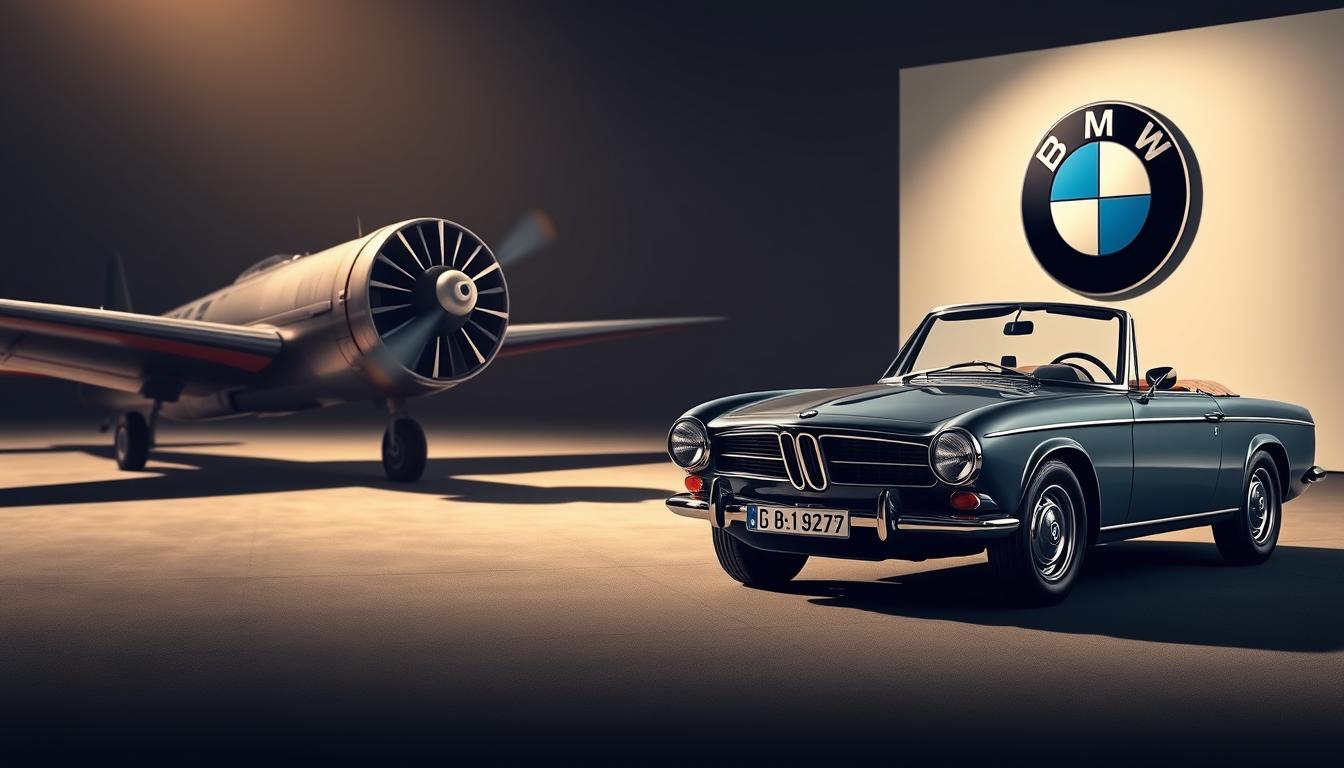
Did you know that BMW’s origins date back to 1916 when it was founded as an aircraft engine manufacturer? This little-known fact highlights the brand’s rich heritage and its evolution over the years.
From producing aircraft engines to becoming a renowned luxury car brand, BMW’s journey is a story of innovation and resilience. Initially known as Bayerische Motoren Werke, the company faced numerous challenges, including a shift in focus from aircraft engines to motorcycles and eventually to automobiles.
Today, BMW is recognized globally for its premium vehicles, embodying a perfect blend of performance, design, and technology. The company’s ability to adapt and innovate has been key to its success.
Key Takeaways
- BMW was originally founded in 1916 as an aircraft engine manufacturer.
- The company shifted its focus from aircraft engines to motorcycles and then to automobiles.
- BMW’s heritage is rooted in innovation and resilience.
- The brand is now globally recognized for its luxury vehicles.
- BMW’s success is attributed to its ability to adapt and innovate.
Introduction to BMW’s Origins
BMW’s origins date back to the early 20th century when it was known as Bayerische Flugzeugwerke, an aircraft engine manufacturer.
The company’s early years were marked by its focus on producing high-quality aircraft engines, a crucial component for the rapidly evolving aviation industry.
The Founding of Bayerische Flugzeugwerke
Bayerische Flugzeugwerke, or BFW, was established in 1916 in Munich, Germany. Initially, the company focused on manufacturing aircraft engines, playing a vital role in the war efforts during World War I.
- The company’s first product was an inline-six aircraft engine.
- BFW’s engines were known for their reliability and performance.
Transition to Automobiles
Following the end of World War I, BFW shifted its focus towards motorcycle manufacturing due to the restrictions imposed on aircraft production by the Treaty of Versailles.
In 1928, BFW acquired Fahrzeugfabrik Eisenach, a company that produced automobiles, marking BMW’s entry into the automobile industry.
The transition to automobile manufacturing was a strategic move that paved the way for BMW to become one of the leading luxury car brands globally.
Key milestones in this transition include the introduction of the BMW 3/15, one of the company’s first automobiles, and the development of the iconic BMW 328 sports car.
Early Innovations in Engine Technology
In the midst of World War I, BMW emerged as a key player in the production of aircraft engines, showcasing its engineering prowess. This period marked the beginning of BMW’s journey into engine technology, a journey that would see the company evolve significantly over the years.
Aircraft Engines in World War I
During World War I, BMW’s primary focus was on producing aircraft engines. The company’s innovative designs and commitment to quality quickly made its engines highly sought after. BMW’s aircraft engines played a crucial role in the war effort, demonstrating the company’s capabilities in engine manufacturing.
The experience and expertise gained during this period laid the foundation for BMW’s future innovations. The challenges of producing high-quality engines under the pressures of war drove the company to develop new technologies and manufacturing processes.
The Shift to Motorcycle Manufacturing
Following the end of World War I, BMW faced significant challenges, including the Treaty of Versailles, which imposed restrictions on the production of aircraft engines. In response, BMW shifted its focus to motorcycle manufacturing, producing its first motorcycle in 1923.
This transition marked a significant milestone in BMW’s evolution, as it allowed the company to leverage its engine technology expertise in a new and emerging market. The production of motorcycles not only helped BMW survive the post-war economic challenges but also paved the way for its future expansion into automobile manufacturing.
| Year | Event | Significance |
|---|---|---|
| 1914-1918 | Production of aircraft engines during World War I | Established BMW as a key player in engine manufacturing |
| 1923 | Production of the first BMW motorcycle | Marked BMW’s entry into motorcycle manufacturing |
The early innovations in engine technology set the stage for BMW’s future success, both in terms of its product offerings and its reputation as a manufacturer of high-quality engines. As BMW continued to evolve, its commitment to innovation and excellence remained a constant theme throughout its history.
The Birth of the BMW Automobile
The BMW automobile story began with a significant milestone, the launch of the BMW 3/15 in 1928. This marked BMW’s entry into the automobile market, a sector the company would soon dominate with its innovative designs and engineering prowess.
The introduction of the 3/15 was a crucial step for BMW, as it was the company’s first mass-produced car. The 3/15 was not just any car; it was a testament to BMW’s ability to adapt and innovate, transitioning from aircraft engines to automobiles.
Launch of the BMW 3/15
The BMW 3/15 was launched in 1928, representing a significant BMW milestone. It was BMW’s first mass-produced automobile, signaling the company’s official entry into the car manufacturing industry. The 3/15 was essentially a licensed version of the Austin 7, manufactured under license from Austin Motor Company. Despite its origins, the 3/15 quickly gained popularity for its reliability and performance.
The success of the 3/15 was pivotal for BMW, as it allowed the company to expand its manufacturing capabilities and explore new technologies. It was a crucial learning experience that laid the groundwork for future innovations.
The Role of the 328 Sports Car
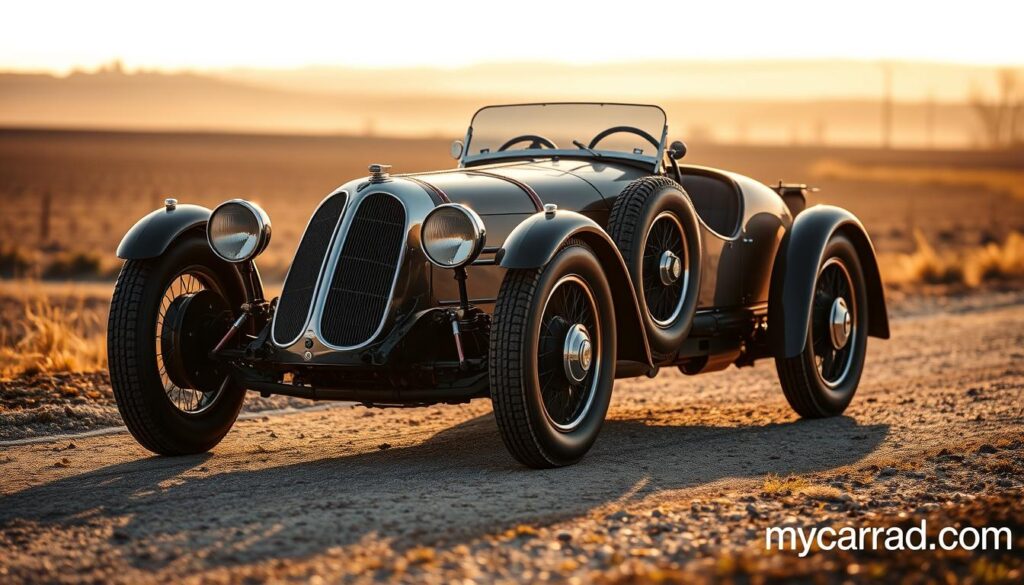
Years after the introduction of the 3/15, BMW continued to push the boundaries of automotive engineering with the launch of the 328 Sports Car in 1936. The 328 was a masterpiece of its time, known for its sleek design, agility, and impressive performance. It quickly became an icon in the automotive world, further solidifying BMW’s reputation as a manufacturer of high-quality sports cars.
The 328 Sports Car was not just a marvel of engineering; it was also a testament to BMW’s commitment to innovation and performance. Its success in various racing events, including the 24 Hours of Le Mans, underscored BMW’s capabilities in motorsports and contributed to its legacy as a builder of high-performance vehicles.
The impact of the 328 Sports Car extended beyond its racing achievements. It influenced the design and engineering of future BMW models, cementing the company’s position in the luxury sports car market. The 328 remains a celebrated model among BMW enthusiasts, symbolizing the brand’s heritage and its passion for performance.
The Impact of World War II
The onset of World War II marked a pivotal moment for BMW, as it began manufacturing aircraft engines and other military hardware. This shift in production was a response to the German war effort’s needs, significantly impacting the company’s role in the conflict.
Contributions to the War Effort
During World War II, BMW’s production was heavily focused on aircraft engines and military vehicles. The company’s aircraft engines were crucial for the German Luftwaffe, playing a significant role in the war. BMW also produced motorcycles and vehicles for military use, further contributing to the war effort.
The production of military equipment came at a significant cost. BMW’s factories were subjected to heavy bombing by the Allies, leading to substantial damage and disruption in production. This period was challenging for the company, testing its resilience and ability to adapt.
Post-War Challenges
In the aftermath of World War II, BMW faced numerous challenges. The company’s facilities were severely damaged, and it was forced to undergo denazification, a process that aimed to remove former Nazi Party members from positions of power. This process, along with the physical reconstruction of its factories, posed significant hurdles for BMW.
“The war had left BMW in a difficult position, with damaged factories and a need to redefine its purpose in a devastated economy.”
The table below summarizes the key challenges faced by BMW post-World War II:
| Challenge | Description | Impact |
|---|---|---|
| Factory Damage | Factories were heavily damaged during the war. | Significant investment was required for reconstruction. |
| Denazification | Removal of former Nazi Party members from power. | Led to changes in management and operational practices. |
| Economic Challenges | The post-war German economy was in shambles. | BMW had to navigate a difficult economic landscape. |
Despite these challenges, BMW began the process of rebuilding, eventually transitioning back to the production of motorcycles and automobiles. This period marked a significant turning point in BMW’s history, shaping its future and contributing to its legacy as a resilient and innovative automotive manufacturer.
Revival in the 1950s and 1960s
As the automotive landscape evolved in the 1950s and 1960s, BMW successfully revived its brand, introducing the BMW 700 and venturing into the U.S. market. This period was crucial for the company as it marked a significant turning point in its history.
Introduction of the BMW 700
The BMW 700, introduced in 1959, was a compact, lightweight coupe that became a symbol of BMW’s resurgence. Its innovative design and robust performance helped reestablish BMW’s reputation in the automotive world.
The BMW 700 was not just a car; it was a statement of BMW’s commitment to quality and innovation. As noted by automotive historians, “The BMW 700 was a critical model that helped BMW survive the post-war era and eventually thrive in the decades that followed.”
“The BMW 700 was a car that embodied the spirit of innovation and resilience that defined BMW’s approach to automotive manufacturing.”
Expansion into the U.S. Market
BMW’s expansion into the U.S. market in the 1960s was a strategic move that marked the beginning of its global presence. The company established a robust distribution network and introduced models that appealed to American consumers.
| Year | Model Introduced | Significance |
|---|---|---|
| 1959 | BMW 700 | Symbol of BMW’s resurgence |
| 1960s | Various Models | Expansion into the U.S. market |
As BMW continued to expand its operations, it faced new challenges but also seized opportunities for growth. The company’s commitment to innovation and quality remained at the forefront of its strategy.
The revival of BMW in the 1950s and 1960s laid the foundation for its future success, setting the stage for the company’s continued growth and innovation in the decades that followed.
Innovations in Performance and Design
The 1960s and 1970s were pivotal decades for BMW, marked by significant innovations that would shape the company’s future. This period saw the introduction of models that not only showcased BMW’s engineering capabilities but also redefined the brand’s identity in the automotive world.
The Introduction of the “New Class”
In 1962, BMW launched the “New Class” sedans, which were a significant departure from their previous models. These cars were designed to be more compact, efficient, and performance-oriented. The “New Class” models, particularly the 1500 and 1600, were instrumental in establishing BMW as a manufacturer of high-performance vehicles that were also practical for everyday use.
The “New Class” sedans were notable for their agile handling and robust engine performance. They featured a sleek design that appealed to a younger demographic, contributing to BMW’s growing popularity among driving enthusiasts.
The Birth of the iconic 3 Series
The success of the “New Class” laid the groundwork for the introduction of the 3 Series in 1975. The 3 Series was designed to be a more compact and sporty successor to the “New Class.” It quickly became an icon for BMW, known for its dynamic performance and agile handling. The 3 Series was a testament to BMW’s commitment to creating vehicles that were both exhilarating to drive and practical for daily use.
The first generation of the 3 Series set a new benchmark in the compact luxury segment, combining innovative design with advanced engineering. Its impact on the automotive market was significant, influencing the development of future BMW models and cementing the 3 Series as a cornerstone of the brand’s identity.
BMW and Motorsports: A Winning Legacy
The world of motorsports has been a crucial arena for BMW, where it has garnered numerous accolades and built a lasting legacy. With a history that spans decades, BMW’s involvement in racing has not only showcased its engineering capabilities but also significantly contributed to its brand identity.
Success in Touring Car Championships
BMW’s success in touring car championships is a testament to its commitment to performance and innovation. The company’s participation in various racing series has led to numerous victories, cementing its reputation as a manufacturer of high-performance vehicles. BMW’s touring car racing legacy is highlighted by its multiple championships won in prestigious series.
The Influence of the M Series
The introduction of the M Series in the 1970s marked a significant milestone in BMW’s history, further establishing the brand’s credentials in the performance car segment. The M Series, known for its enhanced performance and distinctive design, has had a profound influence on BMW’s product lineup and brand image. The M Series embodies the spirit of BMW’s motorsports heritage, bringing the excitement of racing to the road.
Through its motorsports activities, BMW has not only achieved success on the track but has also driven innovation that has benefited its production cars. The technology and expertise developed through racing have been transferred to its consumer vehicles, enhancing their performance and appeal.
The Global Expansion of BMW
With a rich history rooted in Germany, BMW began to explore international opportunities, marking a significant phase in its global expansion. This strategic move enabled the company to increase its production capacity, diversify its market presence, and cater to a broader customer base.
Establishment of International Factories
BMW’s decision to establish international factories was a crucial step in its global expansion strategy. By setting up manufacturing plants in various countries, BMW was able to reduce production costs, minimize logistical challenges, and better serve local markets.
Some of the key locations for BMW’s international factories include:
- The United States, where BMW established its first non-European plant in Spartanburg, South Carolina.
- China, where BMW has partnered with local companies to set up manufacturing facilities.
- South Africa, where BMW has a significant presence with its manufacturing plant in Rosslyn.
| Location | Year Established | Significance |
|---|---|---|
| Spartanburg, USA | 1994 | First BMW plant outside Europe |
| China | 2003 | Partnership with local companies for local production |
| Rosslyn, South Africa | 1965 | Significant presence in the African market |
Partnerships and Collaborations
Alongside establishing international factories, BMW has also engaged in various partnerships and collaborations to further its global reach. These alliances have enabled BMW to leverage local expertise, enhance its product offerings, and stay competitive in a rapidly evolving automotive landscape.
Notable partnerships include:
- Collaboration with Toyota: BMW and Toyota have worked together on various projects, including the development of electric vehicle technology.
- Partnership with Intel and Mobileye: BMW has partnered with Intel and Mobileye to develop autonomous driving technology.
Through these strategic initiatives, BMW has successfully expanded its global footprint, enhanced its competitiveness, and positioned itself for continued growth in the international market.
BMW’s Commitment to Sustainability
With a rich history dating back to its founding, BMW continues to evolve, placing a significant emphasis on sustainable practices. As the automotive industry moves towards a greener future, BMW is at the forefront, driving innovation in electric vehicles and eco-friendly manufacturing.
Electric Vehicle Development
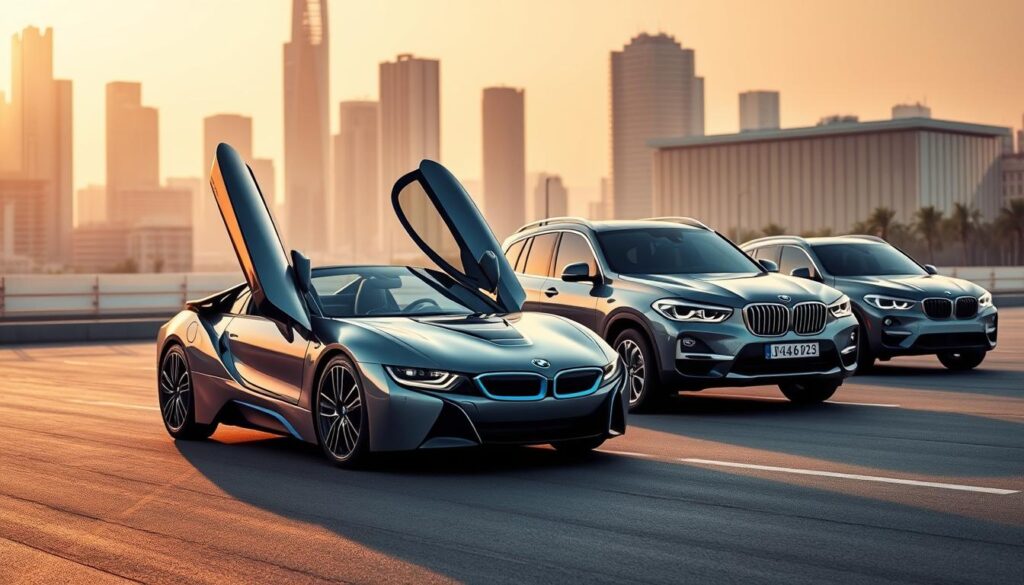
BMW’s commitment to electric vehicles is evident in its expanding range of electric and hybrid models. The company’s i3 and iX3 models are leading the charge, offering consumers sustainable mobility solutions without compromising on performance or design.
The development of electric vehicles is a key component of BMW’s sustainability strategy. By investing heavily in research and development, BMW is able to stay ahead of the curve, incorporating cutting-edge technology into its electric vehicles.
Eco-Friendly Manufacturing Initiatives
BMW’s sustainability efforts extend beyond its products to its manufacturing processes. The company has implemented various initiatives aimed at reducing its environmental footprint, including the use of renewable energy sources and waste reduction programs.
One notable example is BMW’s use of renewable energy in its manufacturing facilities. By switching to renewable energy sources, BMW is able to significantly reduce its carbon emissions, contributing to a more sustainable future.
| Initiative | Description | Impact |
|---|---|---|
| Renewable Energy | Use of solar and wind power in manufacturing facilities | Reduced carbon emissions by 30% |
| Waste Reduction | Implementation of recycling programs and waste minimization strategies | Reduced waste by 25% |
| Efficient Production | Optimization of production processes to minimize energy consumption | Improved energy efficiency by 20% |
BMW’s commitment to sustainability is a testament to its forward-thinking approach. By focusing on electric vehicles and eco-friendly manufacturing, BMW is not only reducing its environmental impact but also setting a new standard for the automotive industry.
Iconic Models and Their Cultural Impact
From the luxurious 7 Series to the versatile X Series, BMW’s iconic models have redefined the automotive landscape. These vehicles have not only showcased BMW’s commitment to innovation and performance but have also had a significant cultural impact.
The 7 Series: A Flagship Luxury Sedan
The BMW 7 Series has long been the epitome of luxury sedans, embodying the perfect blend of comfort, technology, and performance. Since its introduction, it has set standards in the automotive industry for interior luxury and advanced features.
- Luxury Features: The 7 Series is renowned for its opulent interior, complete with premium materials and cutting-edge technology.
- Innovative Technology: It has been at the forefront of introducing innovative features such as advanced driver assistance systems and gesture control.
The Influence of the X Series on the SUV Market
The BMW X Series has revolutionized the SUV market with its dynamic design, versatile capabilities, and performance. It has become a benchmark for SUVs, influencing consumer expectations and driving trends in the automotive industry.
- The X Series has expanded the SUV market with its range of models, from the compact X1 to the luxurious X7, catering to diverse consumer needs.
- Its impact on the market has been significant, driving competitors to innovate and improve their SUV offerings.
BMW’s iconic models, including the 7 Series and X Series, have not only contributed to the company’s success but have also played a crucial role in shaping the automotive industry’s direction. As BMW continues on its timeline, these models remain pivotal in its legacy.
The Future of BMW
BMW’s commitment to innovation is evident in its ongoing developments in autonomous driving and smart car technology. The company’s BMW milestones include a strong focus on electric vehicles and eco-friendly manufacturing processes, solidifying its position at the forefront of the industry.
Advancements in Autonomous Driving
As BMW continues to push the boundaries of automotive technology, its legacy is being shaped by the integration of cutting-edge innovations. With a strong foundation in its history and a clear vision for the future, BMW is set to remain a leader in the luxury car market, further enhancing its BMW legacy.
FAQ
When was BMW founded?
What was BMW’s first product?
When did BMW start producing automobiles?
What is the significance of the BMW 328 sports car?
How did World War II impact BMW?
What was the significance of the BMW 700?
What is the “New Class” in BMW’s history?
What is the significance of the BMW 3 Series?
What is BMW’s commitment to sustainability?
What are some of BMW’s iconic models?