

Did you know that Perodua is the most popular automotive brand in Malaysia, with a market share of over 30%? This remarkable achievement is a testament to the brand’s commitment to innovation, quality, and customer satisfaction.
Since its inception, Perodua has come a long way, establishing itself as a leader in the Malaysian automotive industry. With strategic partnerships and a focus on producing high-quality vehicles, Perodua has built a loyal customer base.
The brand’s success story is a fascinating tale of perseverance, innovation, and adaptability.
Key Takeaways
- Perodua is Malaysia’s most popular automotive brand.
- The brand has a market share of over 30%.
- Perodua’s success is attributed to its commitment to innovation and quality.
- Strategic partnerships have played a crucial role in the brand’s growth.
- Perodua has built a loyal customer base in Malaysia.
Origins of Perodua: The Beginning of a Legacy
The origins of Perodua are rooted in a collaborative effort between Malaysian entrepreneurs and Japanese automotive expertise. This partnership was instrumental in shaping the brand’s early years and laying the foundation for its future success.
The Founding Team Behind Perodua
Perodua was founded by a team of visionary entrepreneurs who recognized the potential for a Malaysian automotive brand to compete with international names. The team brought together expertise from various fields, including automotive manufacturing, marketing, and distribution. Their collective experience and knowledge played a crucial role in navigating the challenges of establishing a new automotive brand.
The founding team’s commitment to producing high-quality vehicles that met the needs of Malaysian consumers was evident in their strategic decisions. They focused on creating a brand that was not only competitive but also resonated with local car buyers.
Initial Goals and Vision for the Brand
Perodua’s initial goals were centered around producing affordable and reliable vehicles that catered to the growing demand in the Malaysian market. The brand’s vision was to become a leading automotive manufacturer in Malaysia, known for its quality and customer satisfaction. To achieve this, Perodua focused on leveraging the expertise of its partners and investing in modern manufacturing techniques.
The brand’s early success was a testament to the effectiveness of its strategy. By understanding the local market and adapting to consumer needs, Perodua was able to establish a strong presence in Malaysia.
Partnership with Daihatsu
A key factor in Perodua’s success was its partnership with Daihatsu, a Japanese automaker renowned for its compact vehicles. This collaboration enabled Perodua to access advanced technology and manufacturing expertise, which were crucial in producing competitive vehicles. The partnership also facilitated the transfer of knowledge and skills, enhancing Perodua’s capabilities as a manufacturer.
The synergy between Perodua and Daihatsu was evident in the quality and reliability of the vehicles produced. This partnership played a significant role in shaping Perodua’s identity and contributed to its evolution as a reputable automotive brand.
The Launch of Perodua’s First Model: Kancil
The Kancil, Perodua’s debut model, played a crucial role in establishing the brand in Malaysia. Launched with the aim of providing an affordable and efficient vehicle, the Kancil quickly gained popularity among Malaysian consumers.
Key Features
The Perodua Kancil was notable for its compact design, fuel efficiency, and affordability. It was powered by a 660cc engine, making it an ideal choice for city driving. The Kancil’s compact size and agile handling made it easy to maneuver through crowded streets, appealing to first-time car buyers.
Market Reception
The Kancil was well-received in the Malaysian market due to its affordability and low maintenance costs. It became a favorite among budget-conscious buyers, contributing significantly to Perodua’s early success. The model’s popularity can be attributed to its competitive pricing and low operating costs, making it an attractive option for many.
Impact on Cost of Ownership
The launch of the Kancil had a significant impact on the cost of ownership for Malaysian consumers. Its fuel efficiency and low maintenance requirements reduced the overall cost of owning a vehicle, making car ownership more accessible to a wider audience. As a result, the Kancil played a pivotal role in Perodua’s Perodua Milestones, marking a successful entry into the automotive market.
In conclusion, the Perodua Kancil was more than just Perodua’s first model; it was a game-changer in the Malaysian automotive industry. Its success paved the way for future models and contributed to Perodua’s position in the Perodua Timeline as a leading automotive brand.
Growth and Expansion: The1990s Boom
The 1990s were a transformative period for Perodua, marked by increased production, innovative marketing strategies, and the introduction of new models. This decade was crucial in shaping the company’s future and cementing its position in the Malaysian automotive market.
Enhanced Manufacturing Capabilities
Perodua significantly enhanced its production capabilities during the 1990s. This involved investing in modern manufacturing technologies and expanding its production facilities. The move not only increased the company’s output but also improved the quality and reliability of its vehicles.
By adopting advanced manufacturing techniques, Perodua was able to reduce production costs and pass the savings on to consumers, making its vehicles more competitive in the market.
Strategic Market Penetration
Perodua implemented effective market penetration strategies during the 1990s. The company focused on building a strong distribution network and improving its after-sales service. This strategic approach helped Perodua to expand its customer base and increase its market share.
“Perodua’s commitment to quality and customer satisfaction has been a key factor in its success.” – Industry Analyst
Introduction of New Models
The introduction of new models was a significant aspect of Perodua’s growth strategy in the 1990s. The company launched several models that catered to different segments of the market, including compact cars and multi-purpose vehicles.
| Model | Year Introduced | Key Features |
|---|---|---|
| Kembara | 1998 | First Malaysian SUV, 1.3L engine |
| Rusa | 1996 | Compact van, versatile interior |
These new models not only attracted new customers but also helped to retain existing ones, contributing to Perodua’s overall growth and success during the decade.
Technological Innovations and Development
As a pioneer in Malaysia’s automotive industry, Perodua has consistently embraced technological innovations to stay ahead of the competition and meet the evolving needs of its customers.

Adoption of Advanced Manufacturing Techniques
Perodua has invested heavily in adopting advanced manufacturing techniques, including automation and robotics, to enhance production efficiency and quality. This has enabled the company to produce vehicles that meet international standards while maintaining competitive pricing.
The use of advanced manufacturing technologies has also allowed Perodua to reduce its environmental footprint by minimizing waste and optimizing energy consumption.
Key advancements include:
- Implementation of robotic assembly lines
- Use of automated welding and painting systems
- Adoption of lean manufacturing principles
Collaborations with Other Automakers
Perodua has collaborated with other automakers, notably Daihatsu, to leverage their technological expertise and stay updated on the latest industry trends. These collaborations have facilitated the transfer of knowledge and technology, enabling Perodua to improve its products and manufacturing processes.
Such partnerships have been instrumental in helping Perodua to introduce new models and features that cater to the changing preferences of Malaysian consumers.
Eco-Friendly Initiatives
In line with its commitment to sustainability, Perodua has implemented various eco-friendly initiatives aimed at reducing its environmental impact. These include efforts to minimize waste, reduce energy consumption, and promote recycling.
Perodua’s eco-friendly initiatives not only contribute to a more sustainable automotive industry but also enhance its brand reputation as a responsible corporate citizen.
Some of the eco-friendly measures adopted by Perodua include:
- Installation of solar panels at its manufacturing facilities
- Implementation of a recycling program for waste materials
- Development of more fuel-efficient vehicles
Perodua’s Popular Models Through the Years
With a history spanning several decades, Perodua has established itself as a reliable brand with a range of popular models that have captured the Malaysian market.
Perodua’s success can be attributed to its strategic introduction of models that cater to different segments of the market. Let’s take a closer look at some of the most popular models that have contributed to Perodua’s success.
The Myvi: A Game Changer in the Market
The Myvi has been one of Perodua’s most successful models, known for its stylish design and advanced features. Launched in 2005, the Myvi quickly gained popularity due to its competitive pricing and robust performance.
The Myvi’s impact on the market was significant, as it set a new benchmark for compact cars in Malaysia. Its success can be seen in its sales figures, which consistently ranked high in its category.
The Axia: Affordable and Practical
Introduced in 2014, the Axia was designed to be an affordable and practical vehicle for the masses. Its compact size and fuel efficiency made it an instant hit among first-time car buyers.
The Axia’s popularity can be attributed to its low maintenance costs and ease of handling, making it a favorite among urban dwellers.
The Alza: Versatile Family Vehicle
The Alza, launched in 2009, is another model that has contributed significantly to Perodua’s success. As a multi-purpose vehicle (MPV), the Alza is known for its spacious interior and versatility, making it ideal for families.
Its ability to accommodate large families comfortably, combined with its safety features, has made the Alza a popular choice among Malaysian families.
| Model | Launch Year | Key Features |
|---|---|---|
| Myvi | 2005 | Stylish design, advanced features |
| Axia | 2014 | Affordable, practical, fuel-efficient |
| Alza | 2009 | Spacious interior, versatile, safety features |
In conclusion, Perodua’s popular models have played a crucial role in the brand’s success. By understanding the needs of the Malaysian market and delivering models that meet those needs, Perodua has established itself as a leader in the automotive industry.
Marketing Strategies that Made Perodua a Household Name
With a keen understanding of its target audience, Perodua has employed a range of marketing strategies that have resonated with Malaysian consumers. The brand’s ability to connect with its customers through various channels has been instrumental in its success.
Engaging Advertising Campaigns
Perodua has consistently invested in engaging advertising campaigns that capture the attention of its target audience. By leveraging a mix of traditional and digital media, Perodua has managed to create a strong brand presence. For instance, the brand’s use of memorable slogans and catchy jingles has contributed to its brand recall.
Community Involvement and CSR Efforts
Perodua’s commitment to community involvement and Corporate Social Responsibility (CSR) efforts has also played a significant role in its marketing strategy. By supporting local initiatives and charitable causes, Perodua has fostered a positive brand image. This approach has not only enhanced the brand’s reputation but also contributed to its social responsibility credentials.
| Year | CSR Initiative | Impact |
|---|---|---|
| 2018 | Environmental Cleanup Drive | Improved community engagement |
| 2020 | Education Scholarship Program | Supported underprivileged students |
| 2022 | Health Awareness Campaign | Promoted health and wellness |
Building Brand Loyalty Through Customer Service
Perodua has also focused on building brand loyalty through exceptional customer service. By providing a seamless ownership experience, from sales to after-sales support, Perodua has managed to retain customers and encourage repeat business. The brand’s commitment to customer satisfaction has been a key factor in its success.
Challenges Faced Over the Years
Despite its success, Perodua has faced several significant challenges that have impacted its growth and operations. The brand’s ability to navigate these challenges has been crucial to its continued dominance in the Malaysian automotive market.
Economic Downturns and Market Fluctuations
Perodua has had to contend with various economic downturns and market fluctuations over the years. These challenges have required the company to be agile and responsive to changing market conditions.
Economic Challenges Faced by Perodua
| Challenge | Impact | Response |
|---|---|---|
| Economic Downturns | Reduced Consumer Spending | Cost Optimization, Promotional Campaigns |
| Market Fluctuations | Changes in Demand Patterns | Flexible Production Planning, Market Research |
Competition from International Brands
The Malaysian automotive market has become increasingly competitive with the entry of international brands. Perodua has had to differentiate its products and services to maintain its market share.
Competitive Strategies Adopted by Perodua
- Enhanced Product Quality
- Innovative Marketing Campaigns
- Strong Dealer Network
Addressing Quality Control Issues
Perodua has also faced quality control issues that have required immediate attention and rectification. The company has implemented various measures to ensure that its vehicles meet high standards of quality and reliability.
By addressing these challenges effectively, Perodua has been able to maintain its position as a leading automotive brand in Malaysia. The company’s proactive approach to managing challenges has been key to its success.
The Role of Perodua in Malaysia’s Automotive Industry
Perodua’s impact on Malaysia’s automotive industry is multifaceted, ranging from employment opportunities to influencing national policies. As a cornerstone of the industry, Perodua has contributed significantly to the country’s economic development.
Contribution to Local Employment
Perodua has been a significant source of employment in Malaysia, providing jobs not only within its manufacturing facilities but also through its extensive network of suppliers and dealerships. The company’s presence has boosted local economies, contributing to the overall well-being of communities across the country.
Job Creation: Perodua’s operations have led to the creation of thousands of jobs, both directly and indirectly. This includes employment opportunities in manufacturing, sales, and after-sales services.
Influence on National Policies
Perodua’s influence extends to shaping national automotive policies. The company’s growth and success have prompted the government to implement policies that support the local automotive industry, including incentives for manufacturers and investments in infrastructure.
Policy Impact: Perodua’s role in the industry has been a driving force behind policy decisions aimed at promoting local automotive manufacturing and reducing dependency on imported vehicles.
Support of Local Suppliers
Perodua has been instrumental in supporting local suppliers, fostering a robust ecosystem within the automotive industry. By partnering with local businesses, Perodua has helped to stimulate economic growth and develop the capabilities of Malaysian suppliers.
Local Sourcing: Perodua’s commitment to sourcing components locally has not only reduced costs but also enhanced the competitiveness of the local automotive industry.
Perodua in the Global Market
Perodua’s global ambitions are driven by its mission to provide affordable, high-quality vehicles that meet the needs of customers worldwide. As the brand continues to expand its presence beyond Malaysia, it is leveraging its strengths in innovation, quality, and customer satisfaction to establish a strong foothold in international markets.
Expansion to International Markets
Perodua’s journey into the global market is characterized by a strategic approach to expansion. The company has identified key regions where its vehicles can compete effectively, based on market research and analysis of consumer preferences. By focusing on markets with similar needs and preferences to Malaysia, Perodua is able to tailor its offerings to meet local demands while maintaining its global standards.
Strategic market selection has been crucial in Perodua’s international expansion. The brand has entered markets where there is a demand for its specific models, such as the Myvi and Axia, which have been well-received in Malaysia. This targeted approach allows Perodua to maximize its market penetration efforts.
Export Strategies and Partnerships
To facilitate its entry into international markets, Perodua has developed robust export strategies and formed significant partnerships with local distributors and automotive industry players. These partnerships enable Perodua to navigate the complexities of foreign markets, including regulatory compliance and distribution networks.
“Perodua’s commitment to quality and customer satisfaction has been instrumental in its successful expansion into new markets.”
By collaborating with established local partners, Perodua can leverage their expertise and infrastructure to support its growth in these markets. This collaborative approach has been key to Perodua’s ability to quickly establish a presence in new regions.
Brand Reception Outside Malaysia
The reception of Perodua’s brand and vehicles outside Malaysia has been overwhelmingly positive. Customers in international markets have praised the brand for its value for money, reliability, and innovative features. Perodua’s focus on producing high-quality vehicles that meet global safety and environmental standards has contributed to its favorable reputation.
- Positive brand recognition due to quality and reliability
- Effective marketing strategies tailored to local preferences
- Strong partnerships with local automotive industry players
As Perodua continues to expand its global footprint, it remains committed to its core values of quality, innovation, and customer satisfaction. By doing so, the brand is poised to become a significant player in the global automotive industry.
The Future of Perodua: Vision2025 and Beyond
As Perodua looks to the future, its Vision 2025 initiative is set to revolutionize the automotive landscape. This comprehensive plan is designed to propel Perodua forward, embracing innovation, sustainability, and customer satisfaction.
Perodua’s commitment to innovation is reflected in its plans for electric vehicles (EVs). The brand aims to lead the charge in the Malaysian automotive industry by introducing eco-friendly models that cater to the growing demand for sustainable transportation.
Plans for Electric Vehicles
Perodua’s strategy for EVs involves significant investment in research and development. By collaborating with technology partners, the brand aims to create affordable and reliable electric vehicles that meet the needs of Malaysian consumers.
The introduction of EVs is expected to not only reduce carbon emissions but also provide customers with a cost-effective alternative to traditional fuel-powered vehicles.
Innovations in Smart Technology
In addition to electric vehicles, Perodua is also focusing on integrating smart technology into its models. This includes advanced safety features, infotainment systems, and connectivity options that enhance the driving experience.
By incorporating smart technology, Perodua aims to provide a more personalized and enjoyable driving experience, setting a new standard in the automotive industry.
Sustainable Manufacturing Goals
Perodua’s Vision 2025 also emphasizes sustainable manufacturing practices. The brand is committed to reducing its environmental footprint by implementing eco-friendly production processes and reducing waste.
Through its sustainable manufacturing goals, Perodua aims to not only minimize its impact on the environment but also promote a culture of sustainability within the industry.
| Initiative | Description | Expected Outcome |
|---|---|---|
| Electric Vehicles | Introduction of eco-friendly models | Reduced carbon emissions |
| Smart Technology | Integration of advanced safety and infotainment systems | Enhanced driving experience |
| Sustainable Manufacturing | Eco-friendly production processes | Minimized environmental impact |
Customer-Centric Approach: Understanding User Needs
Perodua’s customer-centric approach is a key factor in its enduring success, reflecting a broader strategy to align its products with customer preferences. This approach has enabled the company to establish a strong connection with its customers, driving loyalty and satisfaction.
Research and Development Efforts
Perodua’s commitment to research and development is a critical component of its customer-centric strategy. By investing in R&D, the company is able to stay abreast of changing consumer needs and technological advancements. This enables Perodua to develop vehicles that are not only appealing to its target audience but also meet the evolving demands of the market.
Innovative technologies adopted by Perodua include advanced safety features and eco-friendly solutions, which have become increasingly important to consumers. The company’s collaboration with international partners has also facilitated the transfer of knowledge and expertise, further enhancing its R&D capabilities.
Proactive Customer Feedback Systems
Perodua has implemented proactive customer feedback systems to ensure that it remains attuned to customer needs. By actively seeking feedback, the company is able to identify areas for improvement and make informed decisions about its products and services.
“Listening to our customers is crucial in helping us understand their needs and preferences. It enables us to make necessary adjustments to our products and services, ultimately enhancing customer satisfaction.” – Perodua spokesperson
This feedback loop has been instrumental in driving continuous improvement across the organization, from product design to after-sales service.
Tailoring Vehicles to Local Preferences
Understanding local preferences is vital in the automotive industry, and Perodua has demonstrated a keen ability to tailor its vehicles to the Malaysian market. By incorporating features that resonate with local consumers, such as spacious interiors and fuel-efficient engines, Perodua has been able to establish a strong presence in the region.
| Model | Key Features | Customer Appeal |
|---|---|---|
| Myvi | Compact design, fuel efficiency | High demand among young drivers |
| Axia | Affordable pricing, low maintenance costs | Popular among first-time car buyers |
| Alza | Spacious interior, versatile seating arrangements | Favored by families |
By focusing on customer needs and preferences, Perodua has been able to develop a diverse portfolio of vehicles that cater to different segments of the market. This customer-centric approach has been a driving force behind the company’s success and continues to shape its future strategies.
Celebrating Milestones and Achievements
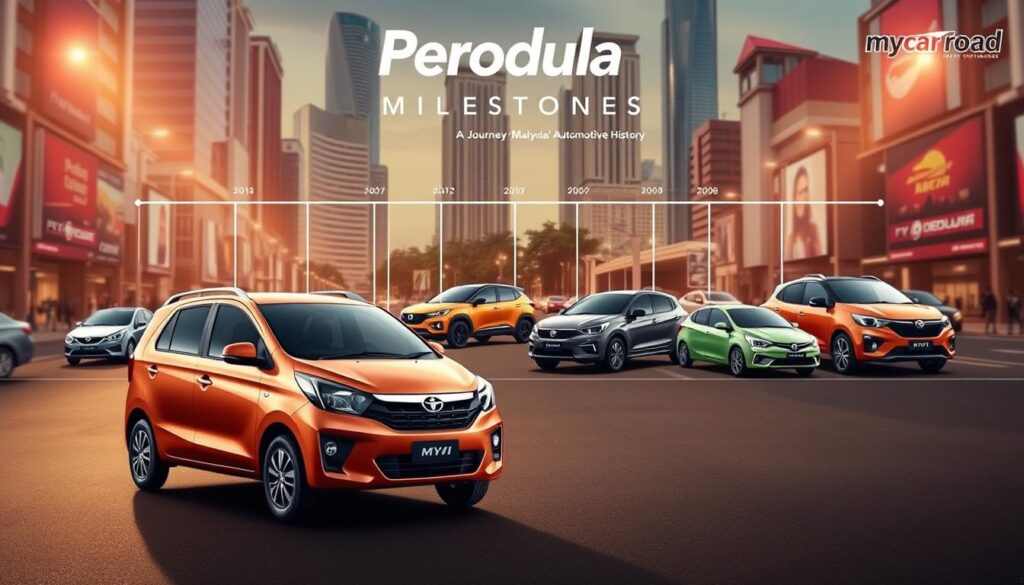
Perodua has come a long way since its inception, marking numerous milestones that have cemented its position in the automotive industry. The brand’s journey, as seen in its Perodua Timeline, is a testament to its dedication to quality and innovation.
Awards and Recognitions
Throughout its history, Perodua has received several notable awards, reinforcing its commitment to excellence. The story of Perodua’s founder and its historical overview highlight the brand’s perseverance and strategic growth.
Community and Cultural Impact
Perodua has been involved in various community events, fostering a strong connection with its customers. The brand’s influence extends beyond the automotive sector, contributing significantly to Malaysian culture.
Legacy and Future Prospects
As Perodua continues to evolve, its legacy remains an integral part of its identity. The brand’s historical overview provides valuable insights into its achievements and future aspirations, ensuring its continued relevance in the industry.
FAQ
When was Perodua founded?
What was Perodua’s first car model?
Who is Perodua’s main technology partner?
What are some of Perodua’s most popular models?
Has Perodua expanded to international markets?
What is Perodua’s vision for the future?
How has Perodua contributed to the Malaysian economy?
What is Perodua’s approach to customer satisfaction?
What are some of Perodua’s notable achievements?
What is the history of Perodua’s company background?
What are some key milestones in Perodua’s timeline?
How has Perodua evolved over the years?