




Honda Australia has raised concerns over ANCAP’s crash-test rating system, saying it confuses consumers by using date-stamped scores that aren’t directly comparable. Here’s why this matters for car buyers.
Car buyers often rely on ANCAP’s five-star safety ratings when choosing their next vehicle. But according to Honda Australia, the system may not be giving consumers the full picture.
Honda argues that ANCAP’s date-stamped star ratings, while designed to reflect evolving safety standards, often leave customers unable to compare vehicles fairly. The result? A five-star car from 2013 is not equivalent to a five-star car from 2024 — yet many buyers don’t realise the difference.
This has reignited debate on whether ANCAP’s current approach is still serving its core purpose: to help Australians make clear, informed choices about car safety.
The Challenge With ANCAP’s Star Ratings
ANCAP (Australasian New Car Assessment Program) provides a safety score out of five stars. Ratings are based on:
- Crash performance in physical tests
- Driver assistance technologies (like AEB and lane-keep assist)
- Pedestrian and child occupant safety
To keep pace with technology, criteria are updated every three years. Each vehicle’s rating is also “date-stamped” and expires after six years.
👉 Here’s the problem:
- A five-star rating from 2016 was judged under less stringent standards than a five-star rating from 2023.
- Consumers, who may only buy a new car once every 8–10 years, often miss these nuances.
- Cars tested in different years can’t be compared directly, but ANCAP’s star system doesn’t make this clear enough.
Honda Australia CEO Jay Joseph summed it up:
“If the consumer cannot decipher the role that testing dates play in the number of stars, then I’m not convinced it is serving consumers with a fair comparison of performance.”
Real-World Examples of Confusion
The Hyundai Palisade case in 2022 highlighted these inconsistencies:
- The pre-facelift Palisade scored four stars because it lacked certain advanced driver aids.
- The updated Palisade, launched just months later, scored five stars.
- Meanwhile, the Toyota Prado still carries a five-star rating from 2013 — under outdated standards.
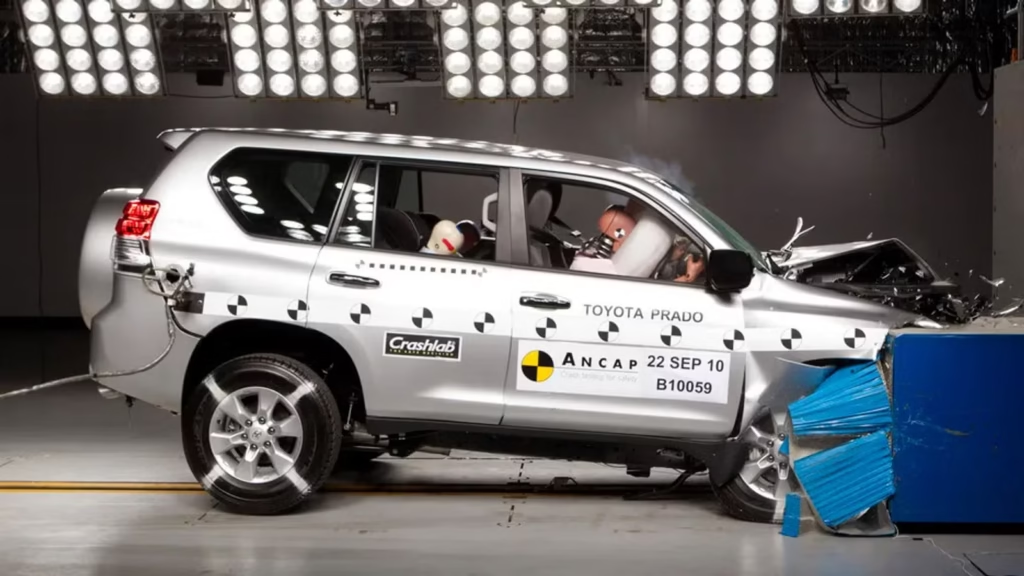
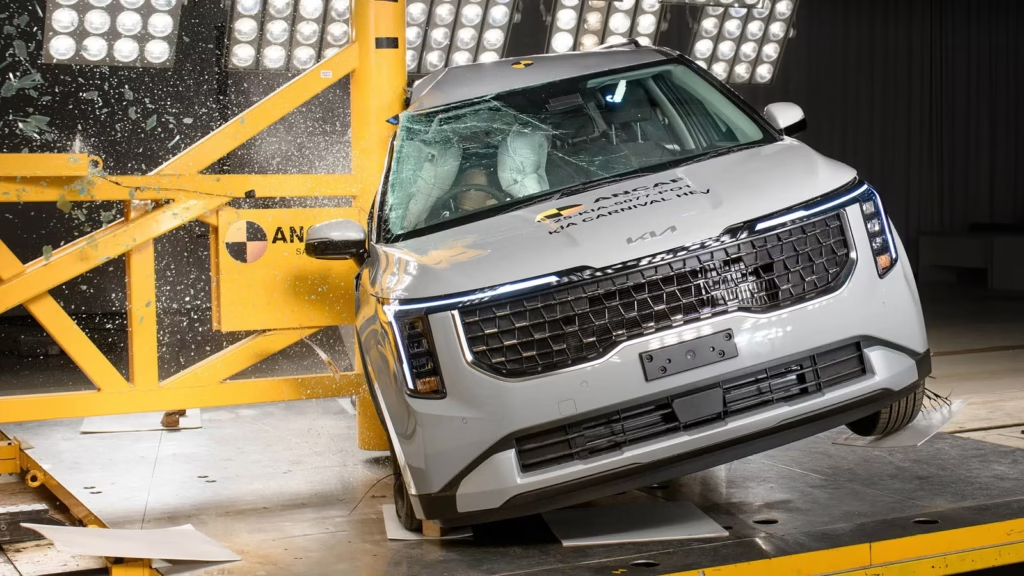
More recently, the 2024 Kia Carnival Hybrid received a five-star score, but based on 2021 testing criteria. Under current 2024 rules, it would only achieve four stars.
Honda itself has seen complications:
- The Civic Hybrid scored five stars, but the discontinued non-hybrid Civic only scored four due to fewer safety features.
- The CR-V and ZR-V sold in Australia earned four stars, while their Euro NCAP counterparts scored five because of optional safety upgrades not available in Australia.
Honda’s Safety Philosophy
Despite these inconsistencies, Honda says it prioritises a holistic approach to safety in all its models. This includes:
- Strong crash structures that sacrifice themselves to protect occupants.
- Occupant restraint systems (airbags, seatbelt pretensioners).
- Omnidirectional safety – considering impacts from every angle.
- Advanced crash avoidance tech to prevent accidents in the first place.
Joseph stressed that Honda’s ultimate goal is zero fatalities, a vision aligned with ANCAP’s mission — but he urged ANCAP to ensure “fair and equitable” comparisons for consumers.
Why This Debate Matters for Buyers
For everyday Australians shopping for a car:
- Not all five-star cars are equal. A decade-old five-star model may not meet today’s standards.
- Check the test year. ANCAP shows the date on its rating, but many skip past it.
- Look beyond the stars. Read the detailed score breakdowns (adult occupant, child occupant, safety assist, pedestrian safety).
As Australia heads toward higher EV adoption and stricter safety standards, this debate is critical. Transparency in safety messaging will help buyers choose not just the “safest car” on paper, but the one that truly protects them under modern conditions.
Conclusion
Honda’s criticism of ANCAP highlights a fundamental challenge: balancing evolving safety benchmarks with consumer clarity. While ANCAP has undoubtedly raised safety standards across the industry, the current system risks confusing buyers who may not understand that five stars doesn’t always mean the same thing across different years.
For now, experts urge consumers to pay close attention to the date stamp on ANCAP ratings and to compare models tested under the same criteria. As Honda points out, if the goal is to help drivers make the safest choice possible, ANCAP may need to rethink how it communicates its results.