





Restoring foggy headlights is crucial for both safety and the overall appearance of your vehicle. Over time, headlights can become cloudy or yellowed due to exposure to the elements, reducing their effectiveness.
Fortunately, you don’t need to visit a mechanic to fix this issue. With a few simple tools and some patience, you can restore your headlights at home. This guide will walk you through the DIY headlight restoration process, making it easy to achieve professional-looking results without the professional price tag.
By following this comprehensive guide on headlight restoration at home, you’ll not only improve your vehicle’s safety but also its overall aesthetic appeal.
Key Takeaways
- Restoring foggy headlights improves vehicle safety.
- A DIY approach can save money and be effective.
- The restoration process is straightforward and achievable at home.
- Regular maintenance can prevent headlights from becoming foggy.
- Clear headlights enhance your vehicle’s appearance.
Understanding the Importance of Clear Headlights
The importance of clear headlights cannot be overstated, as they directly impact your ability to drive safely at night or in low-visibility conditions. Clear headlights are fundamental to ensuring you can see the road ahead and be seen by other drivers, pedestrians, and cyclists.
Why Headlight Clarity Matters for Safety
Clear headlights are crucial for safety as they provide the necessary illumination to navigate through dark or hazardous environments. Foggy or yellowed headlights can significantly reduce the light output, making it difficult to spot obstacles, pedestrians, or other vehicles on the road. According to safety experts, “Dim or foggy headlights can increase the risk of nighttime accidents by reducing visibility.” This is particularly concerning on unlit roads or during adverse weather conditions.
Moreover, clear headlights help in reducing glare from oncoming traffic and improve the overall visibility of your vehicle to others, thereby reducing the risk of collisions.
The Impact on Your Vehicle’s Appearance
Clear headlights not only enhance safety but also contribute to the overall appearance of your vehicle. Foggy or discolored headlights can make your car look older and neglected, potentially affecting its resale value. On the other hand, well-maintained headlights can enhance the vehicle’s aesthetic appeal, giving it a newer and more cared-for appearance.
Restoring your headlights can be a simple yet effective way to improve your vehicle’s look, making it more attractive to potential buyers if you decide to sell.
Legal Implications of Dim Headlights
Driving with foggy or dim headlights can also have legal implications. In many jurisdictions, vehicles with headlights that do not meet certain standards can be considered not roadworthy, potentially leading to fines or failure in vehicle inspections.
“Vehicles must be maintained in a condition that does not pose a risk to the safety of the driver or other road users,” as stated in many vehicle codes. Ensuring your headlights are clear and functioning properly is not just a matter of safety but also of legal compliance.
By maintaining clear headlights, you not only ensure your safety on the road but also avoid potential legal issues associated with poorly maintained vehicles.
Common Causes of Foggy Headlights
Understanding why headlights become foggy is crucial for maintaining vehicle safety and appearance. Foggy headlights are not just a cosmetic issue; they can significantly impair your ability to see and be seen on the road.
Oxidation and UV Damage
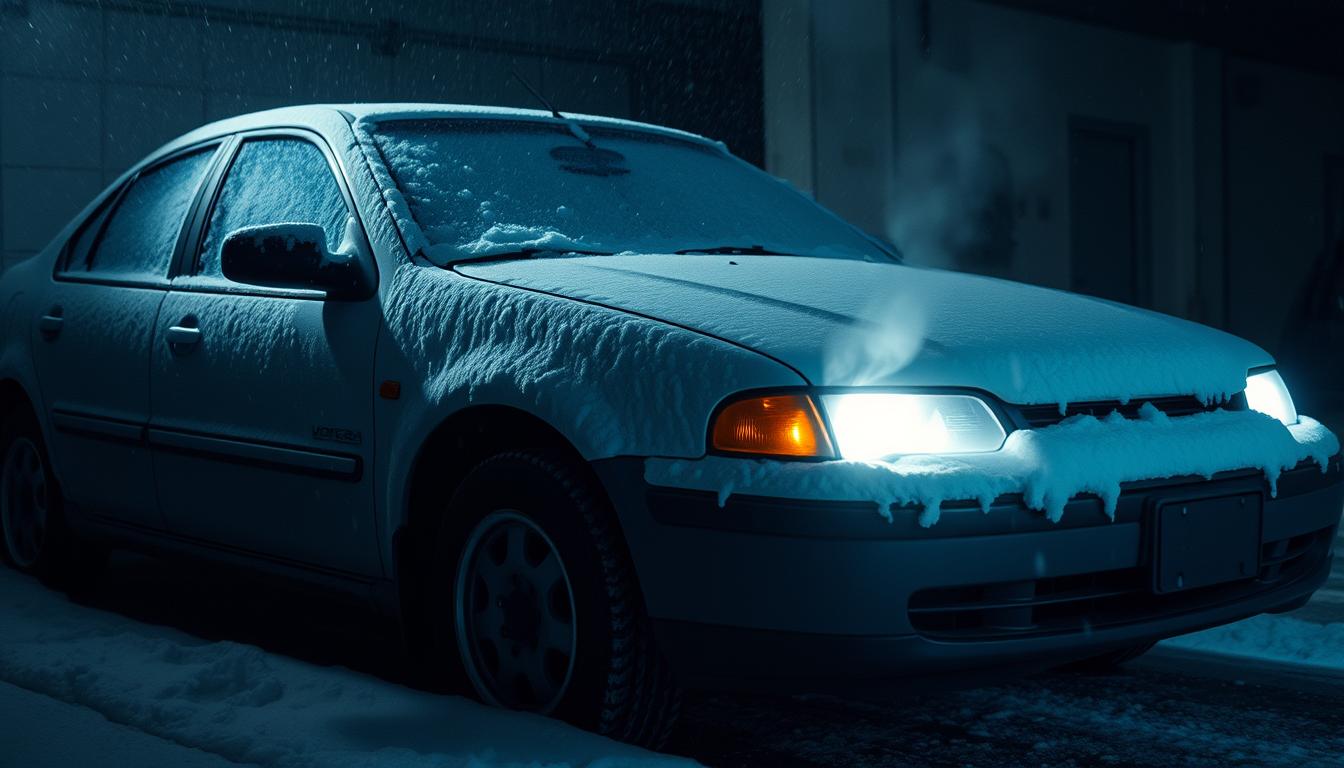
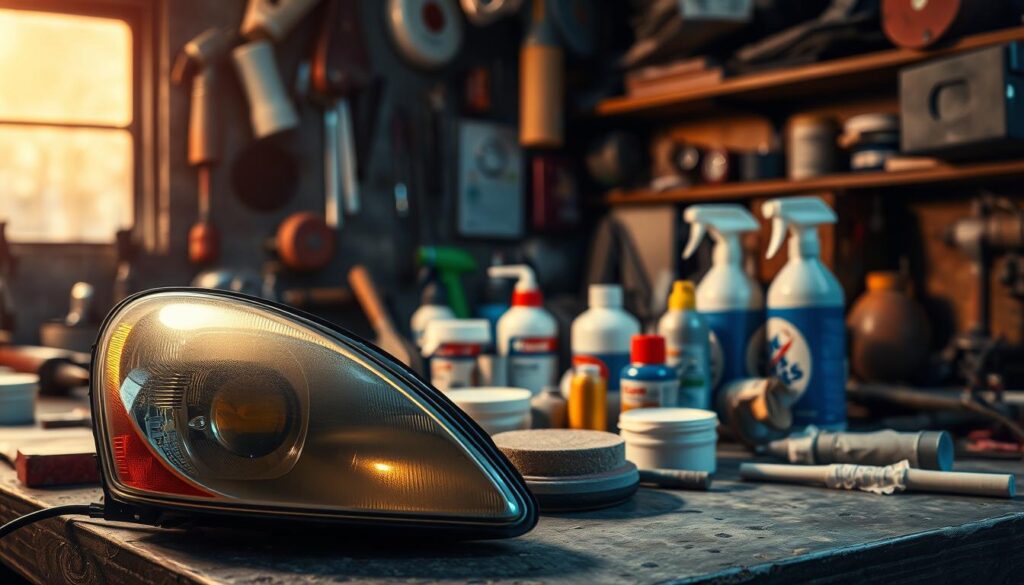
One of the primary reasons headlights become foggy is due to oxidation and UV damage. The plastic lenses of modern headlights are prone to oxidation when exposed to air, leading to a hazy appearance. UV rays from the sun exacerbate this process, breaking down the plastic and causing it to become brittle and discolored over time.
Environmental Factors
Environmental factors also play a significant role in the degradation of headlight clarity. Exposure to rain, snow, and extreme temperatures can cause the headlight lens to deteriorate. Additionally, road debris and dust can scratch the surface, further reducing visibility.
- Moisture accumulation between the lens and the bulb
- Dirt and debris causing scratches
- Extreme temperatures affecting lens integrity
Poor Maintenance Practices
Poor maintenance is another critical factor that contributes to foggy headlights. Failure to regularly clean headlights can lead to the buildup of grime and contaminants, accelerating the oxidation process. Moreover, using inappropriate cleaning materials can scratch the lens, making the problem worse.
To prevent foggy headlights, it’s essential to adopt a regular maintenance routine that includes proper cleaning and protection techniques. By understanding the causes and taking proactive steps, you can maintain clear headlights and ensure your vehicle’s safety and appearance.
Tools You Will Need for DIY Headlight Restoration
Before diving into the DIY headlight restoration process, it’s essential to gather the right tools and materials. Having everything you need at your fingertips will make the task less daunting and more efficient.
Cleaning Solutions
To start, you’ll need a good cleaning solution to remove dirt, grime, and oxidation from the headlight surface. A mixture of soap and water can be effective, but for more stubborn grime, a specialized headlight cleaning solution or a product containing UV protectants can be beneficial. As noted by a leading automotive expert, “Using the right cleaning solution is crucial for maintaining the integrity of the headlight material.”
“The right cleaner can make all the difference in the restoration process, ensuring a clear and durable finish.”
Sanding Tools
Sanding is a critical step in the restoration process, as it helps to remove oxidation and smooth out the headlight surface. You’ll need a variety of grits, ranging from coarse to fine, to achieve the desired clarity. Start with a coarser grit (around 600) to remove heavy oxidation, then progress to finer grits (up to 2000 or more) for a smooth finish. Wet sanding is recommended for better results and to minimize scratches.
- 600-grit sandpaper for initial oxidation removal
- 1200-grit sandpaper for smoothing
- 2000-grit sandpaper for fine-tuning
Protective Gear
Safety should be your top priority when working with chemicals and power tools. Make sure to wear protective gloves to prevent skin irritation and safety goggles to protect your eyes from debris and chemical splashes. A dust mask is also advisable when sanding to avoid inhaling particles.
By having the right tools and protective gear, you’ll be well-prepared to tackle the DIY headlight restoration process with confidence and achieve professional-looking results.
Step-by-Step Guide to DIY Headlight Restoration
Restoring foggy headlights is a DIY project that not only enhances your vehicle’s appearance but also improves safety. With the right techniques and materials, you can successfully restore your vehicle’s headlights to their original condition.
Preparing the Headlights for Restoration
Before starting the restoration process, it’s essential to prepare your headlights. Begin by cleaning the headlights with soap and water to remove any dirt or debris. This initial cleaning helps prevent scratches during the restoration process.
Masking tape can be used to protect the surrounding areas, such as the paint and trim, from damage. Apply the tape carefully around the headlights to create a seal.
Cleaning and Decontaminating the Surface
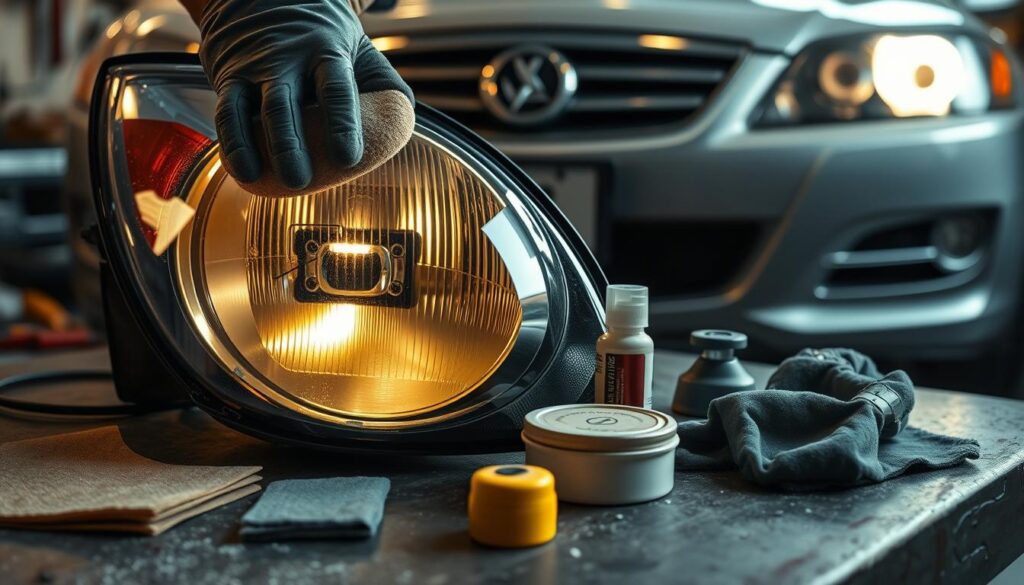
Once the headlights are prepared, the next step is to clean and decontaminate the surface. Use a dedicated headlight cleaning solution or a mixture of baking soda and water to remove oxidation and grime. Apply the solution using a soft cloth, rubbing gently in a circular motion.
Sanding Techniques for Best Results
Sanding is a critical step in the headlight restoration process. Start with a coarse-grit sandpaper (around 600 grit) and work your way up to finer grits (1200, 1500, and finally 2000 grit) for a smooth finish. Wet sanding is recommended to reduce scratches and improve the surface quality.
| Sanding Stage | Grit | Purpose |
|---|---|---|
| Coarse Sanding | 600 | Remove heavy oxidation |
| Medium Sanding | 1200 | Smooth out the surface |
| Fine Sanding | 2000 | Final polishing before finishing |
By following these steps and using the right materials, you can achieve professional-looking results with your DIY headlight restoration project.
DIY Methods for Headlight Restoration
Restoring your car’s headlights can be done effectively at home using a few simple DIY techniques. When considering headlight restoration at home, it’s essential to choose a method that suits your needs and the condition of your headlights.
Using Toothpaste as a Cleaner
One of the most readily available DIY methods for headlight restoration is using toothpaste. The mild abrasives in toothpaste can help remove minor scratches and oxidation. Apply a small amount of toothpaste to the headlight and rub it in with a soft cloth. Rinse thoroughly and dry. While this method is easy and inexpensive, it may not be as effective for deeply damaged headlights.
Baking Soda and Vinegar Mixture
Another homemade solution involves mixing baking soda and vinegar to create a paste. This mixture can be applied to the headlights and scrubbed gently before rinsing. The baking soda acts as a mild abrasive, while the vinegar helps in breaking down the oxidation. This method is non-toxic and environmentally friendly.
Commercial Restoration Kits
For more severe cases of headlight damage, commercial restoration kits are available. These kits usually include sandpaper, polishing compounds, and sometimes a UV protective coating. They provide a more comprehensive approach to car headlight restoration steps, including sanding, polishing, and protecting the headlights. While more expensive than homemade remedies, they offer a professional-grade finish.
| Method | Effectiveness | Cost |
|---|---|---|
| Toothpaste | Low to Moderate | Very Low |
| Baking Soda & Vinegar | Moderate | Low |
| Commercial Kits | High | Moderate to High |
As highlighted by a well-known automotive expert, “The key to successful headlight restoration is not just in the method, but also in the patience and care taken during the process.” Restoring your vehicle’s headlights not only improves its appearance but also enhances safety on the road.
“Restoring headlights is a straightforward DIY project that can significantly improve your vehicle’s safety and appearance.”
Advanced Techniques for Headlight Clarity
For those seeking a more polished finish, advanced techniques can elevate your DIY headlight restoration project to a professional level. These methods involve more specialized tools and materials but yield impressive results.
Wet Sanding for Deeper Scratches
Wet sanding is a crucial step for removing deeper scratches that regular sanding might not eliminate. This technique involves using progressively finer grits of sandpaper while keeping the surface wet to prevent scratches and achieve a smooth finish.
Start with a lower grit (around 600) and work your way up to higher grits (up to 2000 or more) for the best results. Remember to keep the surface wet throughout the process to avoid damaging the headlight lens.

Polishing with a Buffer
After sanding, polishing with a buffer can further enhance the clarity of your headlights. Use a polishing compound specifically designed for automotive applications and a buffer that can be set to a low speed to avoid generating excessive heat.
Apply the polishing compound to the buffer pad and work on one section of the headlight at a time, ensuring even coverage and avoiding circular motions that could create swirl marks.
Applying UV Protection Coatings
To maintain the clarity of your restored headlights, applying a UV protection coating is essential. These coatings protect the lens from UV damage, oxidation, and other environmental factors that can cause fogging.
Choose a high-quality UV protection coating and follow the manufacturer’s instructions for application. Ensure the headlight surface is clean and dry before applying the coating for optimal adhesion and effectiveness.
By incorporating these advanced techniques into your DIY headlight restoration project, you can achieve a professional-like finish that enhances both the safety and appearance of your vehicle.
Safety Precautions During Restoration
Before diving into headlight restoration, it’s essential to understand the safety measures that should be in place. Restoring foggy headlights can be a safe and rewarding DIY project if you take the necessary precautions.
Protecting Your Eyes and Skin
When working with chemicals or power tools during headlight restoration, protecting your eyes and skin is paramount. Wear protective goggles or safety glasses to prevent chemical splashes or debris from causing eye damage. Similarly, wear gloves to protect your skin from harsh chemicals and abrasive materials.
Warning About Chemical Exposure
Many headlight restoration products contain chemicals that can be harmful if not handled properly. Always read the labels and follow the instructions. Ensure good ventilation in your workspace to prevent inhaling fumes. If you’re using a product for the first time, consider doing a patch test to check for any adverse reactions.
Keeping the Work Area Clean
A clean workspace is not just more efficient, but it’s also safer. Keep your work area free from clutter and ensure that all tools and chemicals are stored properly after use. This reduces the risk of accidents and makes the restoration process smoother.
By following these safety precautions, you can ensure a successful headlight restoration experience. Remember, safety should always be your top priority when working on DIY projects, including easy headlight restoration techniques.
How to Maintain Restored Headlights
To keep your headlights shining bright after a DIY restoration, regular maintenance is key. Proper care ensures the longevity of the restoration and maintains the clarity and effectiveness of your headlights.
Regular Cleaning Tips
Regular cleaning is essential to maintain the clarity of your restored headlights. Use a mild soap and water solution to gently clean the headlights. Avoid using harsh chemicals or abrasive materials that can damage the headlight surface.
Tip: For tougher grime, a mixture of baking soda and water can be used as a gentle scrub. Rinse thoroughly with clean water to prevent any residue from drying on the surface.
When to Reapply Protective Coatings
Protective coatings play a crucial role in maintaining the clarity and integrity of your headlights. It’s recommended to reapply a UV protective coating every 2 to 3 years, or sooner if you notice the coating starting to wear off.
| Coating Type | Reapplication Interval | Benefits |
|---|---|---|
| UV Protective Coating | 2-3 Years | Prevents UV damage, maintains clarity |
| Water Repellent Coating | 1-2 Years | Improves visibility during rain, reduces water spots |
Avoiding Common Mistakes
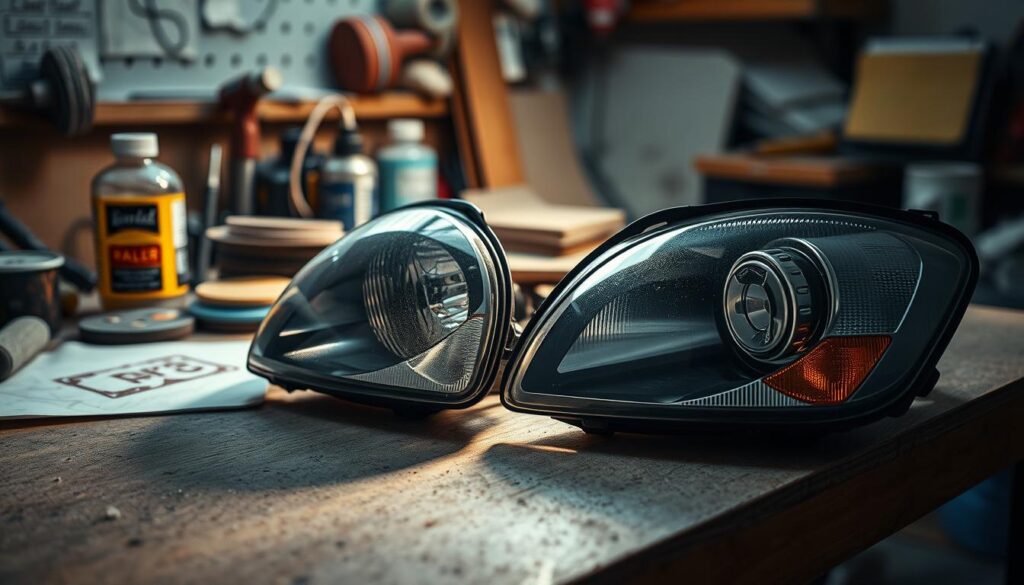
When maintaining your restored headlights, it’s crucial to avoid common mistakes that can damage the headlight surface. Avoid using household cleaners or chemicals that contain ammonia, as they can damage the headlight material.
Mistake to Avoid: Using paper towels or other abrasive materials to dry or clean the headlights, as they can cause micro-scratches on the surface.
By following these maintenance tips, you can ensure your headlights remain clear and effective, enhancing both the safety and appearance of your vehicle.
Signs It’s Time for a Professional Restoration
DIY headlight repair has its limits, and recognizing when to seek professional help is crucial. While many cases of foggy headlights can be resolved with DIY methods, there are instances where the damage is too extensive.
Extensive Damage Not Fixed by DIY
If your headlights are severely cracked, deeply scratched, or have significant oxidation that DIY methods can’t fix, it’s likely time for a professional restoration. Professional restorers have the tools and expertise to handle complex damage.
Some signs that indicate extensive damage include:
- Deep cracks or chips in the headlight lens
- Significant yellowing or oxidation that doesn’t improve with DIY cleaning
- Headlight assemblies that are loose or damaged
When to Consider Replacement
In some cases, the damage to the headlights may be so severe that restoration is not cost-effective or possible. If the headlight lens is shattered, or the assembly is damaged beyond repair, replacement might be the better option.
Consider the following factors when deciding between restoration and replacement:
| Factor | Restoration | Replacement |
|---|---|---|
| Cost | Generally cheaper, with costs ranging from $50 to $200 | More expensive, with costs ranging from $200 to $500 per headlight |
| Time | Less time-consuming, typically taking a few hours | More time-consuming, potentially requiring several hours or a visit to a mechanic |
| Effectiveness | Effective for minor to moderate damage | Ideal for severe damage or when restoration is not feasible |
Assessing Cost-effectiveness
When deciding whether to restore or replace your headlights, it’s essential to assess the cost-effectiveness of each option. Consider the age of your vehicle, the extent of the damage, and your budget.
Ultimately, the decision to restore or replace your headlights should be based on a thorough assessment of your vehicle’s condition and your personal preferences. If you’re unsure, consulting with a professional can provide clarity.
Frequently Asked Questions About Headlight Restoration
Headlight restoration is a common DIY project, but several questions often arise during the process. Below, we address some of the most frequently asked questions to help guide you through the restoration process.
How Long Does Restoration Last?
The longevity of headlight restoration depends on several factors, including the quality of the restoration process, the materials used, and how well the headlights are maintained afterward. Generally, a well-done restoration can last from two to four years. Regular maintenance, such as cleaning and applying protective coatings, can extend the clarity and effectiveness of your headlights.
Can I Restore LED Headlights?
Yes, LED headlights can be restored, but the process might differ slightly from traditional halogen headlights. It’s essential to identify the type of headlight you have before starting the restoration. LED headlights often require specific care to maintain their brightness and functionality. Using the right cleaning solutions and avoiding abrasive materials can help preserve the integrity of LED headlights.
Is It Safe to Drive with Foggy Headlights?
Driving with foggy headlights is not recommended as it can significantly impair your visibility, especially at night or in low-light conditions. Foggy headlights can also make your vehicle less visible to other drivers, pedestrians, and cyclists, increasing the risk of accidents. Restoring your headlights is a simple and effective way to enhance your safety on the road.

To further clarify the restoration process and its benefits, let’s examine some key aspects in detail.
| Restoration Aspect | Description | Benefit |
|---|---|---|
| Restoration Longevity | Depends on restoration quality and maintenance | Extended headlight clarity |
| LED Headlight Restoration | Requires specific care and materials | Preserves LED brightness and functionality |
| Safety Implications | Improves visibility and vehicle visibility | Reduces accident risk |
By understanding these aspects, you can make informed decisions about your headlight restoration project and enjoy the benefits of clearer, safer driving.
Benefits of DIY Headlight Restoration
Taking the DIY route for headlight restoration offers numerous benefits. Not only can it improve your vehicle’s safety and appearance, but it also provides a sense of accomplishment and can be cost-effective.
Cost Savings Compared to Professional Services
One of the most significant advantages of DIY headlight restoration is the cost savings. By using a DIY headlight polishing guide, you can avoid the expenses associated with professional services. The materials needed for restoration are relatively inexpensive and can be found at most auto parts stores.
For example, a DIY restoration kit can cost between $20 to $50, depending on the brand and quality. In contrast, professional headlight restoration services can range from $100 to $300 or more, depending on the location and extent of the work needed.
Empowering Yourself with Car Care Skills
Engaging in DIY headlight restoration empowers you with new car care skills. By learning easy headlight restoration techniques, you become more self-sufficient and confident in maintaining your vehicle. This knowledge can also be applied to other car care tasks, such as detailing and minor repairs.
Moreover, having the skills to restore your headlights can save you time in the long run. You won’t have to wait for an appointment or rely on someone else to fix your headlights.
Environmental Benefits of DIY Projects
DIY projects, including headlight restoration, can have environmental benefits. By reusing and restoring existing parts, you reduce the need for new materials and minimize waste. This approach is more sustainable and can contribute to a reduction in the environmental footprint associated with automotive maintenance.
Additionally, many DIY restoration kits are designed to be environmentally friendly, using less harsh chemicals and more eco-conscious materials.
Conclusion: Take Action for Safer Driving
Restoring your vehicle’s headlights is a simple yet effective way to enhance your safety on the road. By following the steps outlined in this guide, you can achieve clear and effective headlights that improve your visibility while driving.
Restoration Recap
DIY headlight restoration involves cleaning, sanding, and applying protective coatings to your headlights. This process not only improves the appearance of your vehicle but also ensures that your headlights are functioning properly.
Try DIY Headlight Restoration at Home
With the right tools and a bit of patience, you can restore your headlights at home. This DIY approach to headlight restoration is cost-effective and empowering, allowing you to take care of your vehicle’s maintenance needs.
Stay Safe on the Road
Clear headlights are crucial for safe driving, especially at night or in low-visibility conditions. By maintaining your headlights through DIY headlight restoration or headlight restoration at home, you can significantly reduce the risk of accidents.