



Dealing with a car overheating issue can be stressful, but understanding the causes and solutions can help you tackle the problem effectively. When your vehicle’s engine temperature rises too high, it can lead to serious damage if not addressed promptly.
Common causes include a malfunctioning thermostat, low coolant levels, or issues with the cooling system. Identifying the root cause is crucial for applying the right repair and getting your vehicle back to its optimal condition.
By following a systematic approach to troubleshooting and maintenance, you can prevent overheating issues and ensure your vehicle runs smoothly.
Key Takeaways
- Identify common causes of car overheating.
- Learn troubleshooting steps for overheating issues.
- Understand the importance of regular maintenance.
- Discover DIY fixes for common overheating problems.
- Prevent future overheating issues with the right precautions.
Understanding Car Overheating
Car overheating is not just a minor issue; it’s a warning sign that something is wrong with your vehicle’s cooling system. When your car overheats, it can lead to serious engine damage if not addressed promptly. Understanding the causes and taking swift action are crucial steps in preventing costly repairs.

Common Causes of Overheating
Several factors can contribute to your car overheating. Some of the most common causes include:
- Leaks in the cooling system, which can lead to a loss of coolant and, subsequently, overheating.
- A faulty water pump, which fails to circulate coolant effectively through the engine.
- A malfunctioning cooling fan, which is essential for cooling the radiator.
- Low coolant levels, often due to leaks or neglecting to refill the coolant.
- A clogged radiator, which prevents the coolant from absorbing heat from the engine.
Identifying the root cause is the first step in resolving the overheating issue.
Importance of Addressing Overheating Quickly
Addressing car overheating quickly is vital to prevent severe engine damage. When your car overheats, the engine components can become damaged, leading to costly repairs. Prompt action can save you from expensive fixes down the line. Moreover, ignoring the issue can lead to more significant problems, such as engine failure, which might leave you stranded.
By understanding the causes and taking immediate action, you can prevent your car from overheating and ensure the longevity of your vehicle’s engine.
Signs Your Car is Overheating
Understanding the indicators of car overheating helps in taking timely corrective measures. When your car starts to overheat, it sends out warning signals that you should never ignore.
Dashboard Warning Lights
One of the most straightforward signs of car overheating is the illumination of warning lights on your dashboard. Modern vehicles are equipped with sophisticated systems that monitor engine temperature. If the temperature exceeds safe operating limits, a warning light will typically illuminate, signaling that your car is overheating. This light is often represented by a thermometer symbol or the words “TEMP” or “ENGINE HOT.”
It’s crucial to respond promptly to these warnings to prevent serious engine damage. If the warning light comes on, it’s advisable to pull over safely as soon as possible and turn off the engine.
Temperature Gauge Readings
Another key indicator of car overheating is the temperature gauge on your dashboard. This gauge is designed to show the current engine temperature. A rising temperature gauge is a clear sign that your car’s engine is getting too hot. The gauge usually has a range marked from cold to hot, with a normal operating temperature typically in the middle. If the needle is moving towards the “hot” or maximum mark, it indicates that your car is overheating.

Regularly checking your temperature gauge and being aware of dashboard warning lights are simple yet effective ways to monitor your car’s health and catch potential overheating issues early.
Immediate Actions to Take
Noticing your car is overheating can be alarming, but immediate action can prevent damage. When you realize your vehicle is overheating, it’s crucial to remain calm and follow the right steps to ensure your safety and the longevity of your car.
Pulling Over Safely
The first step when you notice your car is overheating is to pull over to a safe location as soon as possible. This could be the side of the road or a nearby parking lot. It’s essential to signal your intentions to other drivers to avoid any potential hazards.
Safety first: If you’re on a busy road, be cautious of other vehicles and try to maintain a safe distance.
Turning Off the Engine
Once you’ve pulled over to a safe location, turn off the engine. This is a critical step as it helps prevent further damage to your engine. Letting the engine cool down will also make it safer for you to inspect the issue.
Here’s a quick summary of the immediate actions to take when your car is overheating:
| Action | Purpose | Benefit |
|---|---|---|
| Pull Over Safely | Prevent further engine damage | Reduces risk of engine failure |
| Turn Off the Engine | Stop the overheating process | Prevents costly repairs |
| Let the Engine Cool | Make it safe to inspect | Allows for safe diagnosis |
Taking these immediate actions can significantly reduce the risk of severe engine damage. In the next sections, we’ll delve into checking coolant levels and inspecting the radiator, crucial steps in diagnosing and fixing the overheating issue.
Checking Coolant Levels
One of the simplest yet most crucial steps in diagnosing car overheating is checking the coolant levels. Maintaining the right coolant level is essential for your car’s cooling system to function properly. Coolant, also known as antifreeze, plays a vital role in regulating your engine’s temperature.
How to Check Your Coolant
To check your coolant level, start by locating the coolant reservoir under the hood of your car. The reservoir is typically a transparent plastic tank with markings indicating the minimum and maximum levels. Ensure your car is parked on a level surface and the engine is cool before checking the level.
- Open the hood and locate the coolant reservoir.
- Check the level against the minimum and maximum markings.
- If the level is below the minimum, you need to add coolant.
When to Refill or Replace Coolant
If your coolant level is low, you’ll need to refill it. It’s crucial to use the correct type of coolant for your vehicle, as specified in your owner’s manual. Over time, coolant can degrade and lose its effectiveness, so it’s also important to know when to replace it.
Key considerations for refilling or replacing coolant:
- Check your owner’s manual for the recommended coolant type.
- Inspect the coolant for signs of contamination or degradation.
- Replace the coolant at the intervals recommended by your vehicle’s manufacturer.
By regularly checking and maintaining your coolant levels, you can help prevent car overheating and ensure your vehicle’s cooling system operates efficiently.
Inspecting the Radiator
The radiator is a critical component of your car’s cooling system, and inspecting it regularly can help prevent overheating issues. A damaged or clogged radiator can lead to increased engine temperature, potentially causing significant damage if not addressed promptly.
Signs of a Damaged Radiator
Identifying a damaged radiator early can save you from more costly repairs down the line. Some common signs include:
- Leaks or rust spots on the radiator
- Coolant levels dropping without an apparent reason
- Discoloration or sludge in the coolant
- Visible damage or corrosion on the radiator fins
Inspecting your radiator regularly for these signs can help you catch and fix problems early.
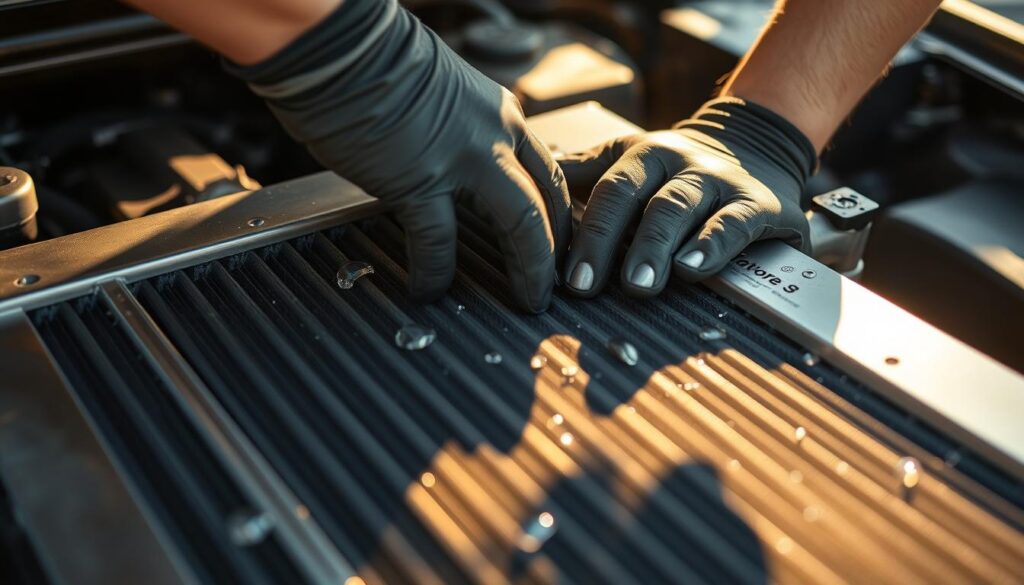
How to Clean Your Radiator
Cleaning your radiator is a relatively straightforward process that can help maintain its efficiency. Here’s a simple guide:
- Ensure the engine is cool before starting.
- Locate the radiator drain petcock and open it to drain the coolant into a pan.
- Close the drain petcock and fill the radiator with a mixture of water and a radiator cleaning solution.
- Run the engine for a few minutes to circulate the cleaning mixture.
- Drain the mixture and flush the radiator with clean water until it runs clear.
- Refill the radiator with the appropriate coolant mixture.
Regular cleaning and inspection can significantly extend the life of your radiator and help prevent overheating issues.
Examining the Thermostat
When diagnosing overheating problems, examining the thermostat is essential. The thermostat is a critical component of your car’s cooling system, responsible for regulating the engine’s temperature.
Symptoms of a Malfunctioning Thermostat
A malfunctioning thermostat can cause your car to overheat. Common symptoms include:
- The temperature gauge fluctuating wildly.
- The engine taking too long to warm up.
- The cooling system’s inefficiency, leading to overheating.
If you notice any of these signs, it’s crucial to investigate further.

How to Test Your Thermostat
Testing your thermostat involves a few straightforward steps:
- Locate the thermostat: Typically found where the upper radiator hose connects to the engine.
- Remove the thermostat: Follow your car’s repair manual for specific instructions.
- Test the thermostat: Place it in a pot of boiling water to check if it opens.
If the thermostat fails to open or remains stuck closed, it’s likely faulty and needs replacement.
Replacing a thermostat can be a relatively simple process, but it’s essential to follow the correct procedures to avoid damaging your car’s cooling system. Always refer to your car’s repair manual for detailed instructions.
By understanding how to examine and test your thermostat, you can identify potential issues before they lead to more serious problems like car overheating.
Inspecting the Water Pump
Inspecting the water pump is a vital step in diagnosing and fixing car overheating problems. The water pump is crucial for circulating coolant through your car’s engine, preventing it from overheating.
Signs of Water Pump Failure
A failing water pump can manifest several symptoms. Common signs include:
- Leaks around the water pump
- Noise coming from the water pump
- Rust or corrosion on the pump
- Coolant leakage
Early detection of these signs can help prevent engine damage.
| Signs | Description | Action |
|---|---|---|
| Leaks | Coolant leakage around the pump | Inspect and replace the water pump |
| Noise | Unusual noise from the water pump area | Check for loose belts or bearings |
| Rust/Corrosion | Visible rust or corrosion on the pump | Replace the water pump |
How to Replace a Water Pump
Replacing a water pump involves several steps. First, ensure your car is cool, then follow these steps:
- Drain the coolant system.
- Remove the serpentine belt.
- Disconnect the water pump inlet and outlet.
- Remove the water pump mounting bolts.
- Replace the old water pump with a new one.
It’s crucial to follow the manufacturer’s instructions for specific guidance on replacing the water pump in your car.
Exploring the Cooling Fan
A functioning cooling fan is essential for keeping your car’s engine at the right temperature. The cooling fan helps to dissipate heat from the radiator, ensuring that your engine operates within a safe temperature range.
How to Check if the Cooling Fan Works
To check if your cooling fan is working properly, start by turning on your car’s engine and letting it run until it reaches its normal operating temperature. Then, turn on the air conditioning. The cooling fan should start to operate. If it doesn’t, there might be an issue with the fan, its electrical circuit, or the temperature sensor that controls it.
Steps to Check the Cooling Fan:
- Turn on the engine and let it reach normal operating temperature.
- Turn on the air conditioning.
- Observe the cooling fan. It should be operating.
Fan Replacement Process
If your cooling fan is not working, you may need to replace it. The replacement process involves several steps, including disconnecting the electrical connector, removing the mounting screws, and carefully pulling out the fan assembly.
Here’s a more detailed look at the fan replacement process:
- Disconnect the negative battery cable to prevent any accidental engine starts.
- Locate and disconnect the electrical connector that powers the cooling fan.
- Remove the mounting screws that hold the fan assembly in place.
- Carefully pull out the fan assembly and replace it with a new one.
- Reinstall the mounting screws and reconnect the electrical connector.
- Reconnect the negative battery cable.
Fixing Leaks in the Cooling System
A leaking cooling system can lead to serious engine problems if not addressed promptly. Leaks can cause your car’s engine to overheat, leading to costly repairs if not managed properly. Understanding where leaks commonly occur and how to temporarily fix them can help you get back on the road.
Common Leak Sources
Leaks in the cooling system can occur at various points. Common sources include:
- The radiator and its hoses
- The water pump
- The heater core
- The head gasket
- Coolant reservoir
Inspecting these areas regularly can help you identify potential leaks early. Regular maintenance is key to preventing leaks.
Temporary Fixes for Leaks
While a permanent fix is always recommended, there are temporary measures you can take to manage a leaking cooling system. For small leaks, using a cooling system leak sealant can be an effective temporary solution. However, it’s crucial to follow the manufacturer’s instructions and understand that this is not a permanent fix.
For more significant leaks, you may need to isolate the leaking component. For instance, if the leak is from a hose, you can temporarily repair it with tape or replace it if necessary. It’s essential to monitor the temperature gauge closely when driving with a temporary fix.
| Leak Source | Temporary Fix | Permanent Fix |
|---|---|---|
| Radiator Hose | Tape or clamp | Replace hose |
| Water Pump | Sealant | Replace water pump |
| Head Gasket | Not recommended | Replace head gasket |
As noted by a leading automotive expert, “A stitch in time saves nine. Regularly checking your cooling system can prevent minor issues from becoming major repairs.”
“Neglecting cooling system maintenance can lead to severe engine damage, emphasizing the importance of regular checks and timely repairs.”
Fixing leaks in the cooling system is a critical task that requires attention to detail and a proactive approach. By understanding common leak sources and applying temporary fixes, you can manage the situation until a permanent repair is made.
Preventive Maintenance Tips
One of the most effective ways to avoid car overheating is through preventive maintenance. By regularly checking and maintaining your car’s cooling system, you can significantly reduce the risk of overheating and prolong the lifespan of your vehicle.
Regular Coolant Changes
Regular coolant changes are essential for maintaining your car’s cooling system. Over time, coolant can degrade and lose its effectiveness, so it’s crucial to replace it as recommended by your car’s manufacturer. Typically, coolant should be changed every 30,000 to 50,000 miles.
Tips for Coolant Changes:
- Always refer to your owner’s manual for the correct type of coolant to use.
- Check the coolant level regularly to ensure it’s at the recommended level.
- Consider having a professional mechanic perform the coolant change if you’re unsure.
Importance of Engine Tune-Ups
Engine tune-ups are not just about maintaining your car’s performance; they also play a critical role in preventing overheating. A well-tuned engine operates more efficiently and generates less heat. Regular tune-ups can help identify potential issues before they become major problems.
Benefits of Regular Engine Tune-Ups:
- Improved engine performance and fuel efficiency.
- Early detection of issues that could lead to overheating.
- Prolonged engine lifespan due to reduced strain.
When to Seek Professional Help
While many car owners can diagnose and fix overheating issues on their own, some problems require the expertise of a professional mechanic. If you’ve checked the coolant levels, inspected the radiator, and examined the thermostat and water pump, but the issue persists, it’s time to seek professional help.
Signs You Need a Mechanic
If you notice any of the following signs, it’s best to consult a mechanic: persistent overheating, coolant leaks, or a faulty temperature gauge. These issues can lead to costly repairs if left unaddressed.
Cost of Overheating Repairs
The cost of repairing an overheating car can vary widely, depending on the root cause of the problem. Replacing a thermostat or water pump can cost between $200-$500, while repairing a leaky radiator can cost upwards of $1,000. Seeking professional help early on can help you avoid costly repairs down the line and ensure your car is running safely and efficiently.