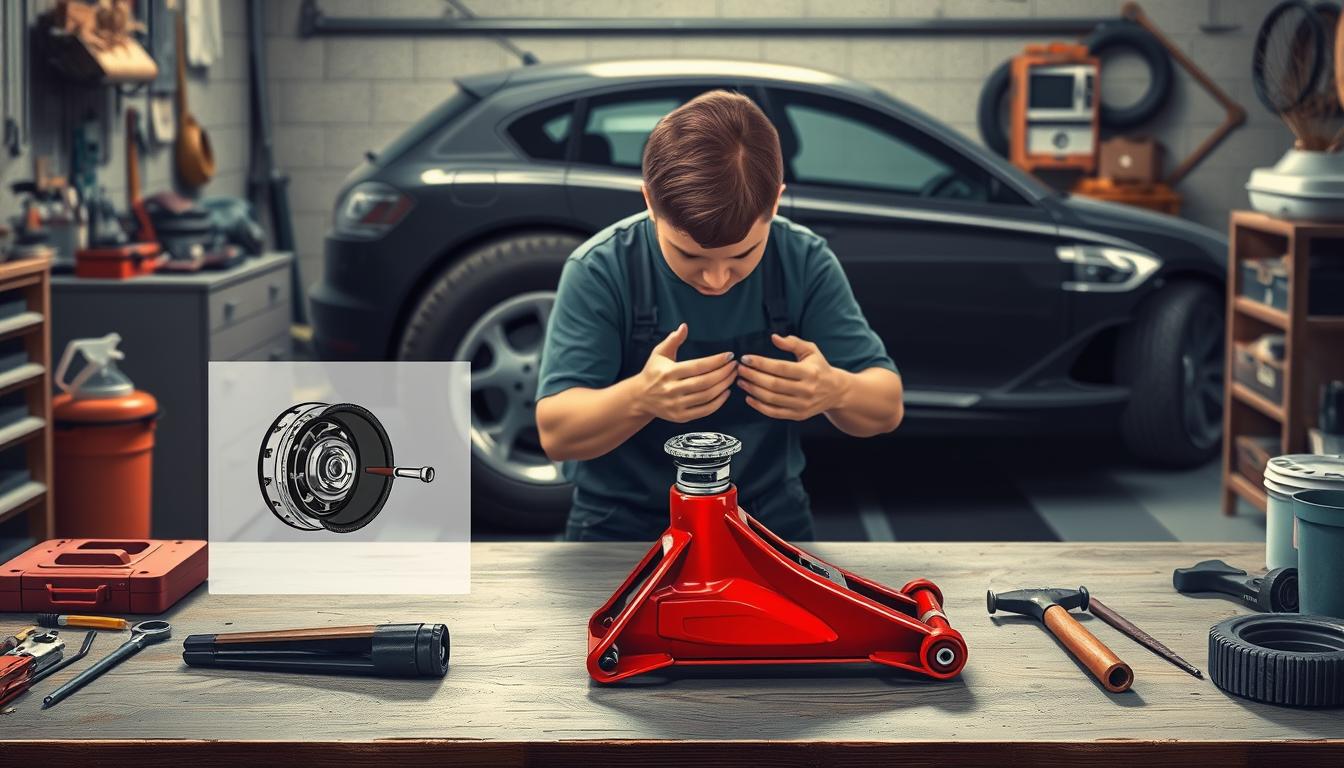






Regularly maintaining your vehicle’s tires is crucial for their longevity and your safety on the road. One simple yet effective way to extend their lifespan is through a DIY tire rotation. By doing so, you not only enhance the durability of your tires but also improve your vehicle’s overall performance.
Performing a DIY tire rotation is a straightforward process that requires some basic knowledge and confidence. In this guide, we’ll walk you through the steps to maintain your vehicle’s health and ensure your safety on the road.
Key Takeaways
- Understand the importance of regular tire rotation for longer tire life.
- Learn the steps involved in a DIY tire rotation process.
- Discover how proper tire rotation enhances vehicle performance and safety.
- Gain confidence in maintaining your vehicle’s health through simple DIY tasks.
- Improve your vehicle’s overall performance and durability.
Why Tire Rotation is Important
One of the most effective ways to prolong the life of your tires is through regular rotation. This simple maintenance task is crucial for car tire maintenance, as it ensures even tread wear, improves vehicle handling, and enhances safety on the road.
Tires wear down unevenly due to various factors, including driving habits, road conditions, and the weight distribution of the vehicle. Understanding these wear patterns is essential to appreciating the importance of tire rotation.
Understanding Tire Wear Patterns
Tire wear patterns can vary significantly depending on whether your vehicle is front-wheel drive, rear-wheel drive, or all-wheel drive. For instance, front-wheel drive vehicles tend to wear out the front tires more quickly due to the added stress of steering and braking.

By recognizing these patterns, you can take proactive steps to maintain your tires. Regular inspections can help identify uneven wear, allowing you to adjust your driving habits or maintenance schedule as needed.
| Vehicle Type | Typical Wear Pattern | Recommended Rotation Frequency |
|---|---|---|
| Front-Wheel Drive | Front tires wear faster | Every 5,000 to 8,000 miles |
| Rear-Wheel Drive | Rear tires wear faster | Every 5,000 to 8,000 miles |
| All-Wheel Drive | Even wear, but check regularly | Every 3,000 to 5,000 miles |
Benefits of Regular Tire Rotation
Regular tire rotation offers numerous benefits, including improved traction, better fuel efficiency, and enhanced vehicle handling. By ensuring that your tires wear evenly, you can avoid the dangers associated with uneven tire wear, such as reduced grip on the road and increased risk of tire failure.
- Improved safety through even tread wear
- Better vehicle handling and performance
- Increased fuel efficiency
- Prolonged tire lifespan
By incorporating regular tire rotation into your car tire maintenance routine, you can enjoy a smoother, safer driving experience while also saving money on premature tire replacements.
When to Rotate Your Tires
The key to extending the life of your tires lies in knowing the optimal rotation schedule. Regular tire rotation is a maintenance task that, when done correctly, can significantly impact the longevity and performance of your vehicle’s tires.

Manufacturer Recommendations
Most vehicle manufacturers recommend rotating tires every 5,000 to 8,000 miles. However, this can vary depending on the vehicle’s make and model, as well as the type of tires used. It’s essential to consult your vehicle’s owner’s manual for the manufacturer’s specific recommendation. As noted by tire care experts, “Following the manufacturer’s recommended tire rotation schedule is crucial for maintaining even tread wear and prolonging tire life.”
Signs That Indicate It’s Time for a Rotation
Besides following the recommended mileage, there are several signs that indicate it’s time for a tire rotation. These include:
- Uneven wear on the tires, which can be checked by visually inspecting the tread depth.
- Vibration while driving, which could be a sign of uneven tire wear.
- Noticeable differences in handling or traction.
By paying attention to these signs and adhering to the recommended rotation schedule, you can extend tire life and ensure your vehicle runs smoothly and safely.
Different Tire Rotation Patterns
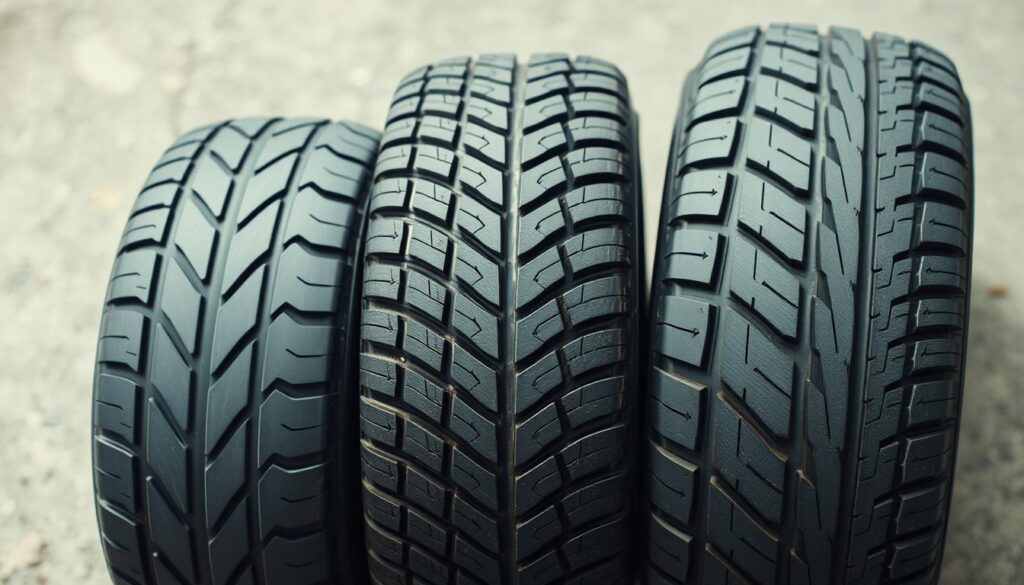
The key to effective tire rotation lies in understanding the various patterns recommended for your vehicle. Different vehicles have distinct drivetrain configurations and tire wear patterns, making it crucial to follow the manufacturer’s recommended tire rotation pattern.
Front-to-Back Pattern
The front-to-back pattern involves moving the front tires straight back to the rear axle and the rear tires to the front axle. This pattern is commonly used for rear-wheel-drive vehicles and some four-wheel-drive vehicles. It’s a straightforward method that ensures even tread wear.
Cross-Pattern Rotation
Cross-pattern rotation, also known as the “rearward cross” pattern, involves moving the rear tires to the front but to the opposite sides. For instance, the left rear tire moves to the right front position, and the right rear tire moves to the left front position. This pattern is often recommended for front-wheel-drive vehicles and some all-wheel-drive vehicles. It helps in distributing the wear evenly across the tires.
Side-to-Side Rotation
Side-to-side rotation involves swapping the tires on the same axle from one side to the other. This means the left tire moves to the right position, and the right tire moves to the left position. This pattern is less common but is used for specific vehicles where the manufacturer recommends it. It’s essential to check your vehicle’s manual to see if this pattern is advised.
Understanding and implementing the correct tire rotation pattern for your vehicle can significantly enhance tire longevity and performance. Always refer to your vehicle’s owner’s manual for the manufacturer’s recommended rotation pattern.
Tools You’ll Need for Tire Rotation
The right equipment is essential for rotating your tires safely and efficiently, so let’s take a look at what you’ll need. Rotating your tires is a relatively straightforward process, but having the correct tools and safety gear can make all the difference.
Essential Tools for DIY
To rotate your tires, you’ll need a few essential tools. These include a lug wrench, also known as a tire iron, which is used to loosen the lug nuts on your tires. You’ll also need a car jack to lift the vehicle off the ground, and jack stands for added safety and support.
- A lug wrench or tire iron
- A car jack
- Jack stands
- A wheel chock (optional)
| Tool | Purpose |
|---|---|
| Lug Wrench | Loosens lug nuts on tires |
| Car Jack | Lifts the vehicle off the ground |
| Jack Stands | Provides safety and support |

Safety Gear to Use
In addition to the essential tools, it’s also important to have the right safety gear. This includes safety glasses to protect your eyes from debris, and gloves to provide grip and protection for your hands.
- Safety glasses
- Gloves
- A reflective vest (optional)
By having the correct tools and safety gear, you’ll be well-prepared to rotate your tires safely and efficiently, ensuring a successful DIY tire rotation experience.
Step-by-Step Guide to Rotating Tires
Tire rotation might seem like a daunting task, but it’s actually quite simple when done step by step. Effective car tire maintenance involves regular rotation to ensure even wear and extend the life of your tires.
Preparing Your Vehicle
Before you start, make sure your vehicle is parked on a level surface and apply the parking brake. Loosen the lug nuts on the wheels with a lug wrench, but do not remove them yet. This step is crucial for safe and efficient tire rotation.
Lifting the Vehicle Safely
Next, you’ll need to lift your vehicle using a car jack. Position the jack under the vehicle’s frame and raise it until the tire is off the ground. For added safety, use jack stands to support the vehicle. Safety should always be your top priority when working under a lifted vehicle.
Rotating the Tires
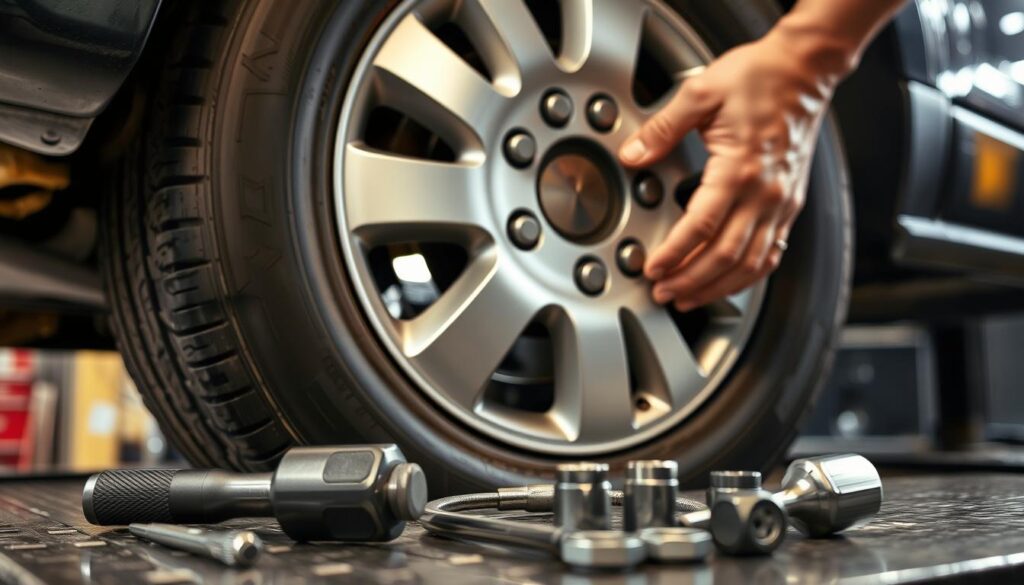
Now, you can remove the lug nuts and take off the tires. Rotate them according to the recommended pattern for your vehicle, which can usually be found in your owner’s manual. Common patterns include the front-to-back, cross-pattern, and side-to-side rotations. After rotating the tires, hand-tighten the lug nuts, then lower the vehicle and tighten them further in a star pattern.
By following these steps, you can ensure your tires are rotated correctly, contributing to better car tire maintenance and overall vehicle performance.
Common Mistakes to Avoid
To get the most out of your tire rotation, it’s crucial to avoid the errors that can undermine its benefits. When you rotate your tires, you’re taking a significant step towards extending their life, but this process can be compromised if you make certain common mistakes.
Overlooking Tire Pressure
One of the most critical factors in tire maintenance is ensuring that your tires are inflated to the correct pressure. Proper tire pressure is essential for even tread wear, fuel efficiency, and safety. Overlooking tire pressure can lead to uneven wear, reducing the effectiveness of your tire rotation.
Before you rotate your tires, make sure to check the pressure of all four tires and adjust it according to the manufacturer’s recommendations. You can find this information in your vehicle’s owner’s manual or on a placard on the driver’s side doorjamb.
| Tire Position | Recommended Pressure |
|---|---|
| Front Left | 35 PSI |
| Front Right | 35 PSI |
| Rear Left | 40 PSI |
| Rear Right | 40 PSI |
Ignoring Uneven Wear
Uneven wear is a sign that something is amiss with your vehicle’s alignment or suspension. Ignoring uneven wear can lead to further damage and compromise the safety of your vehicle. When you rotate your tires, inspect them for signs of uneven wear, such as feathering or excessive wear on one side.
Regular inspections can help you identify potential issues early, allowing you to address them before they become major problems. By being proactive, you can extend the life of your tires and ensure your vehicle remains safe to drive.
By being aware of these common mistakes and taking steps to avoid them, you can ensure that your tire rotation is effective in extending the life of your tires. Remember, proper tire maintenance is key to getting the most out of your tires.
Professional Tire Rotation vs. DIY
The decision to rotate tires personally or have a professional do it depends on several factors, including cost and expertise. While DIY tire rotation is cost-effective and empowering, there are situations where professional service is preferable.
Cost Comparison
One of the primary considerations when deciding between DIY and professional tire rotation is the cost. DIY tire rotation requires an initial investment in tools and equipment, but subsequent rotations are essentially free, aside from the cost of your time.
| Service | Cost |
|---|---|
| DIY Tire Rotation | $0 – $50 (tools and equipment) |
| Professional Tire Rotation | $20 – $50 per rotation |
As shown in the table, while there’s an initial cost for DIY, repeated rotations can be more cost-effective. However, professional tire rotation, while potentially more expensive per rotation, includes the benefit of professional inspection and handling.
Advantages of Going to a Mechanic
Going to a professional mechanic for tire rotation has several advantages. Mechanics can identify potential issues before they become major problems, such as uneven wear or misaligned wheels.
“Regular tire rotation, coupled with professional inspection, can significantly extend the life of your tires and improve your vehicle’s overall performance.” –
Additionally, professionals have the necessary equipment to handle tire rotation efficiently and safely, reducing the risk of injury or improper rotation.
In conclusion, while DIY tire rotation is a viable option for those comfortable with the process, professional tire rotation offers the benefits of expertise and thorough vehicle inspection. Ultimately, the choice between DIY and professional tire rotation depends on your comfort level, the complexity of your vehicle’s tire rotation pattern, and your budget.
Maintaining Your Tires Post-Rotation
Maintaining your tires post-rotation is vital for optimal performance and longevity. After you’ve taken the time to rotate your tires, it’s essential to follow through with regular maintenance to maximize the benefits.
Tips for Tire Care
Proper tire care involves several key practices. First, check tire pressure regularly, as underinflated tires can lead to uneven wear and reduced fuel efficiency. Additionally, inspect your tires for signs of wear, such as uneven tread wear or damage. Ensuring proper wheel alignment is also crucial, as misaligned wheels can cause tires to wear unevenly.
Importance of Regular Inspections
Regular inspections are critical for identifying potential issues before they become major problems. During your inspections, look for signs of uneven wear, check for proper inflation, and ensure that your tires are free from damage. By catching issues early, you can prevent unnecessary damage and extend the life of your tires, making your DIY tire rotation efforts more effective.
Regular tire maintenance, including inspections, is a key part of overall car tire maintenance. By staying on top of these tasks, you can enjoy better tire performance, improved safety, and cost savings over time.
Additional Services to Consider
In addition to regular tire rotation, services such as wheel alignment and balancing can play a critical role in maintaining your vehicle’s health. These supplementary services not only enhance tire longevity but also contribute to a smoother, safer driving experience.
Wheel Alignment
Wheel alignment is a crucial service that ensures your vehicle’s wheels are properly aligned with the manufacturer’s specifications. Proper alignment can significantly extend tire life by preventing uneven wear. Misaligned wheels can lead to tires wearing down more quickly on one side, which not only shortens their lifespan but also affects your vehicle’s handling and fuel efficiency.
Regular wheel alignments can help maintain your vehicle’s stability and ensure that your tires wear evenly. It’s recommended to check your vehicle’s alignment every 6,000 to 8,000 miles or whenever you notice signs of misalignment, such as uneven tire wear or your vehicle pulling to one side.
Balancing Your Tires
Tire balancing is another vital service that complements tire rotation. Balancing involves adjusting the weight distribution of your tires to ensure they rotate smoothly. Unbalanced tires can cause vibrations that not only lead to discomfort while driving but also result in premature wear on your tires and other vehicle components.
By balancing your tires, you can enjoy a smoother ride, reduce the risk of uneven tire wear, and potentially improve your vehicle’s fuel efficiency. It’s generally recommended to balance your tires every 3,000 to 5,000 miles or whenever you rotate them.
By incorporating these additional services into your tire maintenance routine, you can significantly enhance your vehicle’s performance and extend the life of your tires. Regular tire rotation, combined with wheel alignment and balancing, provides a comprehensive approach to tire care that can save you money in the long run and ensure a safer driving experience.
Conclusion: Enjoying Better Tire Performance
Regular tire rotation is a crucial aspect of car tire maintenance that can significantly extend the life of your tires and improve your vehicle’s overall performance. By incorporating tire rotation into your regular maintenance routine, you can enjoy better tire performance, enhanced safety, and cost savings over time.
Key Benefits of Regular Rotation
Regular tire rotation helps to distribute wear evenly across all four tires, reducing the risk of uneven wear patterns and improving traction. This, in turn, can lead to improved fuel efficiency, handling, and safety on the road.
Tips for Long-Lasting Tires
To get the most out of your tires, be sure to check tire pressure regularly, avoid driving in extreme weather conditions, and inspect your tires for signs of wear. By following these simple tips and staying on top of car tire maintenance, you can enjoy a smoother, safer ride for miles to come.