
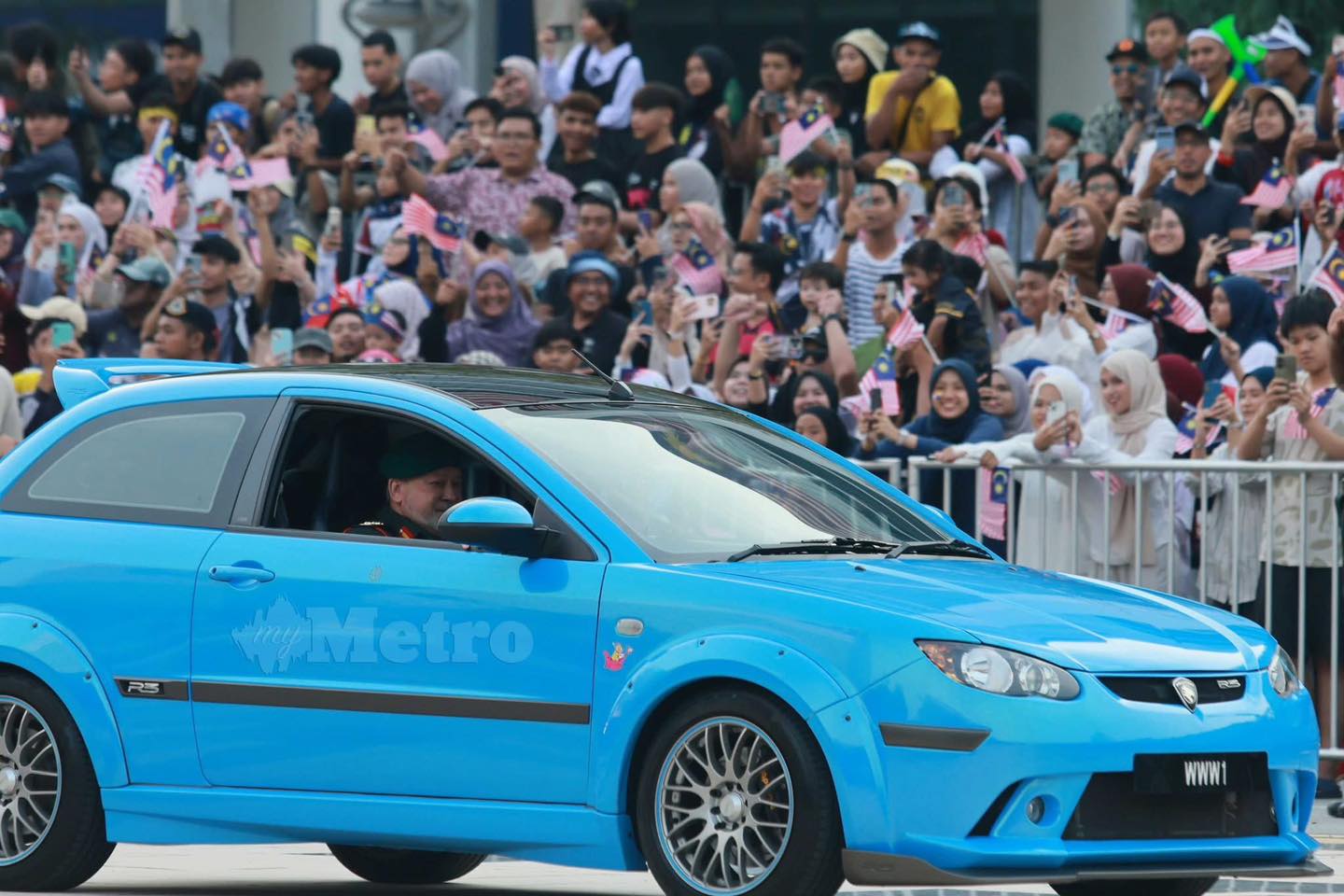
Malaysia’s Yang di-Pertuan Agong turned heads on Independence Day by arriving in a Proton Satria, a locally built icon. Here’s why this gesture struck a chord with Malaysians and what it means for the nation’s automotive heritage.
In a powerful gesture of patriotism, Malaysia’s Yang di-Pertuan Agong (YDPA) chose to ride in a Proton Satria, the beloved national hatchback, during the recent Independence Day (Merdeka) celebrations.
At a time when luxury convoys and imported vehicles are the norm for heads of state, the King’s decision to showcase a homegrown Proton model resonated deeply with Malaysians. It wasn’t just a ride — it was a symbol of national pride, humility, and support for local industry.
The Proton Satria: A Malaysian Icon
First launched in 1994, the Proton Satria quickly became one of Malaysia’s most popular cars, especially among younger drivers. Known for its compact size, sporty handling, and affordability, the Satria carved out a reputation as a practical yet spirited car for everyday Malaysians.
Notably:
- It was based on Mitsubishi’s platform but carried Proton’s unique identity and tuning.
- Special editions like the Satria GTi (developed with Lotus) became cult classics for enthusiasts.
- To this day, the Satria is remembered as a car that represented youth, ambition, and local pride.
By selecting this model for a national celebration, the YDPA reminded Malaysians of Proton’s role in the nation’s industrial history.
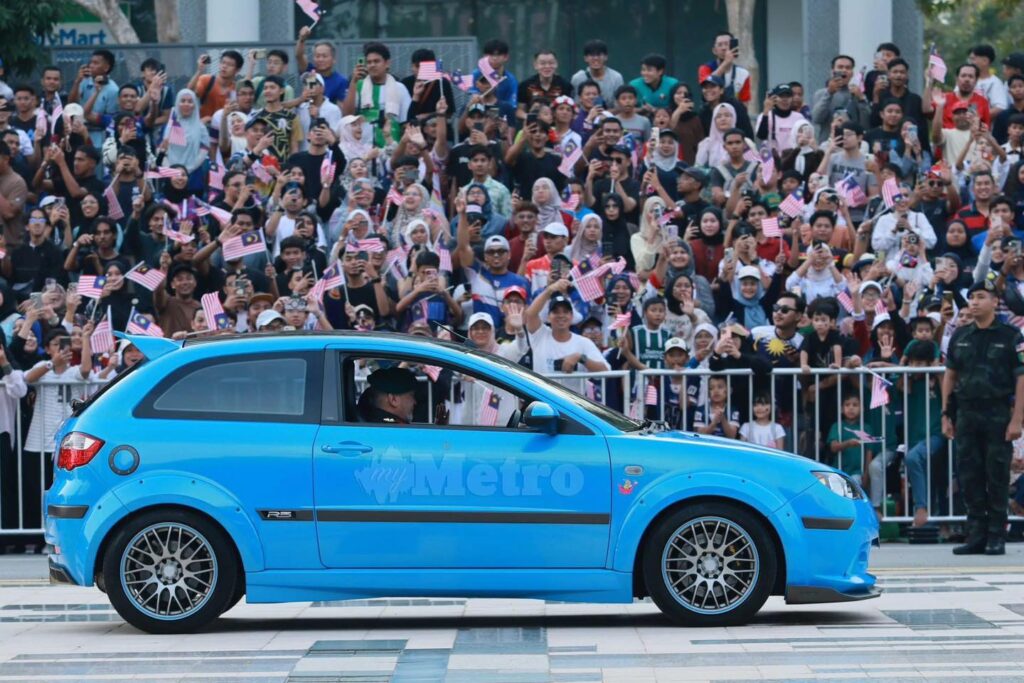
Picture full credit to Harian Metro
Why This Gesture Matters
The King’s choice of the Proton Satria was more than symbolic — it carried multiple layers of meaning:
- Support for Local Industry: Proton, Malaysia’s first national carmaker, remains a pillar of the country’s automotive sector. The gesture reinforces the monarchy’s backing of local innovation.
- Cultural Connection: For many Malaysians, the Satria isn’t just a car — it’s a nostalgic reminder of the 1990s and early 2000s when owning one was a milestone.
- Message of Humility: Instead of arriving in a foreign luxury car, the King’s use of a modest hatchback highlighted values of simplicity and solidarity with everyday citizens.
- Patriotic Symbolism: On Merdeka Day, celebrating with a locally made car amplified the spirit of national independence and self-reliance.
Malaysians React with Pride
Social media was abuzz as images and videos of the King in the Proton Satria circulated widely. Comments reflected admiration and appreciation:
- Many praised the move as “down-to-earth” and “inspiring.”
- Automotive enthusiasts celebrated the revival of an iconic Malaysian model on the national stage.
- Younger Malaysians, some of whom only know the Satria as a “legendary Proton,” felt a new wave of curiosity about the car.
Proton’s Journey: From Satria to Modern EVs
The timing of this gesture also comes as Proton looks to its future.
- The brand has transitioned from models like the Satria and Wira to more modern SUVs such as the X50 and X70.
- Proton has partnered with Geely to upgrade its technology and competitiveness.
- Looking ahead, Proton has announced plans to enter the EV market, signaling a new era of innovation.
By showcasing the Satria, the King not only honored Proton’s past legacy but also reminded Malaysians of the importance of supporting its future.

Conclusion
The Yang di-Pertuan Agong’s use of a Proton Satria during Malaysia’s Independence Day celebration was more than a ceremonial choice — it was a patriotic statement, a cultural reminder, and a proud endorsement of Malaysian innovation.
For many, it brought back nostalgia for a time when Proton cars like the Satria were symbols of aspiration and national identity. Today, as Proton transitions into a modern, globally competitive automaker, this moment underscores how deeply intertwined the brand remains with Malaysia’s story.