




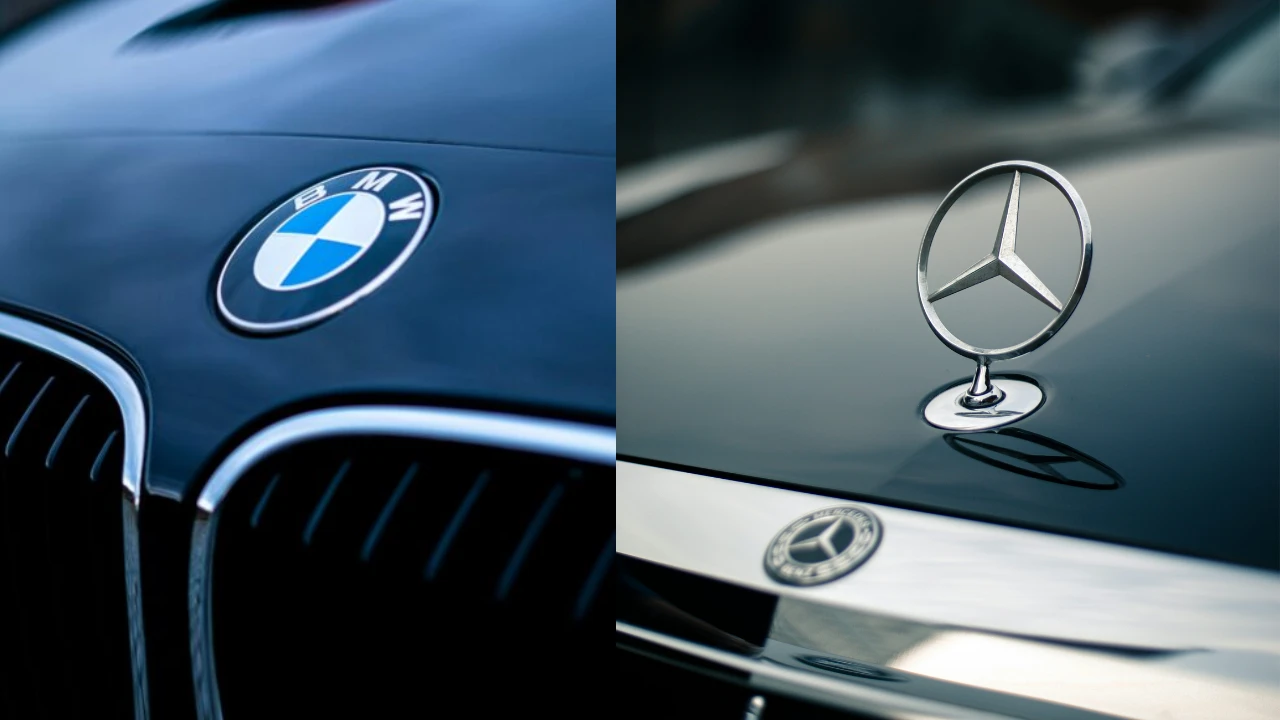
Mercedes-Benz is negotiating with BMW to source four-cylinder petrol engines for future hybrid and ICE models amid slowing EV demand. Learn how this landmark deal could reshape the future of German luxury cars under Euro 7 rules.
Mercedes-Benz Reconsiders Its ICE Strategy
Mercedes-Benz is in advanced negotiations with BMW over the possibility of using BMW’s four-cylinder petrol engines in upcoming vehicles. The talks come as Mercedes rethinks its internal combustion engine (ICE) strategy due to slower-than-expected adoption of electric vehicles (EVs) globally.
The potential tie-up would allow Mercedes to secure Euro 7-compliant engines, a regulatory necessity for ICE vehicles to remain viable in Europe post-2025, while avoiding billions in additional R&D costs.
According to sources cited by Autocar and Germany’s Manager Magazin, the collaboration has already reached a high-level planning stage, with a decision expected by the end of 2025.
What Models Could Get BMW Engines?
If the agreement goes ahead, Mercedes models from compact to mid-size segments could integrate BMW powertrains. Expected candidates include:
- CLA and GLA/GLB compact SUVs
- C-Class and E-Class sedans
- GLC mid-size SUV
- The upcoming “Little G” baby G-Class
The partnership would be framed as a “strategic cost-cutting step”, allowing both automakers to share resources while complying with stricter emissions laws.
The BMW B48 Engine: Why Mercedes Wants It
The engine under discussion is BMW’s B48 turbocharged 2.0-litre four-cylinder, a highly versatile unit used across BMW and Mini lineups since 2014.
Key advantages:
- Euro 7 ready with strong efficiency and emissions performance
- Configurable for longitudinal and transverse layouts
- Supports mild-hybrid (MHEV), plug-in hybrid (PHEV), and range-extender applications
- Proven in markets worldwide, from the BMW 3 Series to the Mini Cooper S
Currently produced at BMW’s Steyr plant in Austria, the B48 could also be manufactured at joint facilities abroad, possibly in the United States, to reduce tariff exposure and supply chain risks.
Mercedes’ In-House M252 Engine Isn’t Enough
Mercedes recently introduced its own 1.5-litre M252 four-cylinder turbo engine, built in partnership with Geely-Renault’s Horse joint venture in China.
While efficient, the M252 has limitations:
- Well-suited to mild hybrids
- Lacks integration for PHEVs or range-extenders
- Currently offered in the CLA with outputs of 136 hp, 163 hp, and 190 hp
This technical gap is where BMW’s B48 powertrain becomes critical, especially as Mercedes expands its plug-in hybrid portfolio to meet customer demand in markets not yet ready for full EV adoption.
Why the Deal Matters: Euro 7 and EV Slowdown
The collaboration highlights a larger industry trend: even as automakers push EVs, ICE engines are far from dead.
- Euro 7 standards (effective 2025) raise costs for automakers, especially for small ICE cars.
- EV adoption in Europe, the U.S., and Asia is slower than forecast due to charging infrastructure gaps and consumer price concerns.
- Plug-in hybrids remain a key transitional technology, especially in markets like Germany, China, and the U.S. where buyers demand flexibility.
By partnering, Mercedes and BMW could share compliance costs, maintain competitive ICE offerings, and continue investing in EV platforms like MB.EA (Mercedes) and Neue Klasse (BMW).
Historic Rivalry Turning into Partnership
If finalized, the deal would represent a historic first: Germany’s two luxury giants — often fierce rivals — sharing engines and possibly gearboxes.
This wouldn’t be the first collaboration in the auto industry:
- Toyota and BMW co-developed the GR Supra / Z4 platform.
- Mercedes and Renault-Nissan previously shared small engines and platforms.
- Stellantis brands often share powertrains across Peugeot, Fiat, and Opel.
But for Mercedes-Benz and BMW, two brands that pride themselves on engineering independence, such a move would signal a seismic cultural shift.
What Happens Next?
- A formal announcement is expected before the end of 2025.
- Production could begin with next-generation plug-in hybrids in the late 2020s.
- A shared engine plant in the U.S. remains under discussion to serve North America.
If approved, this alliance would not only reshape the future of German combustion engines but also redefine what it means to compete in the luxury automotive segment.
Conclusion: A Strategic Move for Survival
Mercedes’ talks with BMW highlight how economic realities, emissions regulations, and shifting consumer demand are forcing even the most established automakers to rethink strategy.
By pooling resources, both brands could weather the EV transition more effectively, ensuring that hybrid and petrol models remain competitive worldwide until EV adoption reaches critical mass.
In the battle of luxury automakers, it seems that sometimes cooperation is the ultimate form of competition.