





The world is on the cusp of a revolution in transportation, with self-driving technology leading the charge. By 2030, the landscape of the automotive industry is expected to undergo significant changes, driven by advancements in autonomous vehicle technology.
Forecasts suggest that by 2030, a global fleet of a few million commercial AVs will be utilized for ridesharing, creating a market worth more than $25 billion for robotaxis. This growth indicates a substantial shift towards autonomous ridesharing services, transforming the way people move around cities.
Key Takeaways
- The global fleet of commercial AVs is expected to reach a few million by 2030.
- Ridesharing services using AVs will create a market worth over $25 billion.
- Autonomous technology is set to revolutionize urban transportation.
- The market for robotaxis is anticipated to grow significantly.
- Advancements in self-driving technology will drive changes in the automotive industry.
An Introduction to Autonomous Cars
Autonomous cars, also known as self-driving cars, are transforming the future of mobility. These vehicles are equipped with advanced technology that enables them to navigate and drive without human input.
What Are Autonomous Cars?
Autonomous cars are vehicles that use a combination of sensors, GPS, and AI to operate without human intervention. They are designed to enhance safety, reduce traffic congestion, and provide mobility for the elderly and disabled.
The levels of autonomy in vehicles range from Level 0 (no automation) to Level 5 (full automation), with most current autonomous cars being at Level 3 or Level 4.
How Do They Work?
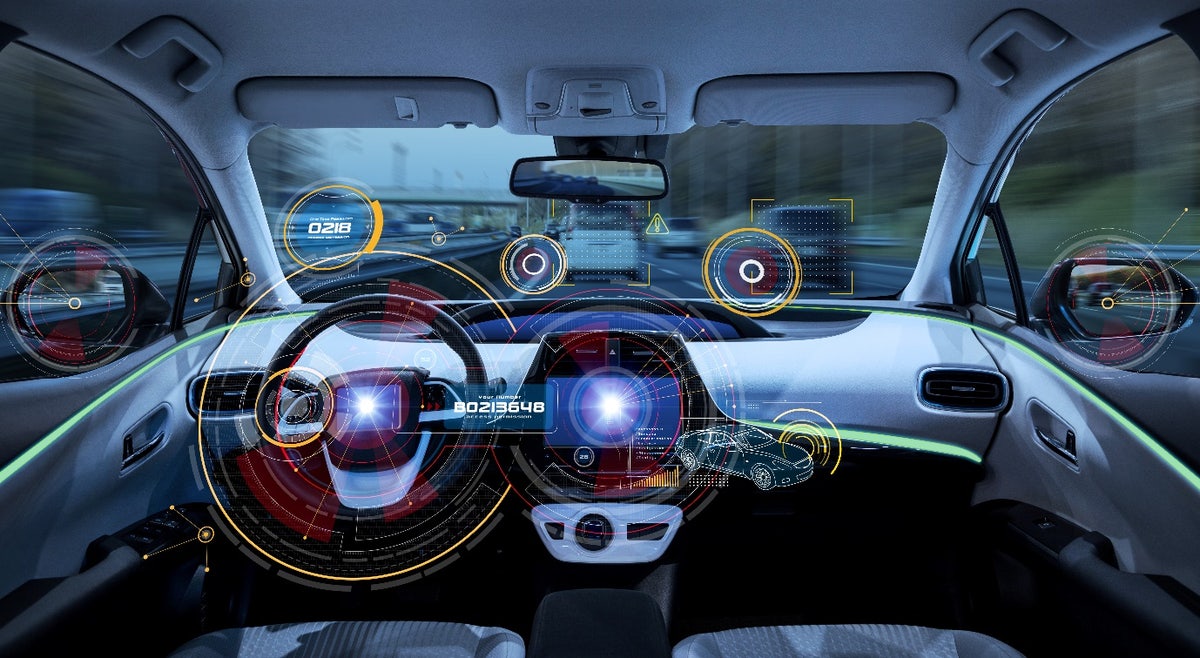
Autonomous cars rely on a complex system of sensors, including cameras, radar, and lidar, to detect their surroundings. This information is processed using sophisticated AI algorithms that enable the vehicle to make decisions in real-time.
- Sensors and Cameras: Detecting obstacles, lanes, and traffic signals.
- GPS and Mapping: Providing location data and detailed maps.
- AI Processing: Interpreting data and making driving decisions.
The cost of autonomous vehicles is expected to be higher than traditional human-operated private vehicles and public transit but potentially lower than human-driven taxis and ride-hailing services. As technology advances, economies of scale are likely to reduce costs, making autonomous vehicles more accessible.
Current Trends in Autonomous Vehicle Technology
As we move towards a future dominated by self-driving cars, it’s essential to understand the current trends shaping the autonomous vehicle landscape. The industry is experiencing rapid growth, driven by advancements in AI, reductions in hardware costs, and increasing investment from major companies.
Key Players in the Industry
Several key players are leading the charge in autonomous vehicle technology. Companies like Waymo, Tesla, and General Motors are at the forefront, investing heavily in research and development. These companies are not only developing the vehicles themselves but also the infrastructure and software necessary for their operation.
According to a recent report, the global autonomous vehicle market is expected to be dominated by a few major players, with Waymo and Tesla leading the way in terms of market share.
| Company | Investment in AV Technology | Notable Achievements |
|---|---|---|
| Waymo | $1 billion+ | Over 10 million miles driven autonomously |
| Tesla | $500 million+ | Autopilot technology in over 1 million vehicles |
| General Motors | $300 million+ | Acquisition of Cruise, a leading AV company |
Recent Innovations
Recent innovations in autonomous vehicle technology have been significant, with advancements in AI and machine learning enabling vehicles to become increasingly sophisticated. The development of more efficient and cost-effective sensors has also been a key factor in the growth of the industry.
“The future of autonomous vehicles is not just about the vehicles themselves, but about creating a comprehensive ecosystem that supports their operation.” –
Some of the recent innovations include the development of Level 4 autonomous vehicles, which can operate without human intervention in most cases. Additionally, advancements in computer vision have enabled vehicles to better understand their surroundings.
- Advancements in AI and machine learning
- Development of more efficient and cost-effective sensors
- Creation of comprehensive ecosystems for AV operation
Global Developments
Autonomous vehicle technology is being developed and implemented globally, with various countries and regions making significant progress. China and the United States are among the leaders in terms of investment and innovation.
A report by the International Transport Forum highlights the global developments in autonomous vehicle technology, noting that countries with supportive regulatory frameworks are seeing faster adoption rates.
Safety and Regulation: The Road Ahead
Ensuring the safe deployment of autonomous vehicles requires a multifaceted approach to regulation and safety protocols. As the technology continues to evolve, governments and industries must work together to establish comprehensive frameworks that address the unique challenges posed by autonomous cars.
Understanding Regulatory Frameworks
Regulatory frameworks for autonomous vehicles are being developed globally, with various countries adopting different approaches. Key considerations include liability, safety standards, and cybersecurity. For instance, the United States has seen a mix of federal and state-level regulations, with some states like California and Nevada taking the lead in testing and deployment.
The regulatory landscape is complex, involving multiple stakeholders and requiring a balanced approach that fosters innovation while ensuring public safety. Some of the critical aspects being addressed include:
- Data protection and privacy
- Cybersecurity measures
- Standards for vehicle-to-vehicle (V2V) and vehicle-to-infrastructure (V2I) communication
Safety Standards and Requirements
Safety standards for autonomous vehicles are crucial to their successful integration into daily life. These standards encompass a wide range of factors, including:
- Sensory and perception systems that enable vehicles to detect and respond to their environment.
- Software and hardware reliability, ensuring that the systems operate as intended under various conditions.
- Testing and validation procedures to verify the safety and efficacy of autonomous vehicles.
Years of testing and regulatory approval will be required before autonomous vehicles are commercially available in most jurisdictions. This process involves rigorous testing, including simulation tests, closed-course tests, and on-road testing, to ensure that autonomous vehicles meet stringent safety standards.
Public Acceptance of Autonomous Cars
Public acceptance of autonomous cars is a complex issue, influenced by various factors including consumer attitudes and educational efforts. As the technology continues to evolve, understanding and addressing the concerns of potential users is crucial for widespread adoption.
Consumer Attitudes Toward Self-Driving Vehicles
Consumer attitudes toward self-driving vehicles are varied and often influenced by factors such as safety concerns, trust in technology, and perceived benefits. Many motorists are hesitant to adopt autonomous vehicles due to concerns about their reliability and safety in various driving conditions.
A significant challenge is the reluctance to pay a premium for vehicles that may sometimes be unable to reach a destination due to inclement weather or unmapped roads. Educating consumers about the capabilities and limitations of autonomous vehicles can help in managing expectations and building trust.
The Role of Education in Acceptance
Education plays a pivotal role in the acceptance of autonomous cars. By informing consumers about how self-driving cars work, their safety features, and the potential benefits they offer, we can foster a more positive perception of the technology.
A well-informed public is more likely to embrace autonomous vehicles. Educational efforts can take many forms, including public awareness campaigns, demonstrations, and interactive experiences that allow people to understand and engage with the technology.
| Educational Method | Description | Impact on Acceptance |
|---|---|---|
| Public Awareness Campaigns | Informing the public through media and events | High |
| Demonstrations and Test Drives | Allowing consumers to experience autonomous vehicles firsthand | Very High |
| Interactive Experiences | Engaging consumers through interactive platforms | High |
By employing a combination of these educational strategies, we can increase public trust and acceptance of autonomous cars, paving the way for their successful integration into our transportation systems.
Environmental Impact of Autonomous Vehicles
One of the most compelling advantages of autonomous vehicles is their capacity to mitigate the environmental impact of transportation. By optimizing driving habits and reducing unnecessary acceleration and braking, autonomous cars can significantly lower emissions and fuel consumption.
Reducing Emissions and Fuel Consumption
Autonomous vehicles can provide various benefits, including reduced energy consumption and pollution. They achieve this through several mechanisms:
- Smooth acceleration and braking reduce fuel consumption.
- Optimized route planning minimizes travel distance.
- Potential for increased use of electric vehicles.
Emissions Reduction is a critical aspect of the environmental benefits offered by autonomous vehicles. By improving driving efficiency and promoting the use of cleaner energy sources, autonomous cars can significantly reduce their carbon footprint.
Integration with Sustainable Transport Options
Autonomous vehicles can also support vehicle sharing, reducing total vehicle ownership and travel. This integration with sustainable transport options can lead to a more environmentally friendly transportation system.
| Sustainable Transport Option | Environmental Benefit | Role of Autonomous Vehicles |
|---|---|---|
| Electric Vehicles | Zero tailpipe emissions | Optimized charging and energy management |
| Vehicle Sharing | Reduced total vehicle ownership | Increased efficiency and reduced idle time |
| Public Transit Integration | Enhanced mobility and reduced congestion | Improved routing and scheduling |
By integrating autonomous vehicles with sustainable transport options, we can create a more environmentally friendly transportation system that not only reduces emissions but also promotes a healthier environment for future generations.
Benefits of Autonomous Cars for Urban Mobility
The future of urban mobility is closely tied to the development and implementation of autonomous cars. As cities continue to expand and populations grow, the need for efficient, safe, and sustainable transportation solutions becomes increasingly critical. Autonomous vehicles are poised to address these needs by transforming the way we travel within urban environments.
Enhancing Traffic Flow
Autonomous cars can significantly enhance traffic flow by improving the efficiency of vehicle traffic. Advanced navigation systems and real-time data analysis enable self-driving cars to optimize their routes and speed, reducing the likelihood of congestion. Moreover, autonomous vehicles can communicate with each other and with traffic infrastructure to smooth out the flow of traffic, minimizing the stop-and-go patterns that often lead to congestion.
- Improved route optimization
- Real-time traffic monitoring
- Enhanced vehicle-to-vehicle (V2V) and vehicle-to-infrastructure (V2I) communication
Reducing Congestion
By reducing the need for parking at destinations and improving the efficiency of traffic flow, autonomous cars can significantly reduce urban congestion. Smart parking solutions integrated with autonomous vehicles can direct drivers (or rather, their cars) to available parking spots more efficiently, reducing the time spent circling around looking for parking. This not only reduces congestion but also decreases emissions and improves overall air quality.

Furthermore, with the ability to drop off passengers and then continue to other destinations or park in more remote areas, autonomous cars can help in reducing the traffic volume in heavily congested city centers.
The Challenges Facing Autonomous Vehicle Adoption
The adoption of autonomous vehicles is hindered by several technological, ethical, and legal barriers.
Significant technical problems must be solved before autonomous vehicles can operate reliably in all normal conditions. These include improving sensor accuracy, enhancing machine learning algorithms, and ensuring robust cybersecurity measures.
Technological Barriers
One of the primary challenges is developing autonomous vehicles that can accurately perceive their environment. This involves sophisticated sensors and complex algorithms to interpret the data correctly.
- Sensor Accuracy: Ensuring that sensors can detect and respond to various conditions, such as weather and lighting.
- Machine Learning: Improving algorithms to make accurate decisions based on the data collected.
- Cybersecurity: Protecting the vehicle’s systems from potential cyber threats.
Ethical and Legal Considerations
Autonomous vehicles also raise significant ethical and legal questions. For instance, how should a self-driving car prioritize the safety of its occupants versus pedestrians in a potential accident?
| Issue | Description | Potential Solution |
|---|---|---|
| Liability in Accidents | Determining who is responsible in the event of an accident involving an autonomous vehicle. | Establishing clear regulations and laws regarding liability. |
| Ethical Decision-Making | Programming vehicles to make ethical decisions in complex situations. | Developing universal ethical standards for autonomous vehicles. |
| Data Privacy | Ensuring that the data collected by autonomous vehicles is handled securely and in compliance with privacy laws. | Implementing robust data protection measures. |
Addressing these challenges is crucial for the successful adoption of autonomous vehicles. It requires a collaborative effort from technology companies, policymakers, and the public to overcome the technological, ethical, and legal hurdles.
Future Innovations in Autonomous Driving
Autonomous driving technology is on the cusp of a breakthrough, driven by innovations in AI, machine learning, and smart infrastructure. The future of transportation is expected to be shaped by these advancements, leading to safer, more efficient, and more sustainable travel.
AI and Machine Learning Applications
AI and machine learning will play crucial roles in the development of future autonomous driving technologies. These technologies will enable self-driving cars to better understand their environment, make informed decisions, and navigate complex scenarios.
Key Applications of AI and Machine Learning:
- Enhanced object detection and recognition
- Improved predictive analytics for safer navigation
- Personalized driving experiences tailored to individual preferences
As noted by Dr. Mary Czerwinski, a renowned expert in human-computer interaction, “The integration of AI and machine learning in autonomous vehicles will revolutionize the way we interact with our cars and the road environment.”
“The future of autonomous driving is not just about the technology itself, but about how it will transform our daily lives and the transportation landscape.”
Connectivity with Smart Infrastructure
Connectivity with smart infrastructure will be essential for the efficient operation of self-driving cars. This integration will enable vehicles to communicate with the environment, infrastructure, and other vehicles, creating a seamless and safe transportation network.
| Benefits of Smart Infrastructure | Description | Impact |
|---|---|---|
| Enhanced Safety | Real-time data exchange between vehicles and infrastructure | Reduced accidents and improved road safety |
| Increased Efficiency | Optimized traffic flow and reduced congestion | Lower travel times and improved productivity |
| Sustainability | Integration with public transport and green initiatives | Reduced emissions and environmental impact |
The future of autonomous driving will be shaped by the convergence of AI, machine learning, and smart infrastructure. As these technologies continue to evolve, we can expect significant improvements in safety, efficiency, and sustainability.
The Business Impact of Autonomous Cars
The rise of ai cars is expected to create new market opportunities and transform the automotive industry. As autonomous vehicles become increasingly prevalent, their impact on the economy and job markets will be significant.
Emerging Opportunities
The adoption of autonomous vehicles could power a variety of stocks in an array of sectors, including chipmakers, rideshare companies, and self-driving technology developers. According to industry experts, “the autonomous car future looks bright, with significant investments being made in AI and machine learning technologies.”
“The future of transportation is autonomous, and it’s going to change the way we live and work.”
Some of the new market opportunities include:
- Development of autonomous vehicle technology
- Ridesharing and ride-hailing services
- Advanced driver-assistance systems (ADAS)
- Smart infrastructure development
Impact on Employment
While the autonomous car future brings many benefits, it also poses challenges for certain job markets. Jobs for drivers may decline as autonomous vehicles become more common. However, new job opportunities are expected to emerge in fields related to AI, machine learning, and autonomous vehicle maintenance.
| Job Category | Potential Impact |
|---|---|
| Drivers | Decline in demand |
| AI/ML Developers | Increased demand |
| Autonomous Vehicle Technicians | New job opportunities |

As the autonomous vehicle industry continues to evolve, it’s essential to monitor its impact on the economy and job markets. By understanding these changes, we can better prepare for the future and capitalize on emerging opportunities.
Predictions for Autonomous Cars by 2030
As we look ahead to 2030, the future of self-driving cars is becoming increasingly clear. Autonomous vehicles are expected to revolutionize the way we travel, making transportation safer, more efficient, and environmentally friendly.
Key Developments on the Horizon
By 2030, autonomous vehicles will be sufficiently reliable and affordable to displace most human driving. This shift is anticipated to provide huge savings and benefits, transforming the way we commute and transport goods. AI cars will play a pivotal role in this transformation, leveraging advanced AI and machine learning applications to navigate complex road scenarios.
Long-Term Impact
The long-term effects of autonomous vehicles on society and the economy will be profound. With the potential to reduce accidents, decrease traffic congestion, and lower emissions, autonomous vehicles are poised to have a significant positive impact. As the technology continues to evolve, we can expect to see new market opportunities emerge and changes in employment and job markets.
FAQ
What are autonomous cars and how do they work?
What are the different levels of autonomy in vehicles?
How will autonomous cars impact the environment?
What are the benefits of autonomous cars for urban mobility?
What are the challenges facing the adoption of autonomous vehicles?
How will autonomous cars change the job market?
What can we expect from autonomous cars by 2030?
Are autonomous cars safe?
How will autonomous cars be regulated?
What is the role of AI in autonomous cars?