





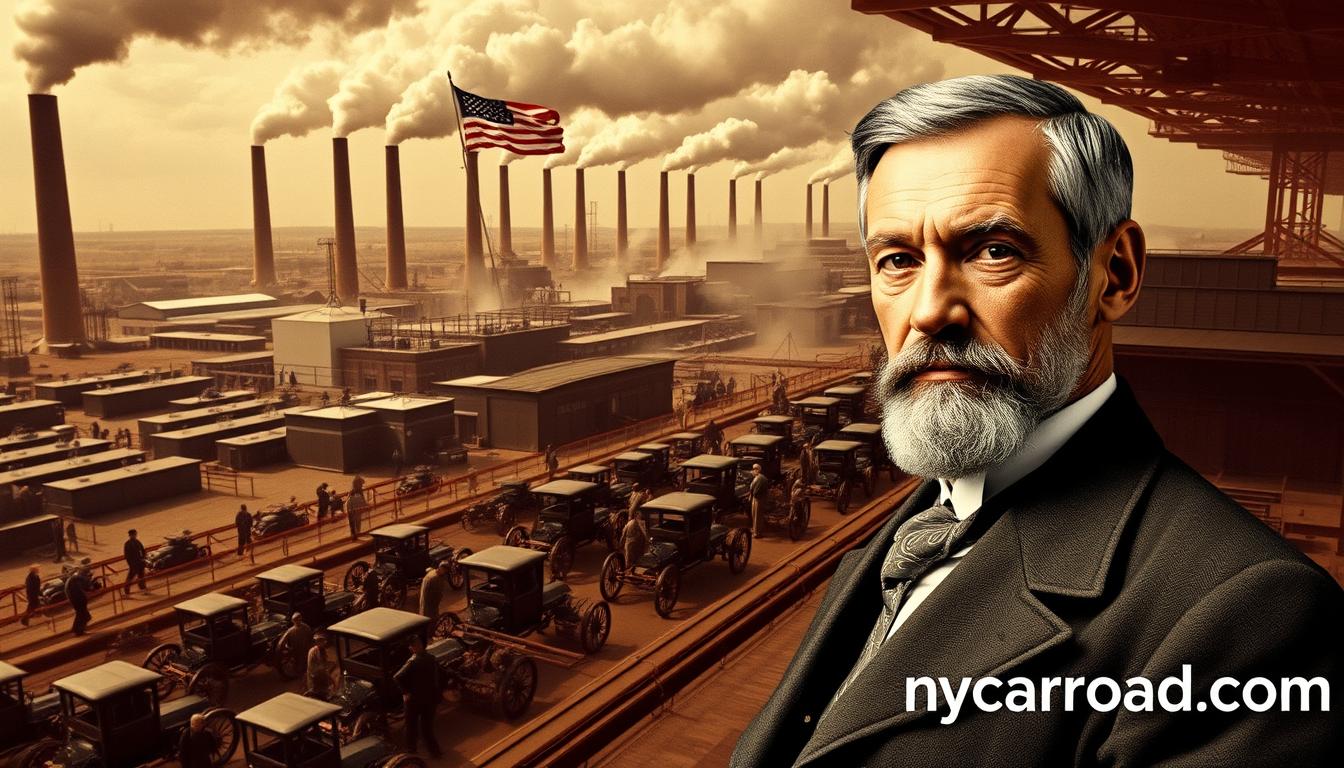
Over 40 million vehicles bearing the Ford nameplate have been sold worldwide, a testament to the brand’s enduring legacy. This remarkable achievement is rooted in the vision of Henry Ford, who revolutionized the automotive industry by making cars more accessible to the average consumer.
Henry Ford’s innovations transformed the manufacturing process, introducing the assembly line production method that significantly reduced production time and costs. This pioneering approach not only democratized car ownership but also paved the way for the global automotive industry as we know it today.
Key Takeaways
- The Ford brand has sold over 40 million vehicles worldwide.
- Henry Ford introduced the assembly line production method.
- Ford’s innovations made cars more accessible to the average consumer.
- The brand’s legacy continues to influence the global automotive industry.
- Henry Ford’s vision transformed the manufacturing process.
Introduction to Ford’s Influence on the Automotive Industry
Henry Ford’s innovations revolutionized the automotive world, leaving a lasting legacy. The Ford Motor Company has been at the forefront of the automotive industry since its inception in 1903. Ford’s influence extends beyond its own vehicles, as it introduced manufacturing techniques that transformed the industry as a whole.
The introduction of the assembly line by Ford in 1913 was a game-changer. It significantly reduced production time and costs, making cars more affordable for the average consumer. This innovation had a ripple effect, with other manufacturers adopting similar techniques to remain competitive.
Ford’s impact on the automotive industry can be seen in several key areas:
| Innovation | Impact | Year Introduced |
|---|---|---|
| Assembly Line Production | Reduced production time and costs | 1913 |
| Model T | Made cars affordable for the masses | 1908 |
| V8 Engine | Introduced powerful engine options | 1932 |
The Ford legacy continues to shape the automotive industry today. With ongoing innovations in electric and autonomous vehicles, Ford remains a leader in the field. The company’s commitment to quality, innovation, and customer satisfaction has ensured its enduring influence on the industry.
The Early Life of Henry Ford
Born on a farm in Dearborn, Michigan, Henry Ford’s life was influenced by his childhood experiences and innate curiosity about mechanics. Growing up on a farm played a significant role in shaping his work ethic and interest in technology.
Childhood and Family Background
Henry Ford was born on July 30, 1863, to William and Mary Ford. He was the eldest of six children. His father was an Irish immigrant who came to the United States in 1847. Henry’s mother was a former schoolteacher, and she played a crucial role in his early education. The family farm was a self-sufficient unit where Henry learned the value of hard work and developed his mechanical skills by fixing and maintaining farm equipment.
Initial Interest in Engineering
Henry Ford’s fascination with mechanics began at a young age. He was particularly drawn to watches and clocks, often taking them apart to understand their workings. This curiosity about how things worked laid the foundation for his future innovations. At the age of 15, Henry was given a pocket watch, which he dissected and reassembled, demonstrating his budding mechanical aptitude.
First Job and Mechanical Apprenticeship
In 1879, Henry Ford left the family farm to work as an apprentice at a shipbuilding firm in Detroit. Later, he moved to the Edison Illuminating Company, where he worked as an engineer. It was during this period that he began experimenting with gasoline engines and built his first gasoline-powered vehicle, the Quadricycle, in 1896. This early experimentation was crucial in developing his ideas for the automobile.
| Year | Event | Significance |
|---|---|---|
| 1863 | Henry Ford born | Future founder of Ford Motor Company |
| 1879 | Apprenticeship at shipbuilding firm | Gained mechanical experience |
| 1896 | Built the Quadricycle | First gasoline-powered vehicle |
Henry Ford’s early life was marked by a strong work ethic, mechanical aptitude, and innovative spirit. These qualities ultimately led him to revolutionize the automotive industry and transform the way cars were manufactured and consumed.
The Birth of Ford Motor Company
With a vision to revolutionize the automotive industry, Henry Ford founded the Ford Motor Company on June 16, 1903. This marked the beginning of a new era in the automotive world, driven by innovation and a commitment to making cars accessible to the average American.
Founding the Company
The establishment of Ford Motor Company was the culmination of Henry Ford’s years of experimentation and innovation in the automotive sector. Backed by a group of investors, including Alexander Malcomson, Henry Ford brought his vision to life in a small factory on Mack Avenue in Detroit.
The initial investment was $28,000, a significant amount that underscored the commitment of the investors to Ford’s vision. The company’s first car, the Model A, was introduced shortly after its founding, signaling the start of a new chapter in automotive history.
The Vision Behind the Brand
Henry Ford’s vision went beyond just manufacturing cars; he aimed to create a culture of innovation and accessibility. He believed in making automobiles that were not just affordable but also reliable and easy to drive. This vision was encapsulated in his famous statement, “The way to make a man trustworthy is to trust him,” reflecting his belief in empowering both his employees and customers.
The vision behind the Ford brand was also influenced by the societal needs of the time. With the United States undergoing rapid industrialization and urbanization, there was a growing need for efficient transportation solutions. Ford Motor Company positioned itself to meet this need by focusing on mass production techniques and innovative manufacturing processes.
Early Challenges and Solutions
Despite its promising start, Ford Motor Company faced several early challenges, including financial constraints, competition, and the need to establish a reliable supply chain. Henry Ford addressed these challenges by implementing innovative manufacturing techniques, such as the assembly line, which significantly reduced production time and costs.
Key Early Challenges and Solutions:
| Challenge | Solution |
|---|---|
| High Production Costs | Introduction of the Assembly Line |
| Financial Constraints | Securing Additional Investment |
| Competition | Innovative Marketing and Product Differentiation |
By overcoming these early challenges, Ford Motor Company was able to establish itself as a leader in the automotive industry, paving the way for its future success.
Innovations in Manufacturing
With the introduction of the assembly line, Ford Motor Company redefined the future of automotive manufacturing. This innovation not only streamlined production but also significantly reduced the time and cost associated with building vehicles.
The Assembly Line Revolution
The assembly line revolution, pioneered by Henry Ford, was a game-changer in the automotive industry. By breaking down the production process into a series of sequential tasks, Ford was able to increase efficiency and reduce production time from 12 hours to just 2.5 hours per vehicle.
This revolutionary approach to manufacturing was first implemented in 1913 at Ford’s Highland Park plant. The assembly line not only improved productivity but also made cars more affordable for the average consumer, thereby expanding the market significantly.
Mass Production Techniques
Ford’s mass production techniques went beyond the assembly line. The company introduced standardization and interchangeable parts, which further streamlined production. By ensuring that parts were uniform and could be easily swapped, Ford reduced waste and improved quality control.
These techniques, combined with the assembly line, enabled Ford to produce vehicles on a scale previously unimaginable. The efficiency gains from these innovations contributed to the company’s ability to offer competitive pricing, making Ford vehicles more accessible to a wider audience.
Impact on the Economy
The impact of Ford’s manufacturing innovations on the economy was profound. By reducing production costs and increasing efficiency, Ford was able to lower the price of its vehicles, making car ownership a reality for many Americans. This had a ripple effect on the economy, stimulating growth in related industries such as road construction, gasoline sales, and tourism.
Moreover, Ford’s manufacturing techniques influenced other industries, promoting the adoption of assembly line production and mass production techniques across various sectors. This contributed to the United States becoming a leading industrial power in the early 20th century, with Ford at the forefront of this transformation.
The Ford legacy in manufacturing continues to be felt today, with the company’s innovations remaining a cornerstone of the automotive industry’s history and development.
Iconic Ford Models Throughout History
The history of Ford is replete with models that have not only revolutionized the automotive industry but also become cultural icons. These models have played a significant role in shaping Ford’s success and leaving a lasting legacy.
The Model T: A Game Changer
The Ford Model T, introduced in 1908, was a groundbreaking vehicle that made car ownership accessible to the average American. With its affordability, durability, and versatility, the Model T revolutionized the automotive industry, transforming the way people lived, worked, and traveled.
Key Features of the Model T:
- Affordable price
- Durable construction
- Versatile design
The Mustang: An American Legend
The Ford Mustang, first introduced in 1964, has become an iconic symbol of American automotive culture. Its sleek design, powerful engine, and sporty appeal have made it a favorite among car enthusiasts. The Mustang has undergone several transformations over the years, yet it remains a testament to Ford’s commitment to innovation and performance.
The Mustang’s impact on American car culture cannot be overstated. It has been featured in numerous films, songs, and other forms of media, cementing its status as a cultural icon.
F-Series Trucks: A Best-Seller
Ford’s F-Series Trucks have been a mainstay of the company’s lineup since 1948. Known for their durability, capability, and versatility, these trucks have become a staple on American roads. The F-Series has consistently been one of the best-selling vehicles in the United States, a testament to Ford’s understanding of the needs of American drivers.
| Model | Year Introduced | Key Features |
|---|---|---|
| Model T | 1908 | Affordable, durable, versatile |
| Mustang | 1964 | Sleek design, powerful engine, sporty appeal |
| F-Series Trucks | 1948 | Durable, capable, versatile |
These iconic models have not only contributed to Ford’s success but have also played a significant role in shaping the automotive industry. They continue to be celebrated by car enthusiasts and remain an integral part of American automotive culture.
The Role of Ford in World War II
Ford Motor Company’s role in World War II was multifaceted, involving not just the production of military vehicles but also innovative manufacturing techniques that supported the Allied forces. As the war effort demanded rapid production and innovation, Ford’s manufacturing capabilities were pivotal.
Production of Military Vehicles
During the war, Ford shifted its production lines to manufacture a variety of military vehicles and equipment, including jeeps, aircraft, and tanks. The company’s ability to adapt its assembly lines for military production was a significant factor in meeting the high demand for military equipment.
- Production of Jeeps: Ford produced thousands of Jeeps, which became iconic symbols of the war effort.
- Aircraft Production: Ford was involved in the production of aircraft parts and, in some cases, entire aircraft, contributing to the airpower of the Allied forces.
- Tank Production: The company also manufactured tanks, playing a crucial role in the armored divisions of the Allied forces.
Contributions to the War Effort
Ford’s contributions went beyond just the production of military vehicles. The company implemented innovative manufacturing techniques, such as the assembly line method, to increase efficiency and output. This not only supported the war effort but also helped to mobilize the U.S. economy.
- Innovative Manufacturing: Ford’s use of assembly lines and mass production techniques significantly increased the production rate of military equipment.
- Workforce Mobilization: Ford also played a role in mobilizing the workforce, employing thousands of workers, including women, in its factories.
Post-War Economic Impact
The post-war period saw a significant economic impact due to Ford’s wartime efforts. The company’s shift back to civilian production helped to stimulate the post-war economy, contributing to the economic boom of the late 1940s and 1950s.
Ford’s legacy, built on its contributions during World War II, continued to influence the automotive industry and beyond. Henry Ford’s history of innovation and manufacturing prowess had a lasting impact on American industry.
Ford’s Global Expansion
As Ford Motor Company grew, it set its sights on international markets, navigating the complexities of global expansion. This strategic move not only broadened its customer base but also played a crucial role in establishing Ford as a global automotive leader.
Entering International Markets
Ford’s entry into international markets was a gradual process that began in the early 20th century. The company established its first overseas assembly plant in Canada in 1904, marking the beginning of its global journey. Over the years, Ford expanded its presence to various countries in Europe, Asia, and South America, adapting its business model to suit local market conditions.
The company’s global expansion was not without its challenges. Ford faced intense competition from local manufacturers, as well as logistical hurdles in distributing its vehicles across different regions. However, its commitment to quality and innovation helped it overcome these obstacles and establish a strong global footprint.
Adapting Vehicles for Local Needs
One of the key factors in Ford’s global success was its ability to adapt its vehicles to meet the needs of local markets. For instance, in regions with poor road conditions, Ford introduced vehicles with enhanced suspension systems and higher ground clearance. In other markets, the company offered vehicles with fuel-efficient engines to cater to the growing demand for eco-friendly transportation.
- Introduced right-hand drive vehicles for markets like the UK and Australia
- Developed vehicles with local preferences in mind, such as larger cargo capacity for certain regions
- Implemented region-specific safety features to comply with local regulations
Influential Partnerships and Acquisitions
Ford’s global expansion was also facilitated by strategic partnerships and acquisitions. The company formed joint ventures with local manufacturers to leverage their market knowledge and production capabilities. Notable acquisitions, such as the purchase of Jaguar and Land Rover, further expanded Ford’s global reach and diversified its product portfolio.
“Ford’s ability to form strategic partnerships and adapt to local market conditions has been crucial in its global success.”
These strategic moves not only enhanced Ford’s global presence but also contributed to its position as a leader in the international automotive industry. As the company continues to evolve, its global expansion strategy remains a key component of its long-term success.
Ford and Environmental Sustainability
With a legacy of innovation, Ford is now steering towards a more sustainable future. As a pioneer in the automotive industry, Ford has been a significant player in shaping the history of Ford cars, and its commitment to environmental sustainability is a crucial step forward.
Green Technologies
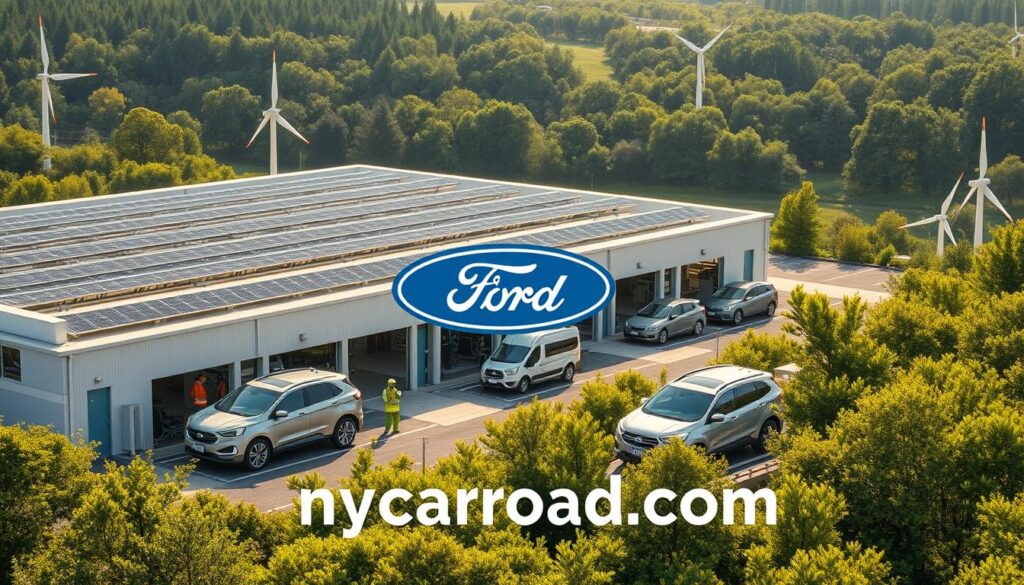
Ford has been embracing green technologies to reduce its environmental footprint. One of the key initiatives includes the implementation of energy-efficient manufacturing processes. For instance, Ford has invested heavily in renewable energy sources, such as solar and wind power, to energize its manufacturing facilities.
Key Green Initiatives:
- Renewable energy integration
- Water conservation efforts
- Waste reduction programs
These initiatives not only contribute to a cleaner environment but also enhance the overall efficiency of Ford’s operations.
Electric Vehicles and Future Initiatives
Ford is making significant strides in the electric vehicle (EV) market, recognizing the importance of EVs in reducing carbon emissions. The company has announced plans to expand its EV lineup, including the highly anticipated Ford Mustang Mach-E.
| Model | Range | Price |
|---|---|---|
| Ford Mustang Mach-E | Up to 305 miles | Starting at $43,895 |
| F-150 Lightning | Up to 300 miles | Starting at $39,974 |
Ford’s commitment to electric vehicles is a testament to its dedication to a sustainable future, aligning with the Ford legacy of innovation.
Corporate Social Responsibility Efforts
Ford’s corporate social responsibility (CSR) efforts extend beyond its products to include community engagement and sustainability initiatives. The company has been involved in various programs aimed at promoting environmental stewardship and supporting local communities.
CSR Highlights:
- Community development programs
- Environmental education initiatives
- Disaster relief efforts
Through these efforts, Ford demonstrates its commitment to being a responsible corporate citizen, contributing positively to the society and environment.
The Challenges Facing Ford Today
As the automotive landscape continues to evolve, Ford Motor Company faces a myriad of challenges that test its legacy and adaptability. The company’s journey is marked by its ability to innovate and respond to changing consumer needs, technological advancements, and shifting global market dynamics.
Adapting to a Changing Market
The automotive industry is undergoing significant transformations, driven by technological innovation, environmental concerns, and changing consumer behaviors. Ford has been at the forefront of adapting to these changes, investing heavily in electric vehicle technology and autonomous driving capabilities.
Key strategies include:
- Enhancing electric vehicle offerings to meet growing demand for sustainable mobility.
- Investing in autonomous driving technology to stay competitive.
- Expanding mobility services to cater to evolving consumer needs.
Competition and Innovation
The automotive industry is highly competitive, with traditional manufacturers facing challenges from new entrants, particularly tech companies and startups focusing on electric and autonomous vehicles. Ford has responded by fostering a culture of innovation, collaborating with technology companies, and acquiring startups to stay ahead.
“The future of mobility is not just about the vehicles themselves, but about creating a seamless, sustainable, and connected experience for consumers.” – Jim Farley, CEO, Ford Motor Company
Financial Challenges and Solutions
Ford, like many in the industry, faces financial challenges stemming from high investment costs in new technologies, fluctuating market demands, and economic uncertainties. To address these, Ford has been focusing on cost reduction, restructuring its operations, and exploring new revenue streams through services and financing options.
Efficient financial management is crucial, involving:
- Streamlining operations to reduce costs.
- Diversifying revenue streams through mobility services and financial services.
- Investing in technologies that offer high returns and competitive advantage.
By navigating these challenges effectively, Ford aims to not only sustain its legacy but to emerge stronger and more competitive in a rapidly evolving automotive landscape.
The Legacy of Henry Ford
Henry Ford’s influence on modern industry and society is profound, with his legacy evident in manufacturing, technology, and cultural shifts. His impact extends far beyond the automotive industry, shaping the way goods are produced, consumed, and distributed worldwide.
Contributions Beyond the Automotive Industry
Henry Ford’s innovations in manufacturing, particularly the introduction of the assembly line, revolutionized production processes across various industries. His emphasis on efficiency, standardization, and the use of interchangeable parts raised productivity and lowered costs, making consumer goods more accessible to the average American.
Impact on Other Industries: Ford’s manufacturing techniques influenced industries such as aerospace, electronics, and consumer appliances. Companies adopted similar production methods to improve efficiency and reduce production time.
- Aerospace industry: Manufacturers applied assembly line principles to produce aircraft more efficiently.
- Electronics: Companies like Sony and Samsung adopted mass production techniques for consumer electronics.
- Consumer Appliances: Brands such as Whirlpool and GE implemented assembly line production for household appliances.
How His Principles Resonate Today
Henry Ford’s principles of innovation, hard work, and customer satisfaction continue to resonate in today’s business landscape. His commitment to quality and his vision for making products affordable and accessible to the masses remain core values in many successful companies.
| Principle | Application Today | Impact |
|---|---|---|
| Innovation | Continuous investment in R&D | Leads to new products and services |
| Customer Satisfaction | Focus on customer experience and feedback | Enhances brand loyalty and reputation |
| Quality | Implementation of stringent quality control measures | Ensures high standards and reliability |
Influence on Future Generations
Henry Ford’s legacy extends to future generations through the continued success of the Ford Motor Company and the countless entrepreneurs and innovators he inspired. His story serves as a testament to the power of vision, perseverance, and innovation.
“The only real mistake is the one from which we learn nothing.” This quote, often attributed to Henry Ford, encapsulates his approach to challenges and failures, inspiring future generations to adopt a similar mindset.
The Ford legacy is a reminder that innovation and leadership can come from anywhere, and that the principles of hard work, quality, and customer satisfaction are timeless.
Ford’s Role in American Culture
From the assembly line to the big screen, Ford has played a significant role in shaping American culture. The brand’s influence extends beyond the automotive industry, reflecting and shaping American values and identity.
Reflections in Popular Media
Ford’s presence in popular media is a testament to its cultural significance. The brand has been featured in numerous films, TV shows, and music videos, often symbolizing freedom, adventure, and the American spirit. For instance, the Ford Mustang has been immortalized in movies like “Bullitt” and “Gone in Sixty Seconds,” becoming an icon of American pop culture.
The company’s vehicles have also been used in various forms of media to convey different themes and emotions. Whether it’s a rugged F-Series truck in a rural setting or a sleek Mustang on the highway, Ford’s vehicles are often used to tell stories that resonate with American audiences.
Ford’s Impact on American Identity
Ford has contributed significantly to American identity, embodying the country’s values of innovation, hard work, and freedom. The brand’s commitment to manufacturing and quality has made it a staple of American industry, influencing the way Americans live, work, and travel.
A look at the Ford timeline reveals key milestones that highlight the brand’s impact on American society. From the introduction of the assembly line to the production of military vehicles during World War II, Ford has been at the forefront of American industrial progress.
| Year | Event | Impact |
|---|---|---|
| 1908 | Introduction of the Model T | Revolutionized car ownership for the average American |
| 1913 | Introduction of the Assembly Line | Significantly reduced production time and costs |
| 1941-1945 | Production of Military Vehicles during WWII | Contributed to the war effort and supported American troops |
Community Engagement and Philanthropy
Ford’s commitment to community engagement and philanthropy is another aspect of its cultural impact. The company has supported various initiatives over the years, focusing on education, sustainability, and community development. Through programs like Ford Motor Company’s Ford Fund, the brand has contributed to numerous causes, enhancing the quality of life for many Americans.
The history of Ford cars is not just about the vehicles themselves but also about the people and communities they have touched. Ford’s philanthropic efforts reflect its understanding of its role in society and its commitment to giving back.
Future of Ford
As the automotive landscape continues to evolve, Ford Motor Company is poised to lead the charge into a new era of innovation. With a legacy built on pioneering advancements, Ford is now on the brink of a new revolution in mobility.
Upcoming Innovations and Models
Ford is committed to expanding its lineup with vehicles that not only meet the demands of the modern consumer but also embrace the latest technological advancements. Some of the key models and innovations include:
- Electric Vehicles (EVs): Ford is investing heavily in EVs, with plans to offer a range of electric models across its portfolio.
- Hybrid Models: Combining the benefits of electric and gasoline engines, Ford’s hybrid models offer improved efficiency without compromising on performance.
- Advanced Driver-Assistance Systems (ADAS): Ford is integrating advanced safety features into its vehicles, enhancing the driving experience and safety on the road.

The Road to Autonomous Vehicles
Autonomous driving is a significant area of focus for Ford, with the company working tirelessly to develop and refine this technology. Key aspects include:
- Testing and Validation: Ford is conducting extensive testing to ensure the safety and reliability of its autonomous vehicles.
- Partnerships and Collaborations: By partnering with technology leaders, Ford is accelerating the development of autonomous driving capabilities.
- Regulatory Compliance: Ford is working closely with regulatory bodies to ensure that its autonomous vehicles meet all necessary standards.
Vision for the Next Century
Looking ahead, Ford envisions a future where mobility is not just about transportation but about creating a more connected and sustainable world. This vision includes:
- Sustainable Mobility: Ford is committed to reducing its environmental footprint through the use of sustainable materials and practices.
- Innovative Services: The company is exploring new services that enhance the mobility experience, making it more convenient and enjoyable for consumers.
By embracing innovation and staying true to its legacy, Ford Motor Company is set to continue its leadership in the automotive industry for generations to come.
Conclusion: The Lasting Impact of Ford’s Vision
Ford’s history is a testament to innovation and perseverance. From its humble beginnings to its current status as a global automotive leader, Ford Motor Company has left an indelible mark on the industry.
Achievements and Legacy
The History of Ford is marked by significant milestones, including the introduction of the assembly line and the creation of iconic models like the Model T and Mustang. Henry Ford’s vision for making cars accessible to the average consumer revolutionized the automotive world.
Ongoing Innovation
Today, Ford continues to innovate, embracing new technologies and sustainable practices. The company’s commitment to electric vehicles and autonomous driving is shaping the future of transportation.
Discover More
As we reflect on Ford’s legacy, we invite you to explore the brand’s continued impact on the automotive industry. From its Ford origin to its current endeavors, Ford remains a driving force in shaping the future of mobility.
FAQ
Who founded the Ford Motor Company?
What was the first car produced by Ford?
What innovation is Henry Ford most known for?
What is Ford’s most iconic car model?
How did Ford contribute during World War II?
What is Ford’s stance on environmental sustainability?
What are some of Ford’s future plans?
How has Ford influenced American culture?