





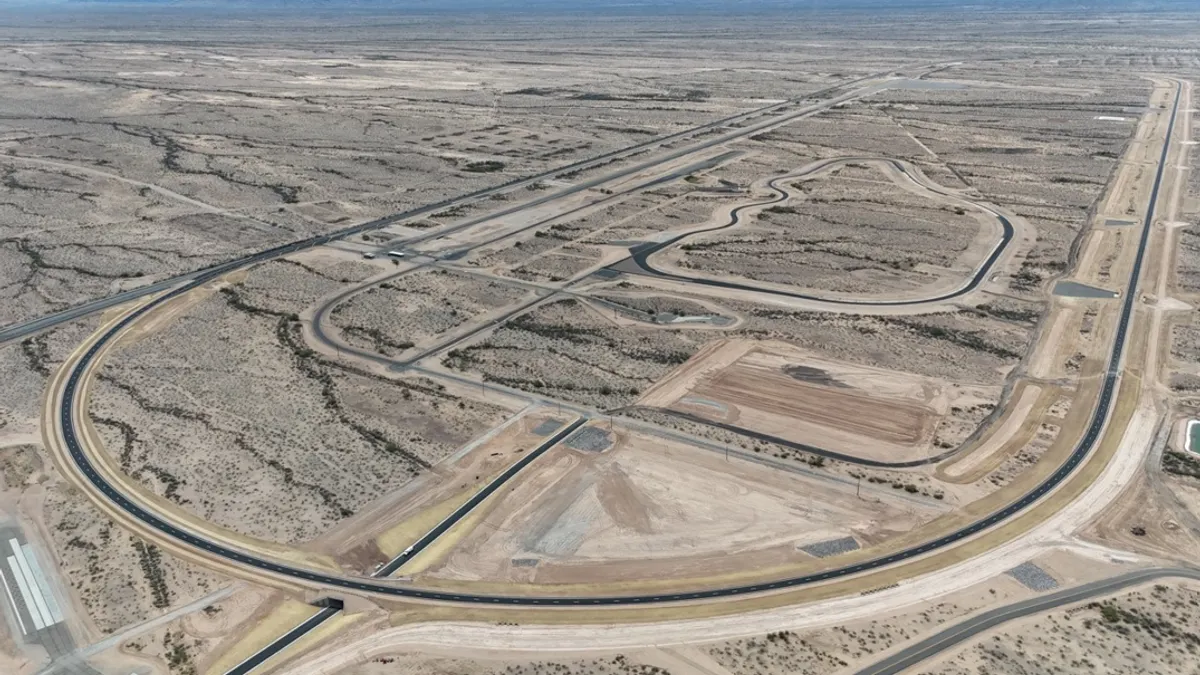
Toyota is investing over $50 million to expand its Arizona Mobility Test Center with a 5.5-mile track, off-road park, and advanced driver assistance testing — enhancing safety and innovation for future vehicles.
Toyota Arizona Vehicle Testing Facility Gets $50 Million Upgrade
Toyota Motor North America (TMNA) has announced a $50 million investment in its Arizona Mobility Test Center at the Toyota Arizona Proving Grounds, aiming to advance vehicle safety, performance, and innovation. Located about 60 miles (96 km) north of Phoenix, the 11,650-acre (4,715-hectare) facility will soon feature:
- A new 5.5-mile (8.85 km) high-speed track
- Specialized ride-and-handling test surfaces
- An off-road park for capability and durability testing
- Additional areas for diverse vehicle evaluations
Most of these enhancements will be completed by the end of 2025. Toyota also plans to add dedicated zones for advanced driver assistance systems (ADAS) testing in the near future.
A Testing Ground for Toyota and the Industry

Initially opened in 1993, the Arizona Mobility Test Center has been instrumental in the development of more than 50 Toyota and Lexus models. Since 2021, Toyota has allowed other automakers and suppliers to use the facility, creating a new revenue stream to fund continuous improvements.
“Site updates make the facility more attractive as an ideal place for companies to test new vehicle capabilities, including by Toyota for our own North American-developed vehicle line-up,” said Stefan Young, Vice President of Research and Development at TMNA.
Boosting North American R&D and Local Manufacturing
This investment reflects Toyota’s “build where we sell” philosophy, focusing on regionalized production and development. Local R&D not only accelerates vehicle innovation but also supports domestic manufacturing — a key strategy to reduce dependency on imports and mitigate the impact of tariffs on vehicles and parts.