




Volkswagen faces a class-action lawsuit in the U.S. over the ID.4’s capacitive touch controls, with owners reporting unintended acceleration and safety risks. Learn about the claims, risks, and VW’s response.
Introduction: Volkswagen Faces Class-Action Lawsuit Over Touch Controls
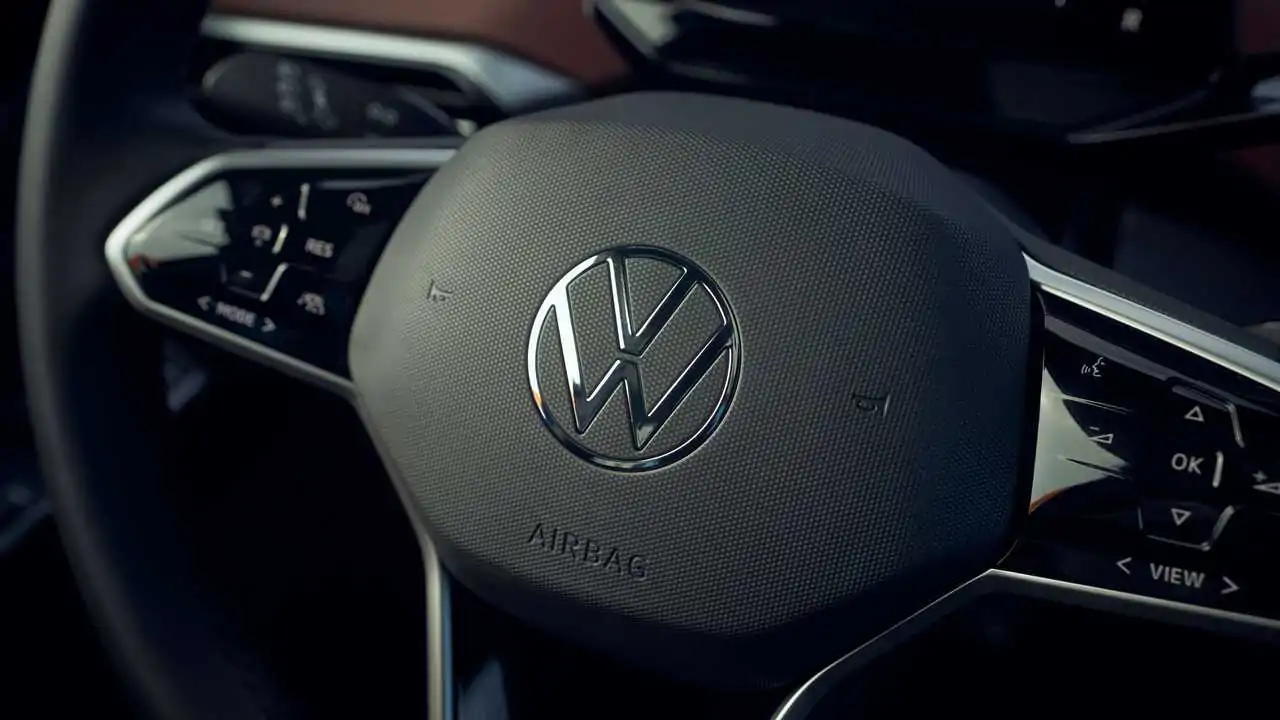
Volkswagen customers are increasingly frustrated with the capacitive touch controls in the 2021–2023 Volkswagen ID.4, and now some are taking legal action. A class-action lawsuit filed in New Jersey alleges that the haptic steering wheel buttons are dangerously sensitive, causing unintended acceleration and creating safety hazards, especially during low-speed maneuvers like parking.
The case adds to the ongoing scrutiny of touch-based controls in modern cars, as automakers balance technology, convenience, and safety.
The Core Allegation: Faulty Capacitive Buttons
The lawsuit centers on the ID.4’s steering wheel haptic buttons, which plaintiffs claim can reactivate adaptive cruise control with just a light brush of the hand.
- One owner reported her ID.4 accelerated unexpectedly while parking after her hand grazed the sensor, resulting in $14,000 in undercarriage damage and a hand injury.
- Another owner crashed into their garage under similar circumstances, damaging both the vehicle and property.
These incidents highlight how overly sensitive touch controls could lead to accidents, even when drivers are performing routine tasks like parking.
Broader Safety Complaints from ID.4 Owners
While only two plaintiffs are named in the lawsuit, the filing references numerous complaints submitted to the U.S. National Highway Traffic Safety Administration (NHTSA).
Reported Issues Include:
- Unintended acceleration during parking maneuvers
- Emergency braking system failures
- Cruise control reactivation without input
- Injuries and property damage
For example, one driver described their ID.4 suddenly surging forward while braking to park, crashing over a curb and into a yard. Another reported three separate lurching incidents, including one where the car nearly collided with another vehicle.
These complaints suggest the issue may be more widespread than Volkswagen initially acknowledged.
Legal Basis of the Lawsuit
The plaintiffs allege Volkswagen violated:
- Warranty obligations
- Consumer protection laws in states including Massachusetts and Connecticut
The claim argues that Volkswagen sold vehicles with a known defect that created safety risks, without providing adequate remedies for existing customers.
Volkswagen’s Response and Future Plans
Volkswagen has acknowledged widespread criticism of its capacitive touch control system and confirmed it will be phased out in future models, starting with updated Golf, Tiguan, and Passat vehicles.
However, discontinuing the technology in new cars does not solve the problem for hundreds of thousands of ID.4s already on the road in the U.S., Europe, and other markets.
Potential Remedies Could Include:
- A recall or software patch to adjust button sensitivity
- Offering customers retrofit steering wheel replacements
- Extended warranty coverage for affected owners
So far, Volkswagen has not issued a recall but may face mounting pressure as the lawsuit progresses.
Global Context: Touch Controls vs. Physical Buttons
The Volkswagen ID.4 lawsuit highlights a broader industry debate: should cars use touch-sensitive controls or stick with traditional physical buttons?
- Many automakers, including Volkswagen, BMW, and Mercedes-Benz, experimented with capacitive buttons to give vehicles a futuristic look.
- However, feedback from drivers shows that tactile buttons are safer, especially for critical functions like cruise control, audio, and climate.
- Recent studies suggest that physical buttons reduce driver distraction, as they allow for muscle memory use without needing to look at the dashboard.
Notably, Volkswagen has already pledged to bring back physical buttons in future models after years of customer complaints.

Implications for ID.4 Owners and EV Buyers
The Volkswagen ID.4 is one of the brand’s best-selling EVs worldwide, competing with the Tesla Model Y, Hyundai Ioniq 5, and Ford Mustang Mach-E. While the lawsuit focuses on U.S. models, global ID.4 owners are also voicing similar complaints online.
For Current Owners:
- Monitor VW communications for recall notices
- Report safety issues to NHTSA (U.S.) or local transport authorities
- Consider contacting dealers about potential retrofits or fixes
For EV Shoppers:
The case serves as a reminder to test features carefully during a vehicle purchase. EV buyers should evaluate whether touch-based controls feel intuitive—or if they pose a distraction or risk.
Conclusion: A Turning Point for In-Car Technology
The Volkswagen ID.4 lawsuit represents more than just a defect claim—it’s a test case for how automakers design user interfaces in modern vehicles.
As touch controls face criticism for being unintuitive and unsafe, brands like Volkswagen may be forced to rethink their strategy. Meanwhile, ID.4 owners affected by unintended acceleration incidents are seeking accountability and compensation.
If the lawsuit succeeds, it could set a precedent for future class actions against other automakers using capacitive technology. Ultimately, this may accelerate the industry’s return to physical buttons, prioritizing safety and usability over futuristic design.