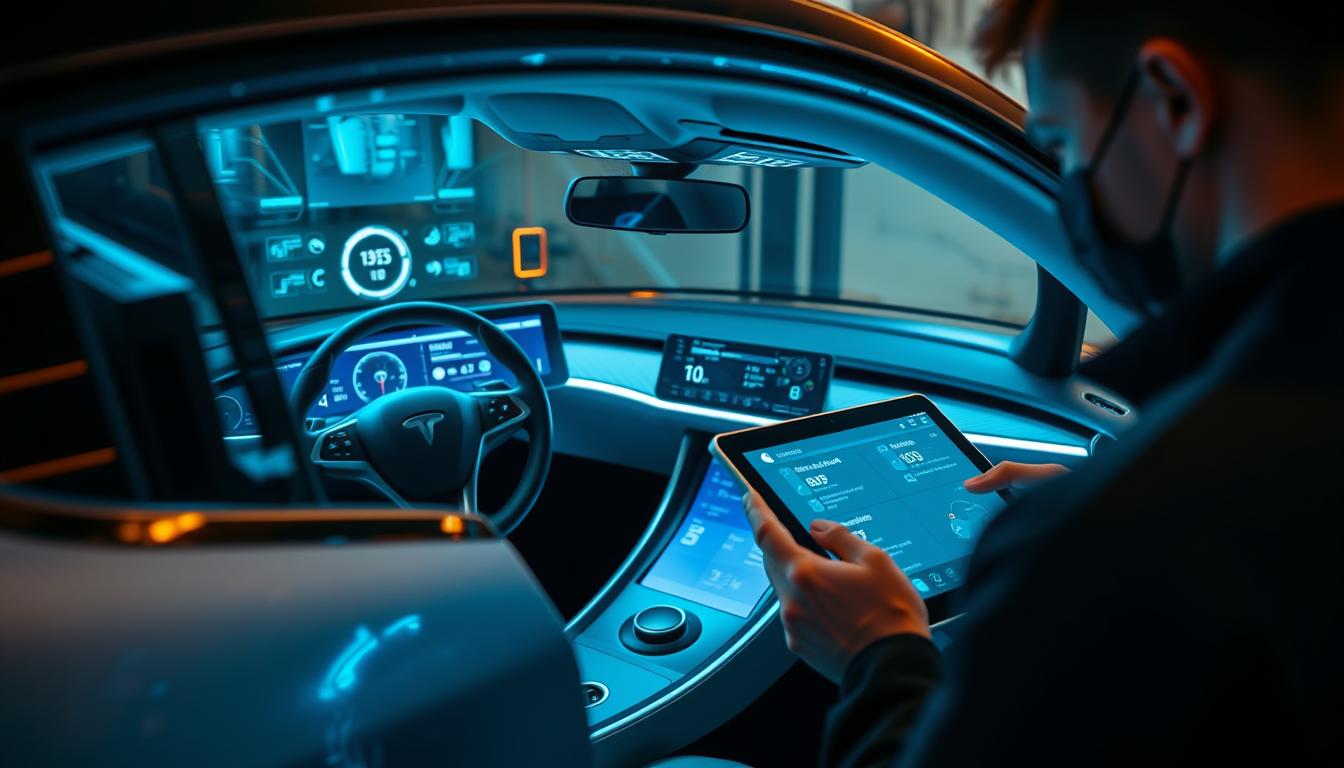






Modern vehicles come equipped with advanced technology, and at the forefront is the car infotainment system. This integrated system provides drivers and passengers with entertainment, navigation, and communication features, enhancing the overall driving experience.
A key feature of these modern infotainment systems is the touchscreen display, allowing users to easily navigate through various options, from adjusting the temperature to selecting their favorite music.
By combining functionality with user-friendly interfaces, car infotainment systems have revolutionized the way we interact with our vehicles.
Key Takeaways
- Car infotainment systems integrate entertainment, navigation, and communication features.
- Touchscreen displays are a key feature, enhancing user experience.
- These systems significantly improve the driving experience.
- Modern vehicles rely on infotainment systems for advanced functionalities.
- User-friendly interfaces make navigation and control easier.
Understanding Car Infotainment Systems
Understanding car infotainment systems is crucial for appreciating the technological advancements that are making our vehicles safer, more enjoyable, and more connected. These systems have become a cornerstone of modern driving, offering a wide range of features that enhance the overall driving experience.
Definition and Overview
A car infotainment system is an integrated setup that combines entertainment, information, and connectivity features into a single, user-friendly interface. This system typically includes a touchscreen display that serves as the central control unit, allowing drivers to access various functions without having to physically interact with multiple controls.
The in-car tech behind these systems is designed to provide a seamless and intuitive experience, integrating hardware components such as display screens, audio systems, and connectivity modules with sophisticated software, including operating systems and applications.
Key Components
The key components of a car infotainment system include:
- Display Screen: Often a high-resolution touchscreen that provides visual feedback and control over the system’s functions.
- Audio System: High-quality speakers and amplifiers that deliver an enhanced audio experience.
- Connectivity Modules: Technologies such as Bluetooth, Wi-Fi, and cellular connectivity that enable features like hands-free calling, wireless music streaming, and internet access.
- Operating System and Applications: The software backbone of the infotainment system, providing the interface and functionality for various apps, including navigation, media playback, and vehicle settings control.
These components work together to create a comprehensive and integrated driving experience, making the vehicle more enjoyable, informative, and connected.
Core Features of Car Infotainment Systems
The modern car infotainment system has revolutionized the driving experience with its advanced features. These systems are designed to provide a more enjoyable, convenient, and safe driving experience.
Touchscreen Interfaces
One of the standout features of contemporary car infotainment systems is the touchscreen display. This interface allows drivers to navigate through various functions with ease, from adjusting the temperature to selecting their favorite music tracks. The intuitive design of these touchscreens minimizes distraction, enabling drivers to keep their eyes on the road.
Modern touchscreens are highly responsive and offer high-resolution graphics, making it easier for drivers to access the information they need. Some systems even support multi-touch gestures, further enhancing user experience.
Voice Recognition Technology
Another critical feature of car infotainment systems is voice recognition technology. This allows drivers to perform various tasks without taking their hands off the wheel or eyes off the road. From making hands-free calls to sending messages, voice commands have significantly improved driver safety.
The sophistication of voice recognition technology has grown, with many systems now capable of understanding complex commands and natural speech patterns. This advancement has made interacting with the infotainment system more natural and less distracting.
Smartphone Integration
Smartphone integration is a vital aspect of modern car infotainment systems. Technologies like Apple CarPlay and Android Auto enable drivers to connect their smartphones to the vehicle’s infotainment system seamlessly. This integration allows for access to a range of apps, including navigation, music streaming, and messaging services.
By integrating smartphones with the car’s system, drivers can enjoy a more cohesive and convenient driving experience. This integration also enhances safety by reducing the need to physically interact with the smartphone while driving.
Benefits of Integrating Infotainment Systems
Car infotainment systems are transforming the way we drive, making it more enjoyable and convenient. The integration of advanced in-car tech has led to a significant enhancement in the overall driving experience.
The car infotainment system offers numerous benefits, primarily through its ability to provide enhanced driver convenience. With features like navigation, hands-free calling, and voice command, drivers can stay focused on the road while accessing essential information.
Enhanced Driver Convenience
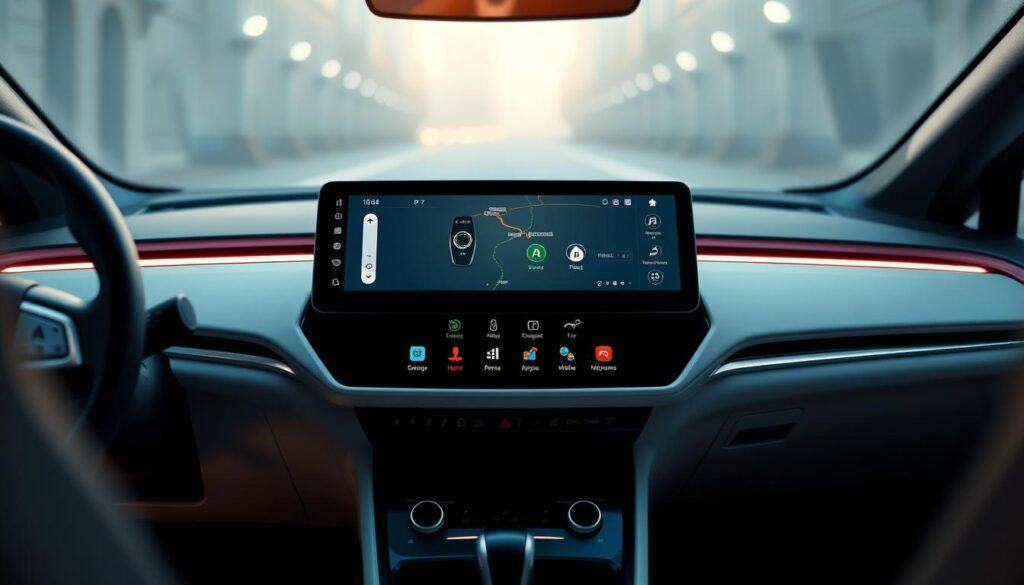
A key feature of modern in-car tech is the touchscreen display, which simplifies interactions by providing an intuitive interface. Drivers can easily access their favorite music, adjust the climate control, or get real-time traffic updates without having to physically handle their devices.
Improved Passenger Experience
Infotainment systems also significantly improve the experience for passengers. With the ability to control the system’s functions, passengers can enjoy their favorite entertainment options, making long trips more enjoyable. Many systems also offer multiple connectivity options, ensuring that all passengers can stay connected and entertained.
Increased Safety Measures
Safety is another critical area where car infotainment systems make a significant impact. Features such as hands-free calling, voice-activated controls, and emergency services integration help reduce distractions while driving, thereby enhancing safety on the road.
By integrating advanced technologies, in-car tech not only makes driving more enjoyable but also contributes to a safer driving environment.
Popular Brands of Car Infotainment Systems
In the realm of car infotainment, certain brands have made significant strides in enhancing the driving experience. The integration of advanced in-car tech has become a hallmark of modern vehicles, with several prominent brands leading the charge.
Apple CarPlay
Apple CarPlay has revolutionized the way drivers interact with their car’s infotainment system. By seamlessly integrating iPhone features into the vehicle’s touchscreen display, Apple CarPlay offers a user-friendly interface that minimizes distractions while driving. With CarPlay, drivers can access their favorite apps, make hands-free calls, and navigate through unfamiliar territories with ease.
“Apple CarPlay has been a game-changer for many drivers,” as it brings the iPhone experience directly into the car, enhancing both convenience and safety.
Android Auto
Android Auto is another leading brand in the car infotainment market, offering a similar integration experience for Android users. By mirroring Android device features onto the car’s display, Android Auto provides a familiar interface that is both intuitive and safe to use while driving. It supports a wide range of apps, from music streaming to messaging services, ensuring that drivers stay connected on the go.
Ford SYNC
Ford SYNC is a sophisticated car infotainment system developed by Ford Motor Company. It is designed to integrate smartphones with the vehicle’s entertainment and navigation systems, offering a range of features that enhance the driving experience. With Ford SYNC, drivers can enjoy hands-free control over their phone, access to turn-by-turn navigation, and the ability to stream music directly from their device.
The success of these brands lies in their ability to provide seamless integration and user-friendly interfaces, making them stand out in the competitive car infotainment market.
Emerging Trends in Car Infotainment
Emerging trends in car infotainment are transforming the driving experience with enhanced connectivity and personalized features. The automotive industry is witnessing a significant shift towards more integrated and sophisticated infotainment systems.
Connectivity and 5G Technology
The integration of 5G technology in car infotainment systems is revolutionizing the way drivers and passengers experience connectivity on the go. With faster data transfer rates and lower latency, 5G enables seamless streaming, navigation, and vehicle-to-everything (V2X) communication.
Some of the key benefits of 5G in car infotainment include:
- Faster data transfer rates
- Lower latency
- Enhanced V2X communication
Artificial Intelligence Integration
Artificial intelligence (AI) is playing a crucial role in enhancing the personalization and usability of car infotainment systems. AI-powered voice recognition and predictive analytics are making it easier for drivers to access the information they need while minimizing distractions.
AI integration offers several advantages, including:
- Personalized recommendations
- Improved voice recognition
- Predictive maintenance alerts
Customization Options
Modern car infotainment systems are offering increased customization options to cater to individual preferences. Drivers can personalize their home screens, choose from various display themes, and configure their favorite apps for quick access.
The ability to customize the infotainment system enhances the overall driving experience by providing a more tailored and intuitive interface.
How to Choose the Right Infotainment System
The process of picking the perfect infotainment system involves several key considerations. With the vast array of options available in the market, it’s essential to evaluate your needs and preferences before making a decision.
Compatibility with Your Vehicle
One of the primary factors to consider is whether the infotainment system is compatible with your vehicle. This includes checking if the system can integrate with your car’s existing technology and if it’s designed for your vehicle’s make and model.
Key compatibility features to look for:
- Integration with existing car systems
- Support for your vehicle’s audio output
- Compatibility with steering wheel controls
User Interface and Usability
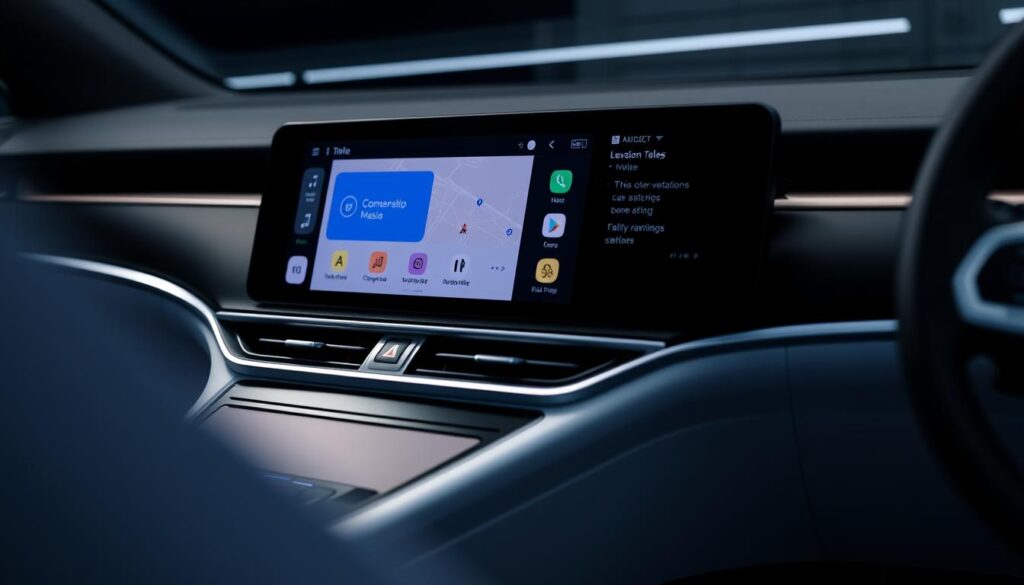
The user interface plays a significant role in your overall experience with the infotainment system. A system with an intuitive and user-friendly interface can significantly enhance your driving experience.
Consider the following when evaluating usability:
- Responsiveness of the touchscreen display
- Ease of navigating through menus
- Availability of voice command features
Budget Considerations
Infotainment systems can vary widely in price, depending on their features and capabilities. Setting a budget beforehand can help narrow down your options.
| Feature | Basic System | Premium System |
|---|---|---|
| Touchscreen Display | Yes | Yes, with higher resolution |
| Smartphone Integration | Yes | Yes, with wireless connectivity |
| Voice Recognition | Limited | Advanced, with natural language processing |
By considering these factors and evaluating your priorities, you can choose an infotainment system that not only fits your budget but also enhances your driving experience.
Challenges Facing Infotainment Systems
Despite their numerous benefits, car infotainment systems pose significant challenges, including driver distraction and data privacy issues. As these systems become more integrated into our driving experience, it’s crucial to address these challenges to ensure safety and satisfaction on the road.
Distraction Risks for Drivers
One of the primary concerns with car infotainment systems is the potential for driver distraction. The touchscreen display, while intuitive, can divert a driver’s attention away from the road. Studies have shown that interacting with infotainment systems can significantly increase the risk of accidents.
To mitigate this, many manufacturers are implementing features that limit the functionality of the infotainment system while the vehicle is in motion. For example, some systems will disable certain features or simplify the interface to reduce visual distraction.
Software Update and Maintenance
Another challenge facing car infotainment systems is the need for regular software updates and maintenance. Just like smartphones, these systems require periodic updates to fix bugs, improve performance, and add new features. However, the process of updating can be cumbersome, and some users may neglect to keep their systems up to date, potentially leading to security vulnerabilities.
Data Privacy Concerns
Data privacy is a growing concern with the increasing connectivity of car infotainment systems. These systems collect a significant amount of data, including driving habits, locations visited, and personal preferences. Ensuring that this data is protected and not misused is a significant challenge for manufacturers.
To address this, many companies are implementing robust data protection policies and complying with regulations such as GDPR. Transparency about what data is collected and how it is used is crucial for building trust with consumers.
| Infotainment System | Distraction Risk | Update Frequency | Data Privacy |
|---|---|---|---|
| Apple CarPlay | Moderate | Regular | Strong Encryption |
| Android Auto | Moderate | Regular | Strong Encryption |
| Ford SYNC | High | Occasional | Robust Privacy Settings |
In conclusion, while car infotainment systems offer many benefits, they also present several challenges that need to be addressed. By understanding these challenges and working to mitigate them, we can create a safer and more enjoyable driving experience.
Future of Car Infotainment Systems
The future of car infotainment systems is poised to revolutionize the driving experience. As we move towards a more connected and autonomous future, the role of in-car tech is becoming increasingly important.
With advancements in technology, car infotainment systems are evolving to meet the changing needs of drivers and passengers.
Integration with Autonomous Vehicles
One of the most significant developments in the future of car infotainment systems is their integration with autonomous vehicles. As vehicles become more autonomous, the infotainment system will play a crucial role in enhancing the driving experience.
For instance, touchscreen displays will become even more intuitive, allowing passengers to control various aspects of their journey.
Evolving Consumer Preferences
Consumer preferences are constantly evolving, and car infotainment systems are adapting to meet these changing demands. Modern drivers expect seamless connectivity and personalized experiences.
To cater to these expectations, manufacturers are incorporating advanced features such as voice recognition and smartphone integration into their systems.
Sustainability and Eco-Friendly Features
Sustainability is becoming a key consideration in the automotive industry, and car infotainment systems are no exception. Future systems are likely to include eco-friendly features that promote sustainable driving practices.
For example, some systems may provide real-time feedback on driving habits, encouraging drivers to adopt more environmentally friendly behaviors.
Conclusion: Embracing the Future of Infotainment
As technology advances, car infotainment systems will continue to evolve, offering more sophisticated features and improved user experiences through advanced touchscreen displays and seamless integration with other in-car tech.
Key Takeaways
The core features of modern car infotainment systems include intuitive touchscreen interfaces, voice recognition technology, and smartphone integration, all of which enhance the driving experience.
Looking Ahead
With the continued development of in-car tech, drivers can expect even more innovative features in the future, making it essential to stay informed about the latest advancements in car infotainment systems.
FAQ
What is a car infotainment system?
How do car infotainment systems work?
What are the benefits of having a car infotainment system?
What are some popular brands of car infotainment systems?
How do I choose the right infotainment system for my vehicle?
What are some emerging trends in car infotainment systems?
Are car infotainment systems safe to use while driving?
How do car infotainment systems impact data privacy?
Can I upgrade my car’s infotainment system?